House Republicans Push 17th Amendment Repeal Amid Senate Gridlock
House Republicans filed a constitutional amendment to repeal the 17th Amendment, seeking to restore state legislative selection of senators after the Senate twice blocked the SAVE America Act on voter ID.
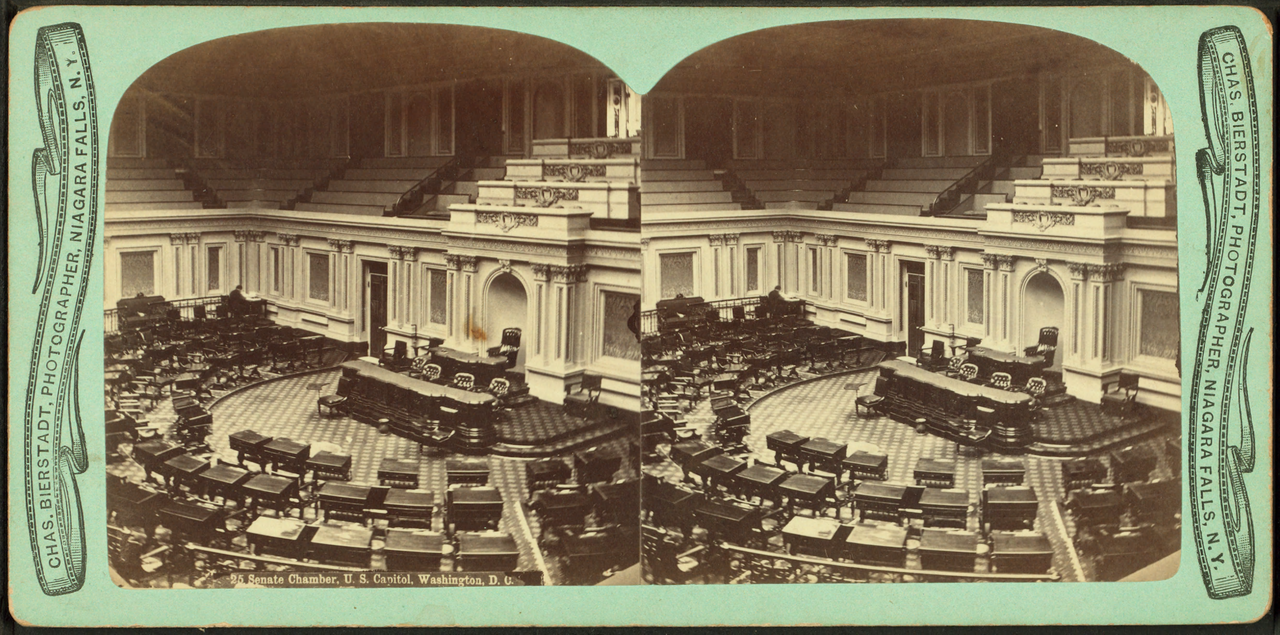
House Republicans moved to repeal the 17th Amendment on June 25, launching a constitutional effort to strip the Senate of its direct election mandate and return power to state legislatures. The resolution answers what conservatives see as Senate obstruction of conservative priorities.
Rep. Keith Self (R-TX) filed H.J.Res. 156 with several co-sponsors, arguing that the 1913 amendment establishing direct election of senators created "six-year politicians more focused on national ambitions and the institution of the U.S. Senate than on the states they serve." The proposal arrives as the Senate has twice rejected the SAVE America Act, a voter ID bill that cleared the House with broad Republican backing.
"Our Founding Fathers designed the Senate to protect state sovereignty and act as a check on federal overreach," Self stated in his June 25 press release. "If senators are supposed to represent their states, then the states should choose them."
The constitutional amendment would return senatorial selection to state legislatures, reversing a Progressive Era reform ratified April 8, 1913. At the Founders' convention, James Wilson's proposal for popular election of senators fell by a 10-1 vote. Article I, Section 3 established that state legislatures would choose senators as a structural check on federal power.
Conservative analysts contest the 17th Amendment's original justification of legislative corruption and electoral deadlocks. Analysis cited by The Federalist shows that only 10 senatorial elections were contested for impropriety over more than a century of legislative selection.
The immediate catalyst for the repeal proposal is the Senate's twice-repeated rejection of the SAVE America Act. The House passed the voter ID bill 218-213 on February 11, 2026. Senate Republicans rejected it as a reconciliation amendment 48-50 on April 23, then blocked it again 48-50 on June 4.
In both votes, Sens. Susan Collins (R-ME), Lisa Murkowski (R-AK), Mitch McConnell (R-KY), and Thom Tillis (R-NC) joined all Democrats. Senate Republicans hold 53 seats, but the 60-vote filibuster threshold makes passage impossible without Democratic support.
The House-Senate feud escalated June 25 when the House Freedom Caucus held a press conference demanding Senate action. Reps. Anna Paulina Luna (R-FL) and Chip Roy (R-TX) threatened to block all House floor action, including Senate-passed legislation like the bipartisan housing bill. President Trump has blocked signing the housing bill until the SAVE Act passes.
Self posted "inaction is not an option" on X, while the Washington Examiner characterized the repeal effort as a "long-shot bid." He added: "If the Senate refuses to act today, let's return the Constitution to the way it was originally designed and repeal the 17th Amendment."
Co-sponsors framed the repeal as restoring constitutional balance and state sovereignty intended by the Founders. Rep. Eric Burlison (R-MO) called the Senate "a key bulwark of federalism" meant to give states a check on federal power. "It's no coincidence that over the last century, Washington has concentrated more power in itself and buried the country in debt," Burlison stated.
Rep. Paul Gosar (R-AZ) argued the "Founders intended the Senate to be the voice of the states in our federal system, not a perpetual roadblock to the will of the American people." Rep. Clay Higgins (R-LA) called the 17th Amendment "arguably the most injurious amendment in history" and noted that "big money has twisted our Senate races into circus acts."
Campaign spending in Senate races reached billions in the 2024 cycle, with Ohio topping $404 million, Pennsylvania approaching $289 million, and Montana exceeding $260 million, according to American Thinker analysis. Co-sponsors argue this fundraising treadmill disconnects senators from state interests.
An amendment to repeal the 17th requires two-thirds of both House and Senate and ratification by three-fourths of states (38). Only one amendment has ever been repealed — the 18th by the 21st — but the proposal forces a national conversation about the Senate's proper role.
The path is steep, but the debate centers on whether the Senate should function as a check on federal power representing state interests, or as an institution of national politics disconnected from its original design. If the Senate refuses to act on conservative priorities, the argument goes, the constitutional structure must change.
"As originally envisioned by our Framers, the Senate was a key bulwark of federalism," Burlison stated. "It was meant to give the states a check on the federal government and moderate the passions of the people."
The proposal may be politically difficult, but it echoes a philosophical debate about federalism, state sovereignty, and the original constitutional design that has defined American governance for more than two centuries. Self's resolution represents a structural response to what House Republicans view as a Senate accountability crisis.