Supreme Court Strikes Down Hawaii's Gun Restrictions in Landmark Second Amendment Ruling
The Supreme Court struck down Hawaii's restrictive concealed-carry law in a 6-3 decision, declaring that Second Amendment rights apply uniformly across all 50 states and do not yield to local political preferences.
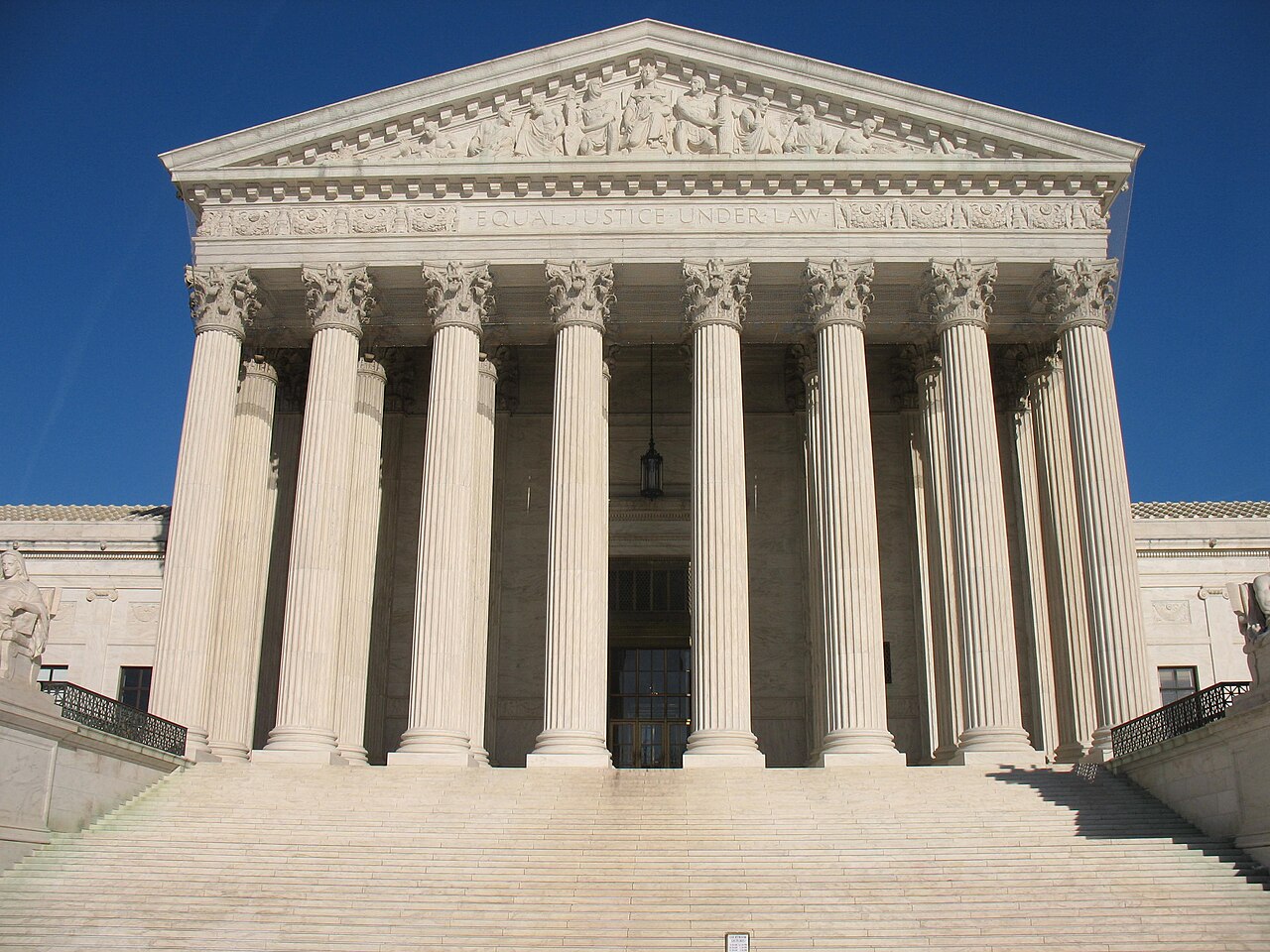
The Supreme Court struck down Hawaii's restrictive concealed-carry law yesterday, delivering a decisive victory for Second Amendment rights that will reshape gun regulations across the nation. In a 6-3 ruling, the conservative majority declared that constitutional guarantees apply uniformly in all 50 states, rejecting efforts by progressive-led states to circumvent established precedent through restrictive default policies. The decision ends years of legal challenges from gun owners who were forced to seek property owners' permission before carrying firearms in public spaces.
Justice Samuel Alito wrote the majority opinion in Wolford v. Lopez, holding that Hawaii's Act 52 "hobbles what the Second Amendment protects: the right of Americans to carry arms for self-defense as they go about their daily lives." The ruling extends the Court's 2022 Bruen precedent, establishing that fundamental rights do not yield to local attitudes or progressive policy preferences. Alito emphasized that the Second Amendment "has the same meaning in all parts of the United States" and "cannot give way to 'the spirit of Aloha' in Hawaii any more than it can yield to the spirit of the Big Apple or the Windy City."
The decision exposes the extraordinary lengths to which Hawaii had gone to restrict gun ownership. Between 2000 and 2018, the state issued only four concealed-carry licenses to residents, illustrating a systemic effort to disarm its population that the Court found fundamentally incompatible with constitutional guarantees. As of December 2024, Hawaii had just 2,207 active concealed-carry licenses statewide, representing only 0.2 percent of residents age 20 and older. The state's gun ownership rate stands at 8 percent, compared with roughly 59 percent in the rest of the nation.
Justice Amy Coney Barrett's concurring opinion dismantled the historical arguments Hawaii presented to defend its law. "Hawaii draws two analogies: one to 18th-century antipoaching laws and the other to 19th-century laws that were mostly designed to suppress newly freed blacks," Barrett wrote. "Unsurprisingly, the analogies fail." The majority opinion rejected Hawaii's reliance on an 1865 Louisiana Black Code as "a tainted artifact" that "cannot be taken seriously" to illuminate the original understanding of the Second Amendment.
The dissenting opinions revealed a clear break between the liberal justices and the Court's textualist approach. Justice Ketanji Brown Jackson openly stated she believes "Bruen was wrongly decided." She argued that "today's decision makes one thing clear: The Court's objective is protecting guns, not consistently preserving any principle of law." Her position suggests a preference for legislative outcomes over constitutional text rather than genuine historical analysis.
Justice Elena Kagan, dissenting alone, asserted she would uphold the challenged Hawaii law "because it is a modern-day analogue of colonial and founding era laws that similarly prohibited carrying firearms onto private property without the owner's affirmative consent." Her reasoning aligned with Hawaii's argument that its law represented a legitimate extension of historical property rights principles.
The ruling invalidates similar "default no-carry" rules enacted by Democratic-led states following the Bruen decision. Five states — Hawaii, California, New York, New Jersey and Maryland — implemented versions of these restrictive policies. Federal courts have already struck down California's, New York's, and New Jersey's laws, cementing a nationwide standard that property owners may exclude armed individuals but cannot be forced to grant them permission.
Gun rights advocates celebrated the decision as a long-awaited vindication of constitutional principles. John Commerford, executive director of the NRA's Institute for Legislative Action, stated that "law-abiding gun owners will no longer be forced to beg for special permission simply to exercise their constitutional right to bear arms in public." Alan Gottlieb, founder of the Second Amendment Foundation, called Hawaii's law "nothing more than a thinly veiled attempt to disarm peaceable citizens."
The decision clarifies that private businesses retain the right to post signs banning firearms on their premises. It removes only the state's burden on peaceable citizens to seek special permission, returning to the historical default that favored armed self-defense. The ruling does not affect Hawaii's other gun restrictions on bars, beaches, parks, hospitals, schools, and government buildings.
Hawaii's Solicitor General Kalikoʻonālani D. Fernandes defended the state's position, stating that "the state of Hawaiʻi takes public safety seriously." The Court found Hawaii's arguments lacked historical foundation and imposed an unconstitutional burden on fundamental rights. State Attorney General Anne Lopez, represented by Neal K. Katyal at oral argument, has not issued a public statement following the ruling.
Janet Carter, managing director of Second Amendment Litigation for Everytown Law, acknowledged the setback while noting that "owners still have every right to decide whether firearms are allowed in their stores and businesses." She conceded that "the Supreme Court may have changed the default rule, but it cannot take away a private property owner's authority over their own land."
The case originated in 2023 when three Maui County residents and the Hawaii Firearms Coalition challenged Act 52, which Governor Josh Green signed into law that June. The law required written or verbal permission to carry on private property open to the public, covering 96.4 percent of publicly accessible land in Maui County when combined with other sensitive-place restrictions.
Alan Beck, attorney for the plaintiffs, argued the lawsuit merely sought "to restore that historical default where the onus is on the property owner to say, even though I've opened this property up to the public, I don't want guns on it." The Court agreed, finding Hawaii's approach fundamentally altered the historical relationship between property rights and Second Amendment protections.
Justice Barrett emphasized that "Hawaii's law does not target any particular abuse of firearms at all." She noted that rather than identifying a specific threat to public peace and safety, "Hawaii admits that it enacted the rule because many of its citizens oppose the public carry of guns." Barrett concluded that "mere disapproval of protected conduct is not a valid reason to severely restrict it."
The ruling represents the latest in a series of Second Amendment victories from the Supreme Court's conservative majority. Earlier this term, in United States v. Hemani, the Court struck down a federal law barring unlawful drug users from possessing firearms. These decisions continue to reshape the landscape of gun rights in America, applying the Bruen framework to strike down restrictions lacking clear historical analogues.
As lower courts implement yesterday's decision, similar laws in other blue states face immediate jeopardy. The coordinated pattern of resistance to Bruen's restoration of Second Amendment rights has now been decisively rejected, establishing that constitutional guarantees transcend geographic and political boundaries. For millions of Americans, the ruling means the right to carry a firearm for self-defense belongs to them — not to politicians, not to property owners, and not to the whims of local sentiment.