Republicans Lock in Trump Border Agenda Through 2029 With $72 Billion Package
Congressional Republicans advance a $71.8 billion reconciliation package funding ICE and CBP operations through fiscal 2029, bypassing Democratic demands for agent restrictions after a record 76-day government shutdown.
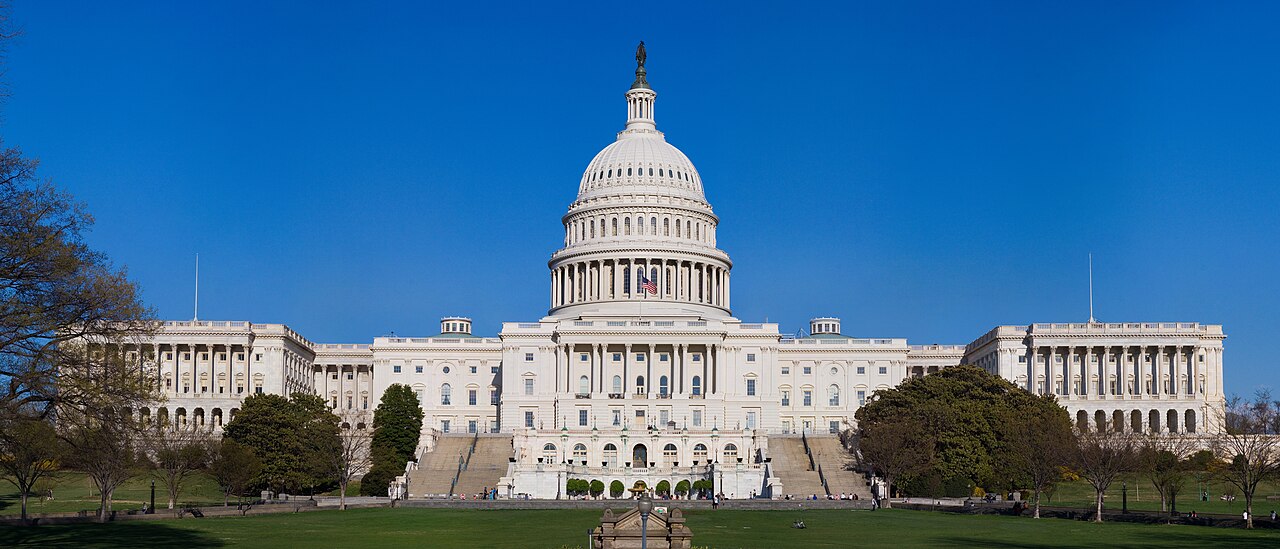
Congressional Republicans are moving to permanently secure border enforcement funding through fiscal 2029, advancing a $71.8 billion reconciliation package that locks in President Trump's immigration agenda for the duration of his administration. The legislation allocates $69.3 billion for ICE and CBP operations, stripping Democrats of their annual leverage to defund or restrict immigration agencies through budget fights.
The strategic maneuver uses budget reconciliation to bypass Democratic obstruction, requiring only a simple Senate majority. Republicans have designated $38.2 billion for ICE operations and $26.1 billion for CBP, ensuring border security continues uninterrupted through September 2029.
The push follows a record 76-day partial government shutdown that ended April 30, triggered by Democratic demands for agent restrictions. Since February, Democrats blocked annual Department of Homeland Security appropriations to force body cameras, mask bans, judicial warrants and limits on roving patrols for immigration agents.
"Senate Democrats refused to vote for a single dollar to secure our borders or enforce our immigration laws, even against the most violent illegal aliens," said Sen. Rand Paul, chairman of the Homeland Security and Governmental Affairs Committee.
Republicans framed the package as essential action against Democratic obstruction. "Republicans are doing something that must be done quickly, and that our Democrat colleagues are trying to prevent us from doing," said Sen. Lindsey Graham, Budget Committee chairman. "That something is simple: fully fund Border Patrol and ICE at a time of great threat to the United States."
The budget resolution passed an initial Senate vote 50-48 and cleared the House 215-211 along party lines last month. Committees begin markups the week of May 19, with President Trump demanding final passage by June 1.
By securing three years of guaranteed funding, Republicans have eliminated Democrats' ability to use annual appropriations votes to impose operational restrictions. The funding package represents a fundamental shift in congressional oversight power.
During the 76-day shutdown, ICE and CBP maintained near-full operations using existing multi-year funds from Trump's One Big Beautiful Bill Act. The $3.4 trillion package, signed in July 2025, provided operational continuity despite Democratic attempts to halt enforcement through budget blockades.
"The Senate Judiciary Committee is taking action to help provide certainty for federal law enforcement and safer streets for American families," said Sen. Charles Grassley, Judiciary Committee chairman.
Beyond core enforcement funding, the bill includes $1.5 billion for the Department of Justice covering terrorism prosecution, the DEA, Marshals Service, U.S. attorneys and the FBI. A $5 billion flexible fund goes to the DHS secretary, alongside $1 billion for Secret Service security upgrades related to the White House ballroom project.
The legislation contains none of the guardrails Democrats demanded. No mandatory body cameras, no mask bans, no judicial warrant requirements and no limits on roving patrols will constrain border agents' operational freedom.
Acting ICE Director Todd Lyons defended agents against calls for masking requirements during congressional testimony. "ICE agents don't want to be masked," Lyons said. "They're honorable men and women, but the threats against their family are real."
CBP Commissioner Rodney Scott supports expanding body cameras but notes funding challenges for personnel to oversee implementation. "Fund the entire program so that we can be transparent," Scott said.
Some legal scholars argue the multi-year funding violates the Constitution's Army Clause, which limits military appropriations to two years. Just Security analysts contend ICE and CBP function as a permanent, nationally controlled coercive apparatus functionally equivalent to a standing army.
House Speaker Mike Johnson and Senate Majority Leader John Thune rejected Democratic demands outright, opting for reconciliation to bypass Senate filibusters. "The sequencing is important," Johnson said. "We've got to make sure that we don't isolate and orphan key agencies."
The failed 76-day shutdown demonstrated that withholding annual appropriations cannot halt enforcement operations. ICE and CBP continued deportation initiatives and border patrols using OBBBA funds, rendering the Democratic blockade purely political.
Senate Minority Leader Chuck Schumer condemned the Republican approach. "We will not support an extension of the status quo, a status quo that permits masked secret police to barge into people's homes without warrants, no guardrails and zero oversight," Schumer said.
The funding extends beyond Trump's current term, securing border enforcement through September 30, 2029. This locks in operational priorities well into the next administration's first year, regardless of November's election outcome.
Committees must submit final reconciliation legislation to budget panels by May 15. The White House has signaled strong support for the package, which would provide stability after months of uncertainty.
Republicans prioritized secure borders and stable operations over endless political fights, delivering practical governance while neutralizing Democratic obstruction. The three-year funding ensures border security remains uninterrupted through the remainder of the Trump presidency.