California Cities Defy Federal Ruling in Gun Purchase Lawsuit as States Target Glock Ban
A federal lawsuit challenges Los Angeles and Inglewood for maintaining unconstitutional gun purchase limits while four states ban Glock pistols over gang violence that accounts for a fraction of total murders nationwide.
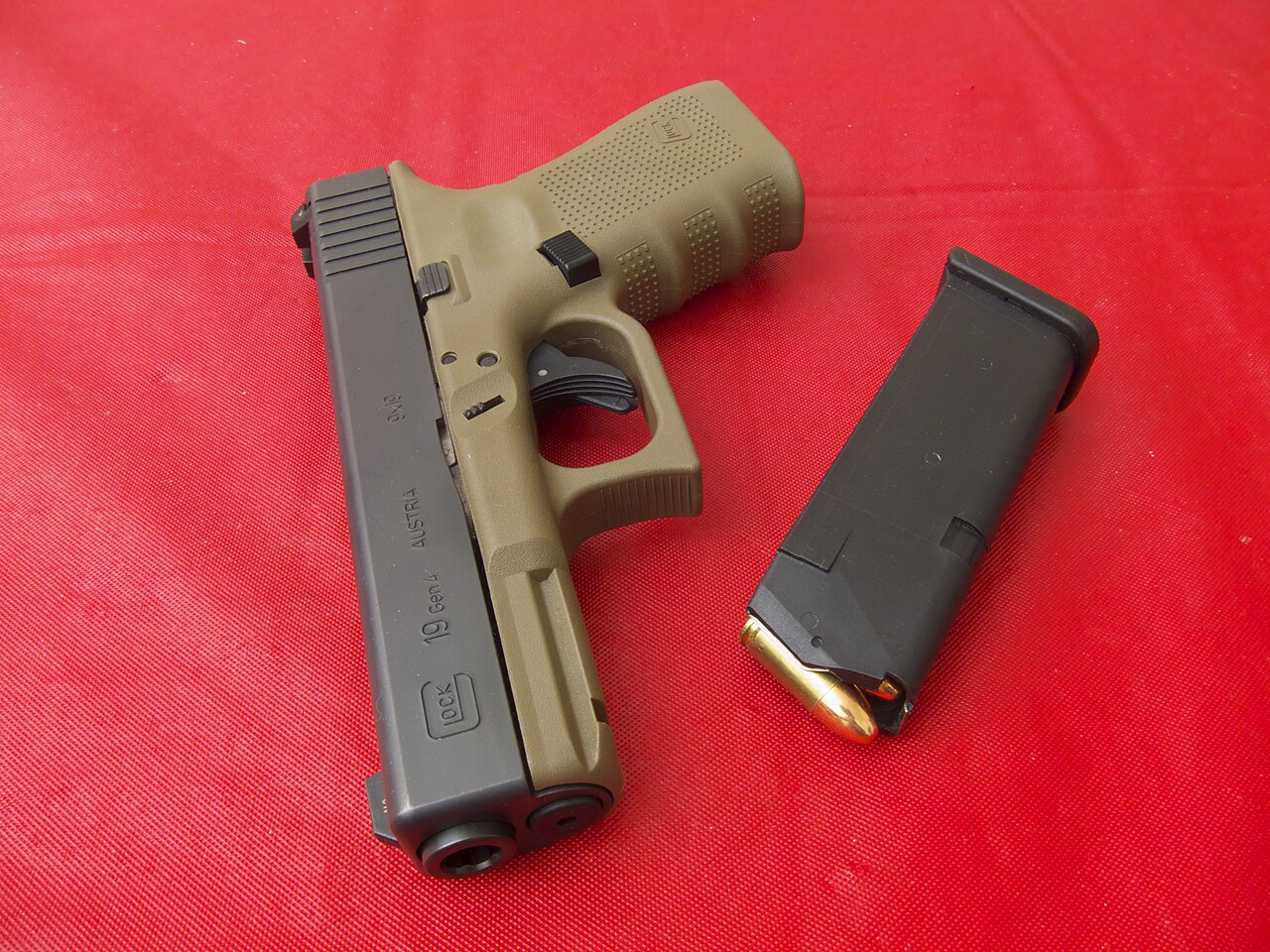
A California National Guard member and two gun rights groups filed a federal lawsuit Wednesday challenging Los Angeles and Inglewood over their one-gun-a-month purchase bans. The cities continue enforcing the restrictions even after the Ninth Circuit declared such limits unconstitutional at the state level. The defiance arrives as four states move to ban Glock pistols over a threat that has killed just 43 people in five years — all deaths occurring during gang violence.
Thomas Lopez, the Firearms Policy Coalition and the California Gun Rights Foundation sued both cities over their "1 in 30" handgun purchase ordinances. The lawsuit argues these restrictions unconstitutionally prevent law-abiding citizens from acquiring multiple firearms for self-defense, training and other lawful purposes. Lopez states in the filing: "But for the bans, plaintiffs would exercise their constitutionally protected right to acquire multiple handguns within a thirty-day period for self-defense, defense of others, proficiency training, and other [lawful purposes]." The legal action exposes how local governments across California continue to ignore constitutional precedent while state legislatures push broader firearm restrictions based on statistically negligible threats.
The Ninth Circuit Court of Appeals struck down California's statewide one-gun-a-month law one year ago. In Nguyen v. Bonta, three judges ruled unanimously on June 20, 2025 that the restriction was facially unconstitutional under the Second Amendment. The mandate became final on Aug. 14, 2025.
Judge Forrest's opinion held that the Second Amendment's protection of "Arms" expressly includes the right to possess multiple firearms. California failed to identify even a historical analogue for its temporal ban, the court found.
Despite that federal ruling and the state legislature's subsequent enactment of AB 1078 — which increased California's purchase limit from one to three firearms per 30-day period effective April 1 — Los Angeles and Inglewood maintain their municipal ordinances. Los Angeles Municipal Code § 55.14 and Inglewood Municipal Code § 5-19.6 impose identical "1 in 30" restrictions. The legal question of whether AB 1078 preempts these local ordinances remains unresolved. The city of Los Angeles has not issued a public response to the lawsuit.
This local defiance occurs amid a national wave of gun control overreach targeting popular firearms. Four states have passed laws banning Glock pistols under the theory they can be converted into machine guns using "Glock switches." California Gov. Gavin Newsom signed AB 1127 in October 2025. Maryland Gov. Wes Moore signed SB 334 on May 26, 2026. Connecticut Gov. Ned Lamont approved his state's ban on May 26. New York Gov. Kathy Hochul embedded the prohibition in a budget bill signed May 28.
New data reveals these bans target a manufactured crisis. The Crime Prevention Research Center published a study May 27 finding only 43 murders from 20 attacks involving Glock switches from 2021 through May 2026. During the 2021-2024 period, America recorded 80,657 total murders nationwide. Glock switch-related murders represent approximately 0.051 percent of all murders. All 43 deaths occurred during gang fights.
"There is no evidence that law-abiding gun owners are converting their handguns, and even the advocates for these laws focus on only the threat from criminal gangs," said CPRC President John R. Lott Jr. "All 43 murders in the 20 U.S. attacks involving 'Glock switches' that the CPRC has identified since the beginning of 2021 occurred during gang fights."
Glock switches are small devices that override a pistol's disconnector, allowing fully automatic fire. They measure roughly the size of a Lego brick. These devices are already illegal under federal law, classified as machine guns under the National Firearms Act since 1934. Possession alone carries a 10-year federal prison sentence. According to Gov. Hochul's own data, the Bureau of Alcohol, Tobacco, Firearms and Explosives recovered 11,088 Glock switches between 2019 and 2023. That figure represents a 784 percent increase, with 5,816 switches recovered in 2023 alone. The devices pose significant danger to users, creating risk of catastrophic malfunction and stray fire.
Gun rights organizations are mounting coordinated challenges against every Glock ban. The Firearms Policy Coalition filed Jaymes v. Bonta challenging California's prohibition in October 2025. The National Rifle Association, FPC and Second Amendment Foundation filed National Rifle Association v. Moore against Maryland's ban on May 26. The National Shooting Sports Foundation announced plans to challenge Connecticut's ban. NRA officials have signaled that a legal challenge in New York is likely to follow.
"To borrow on a line from James Carville, whom Democrats revere, 'it's the criminal, stupid,'" said Lawrence G. Keane, NSSF senior vice president and general counsel. "These bills, and similar laws passed in other states, punish law-abiding citizens by infringing on their Second Amendment rights to legally obtain the firearms they choose to protect themselves and their families against criminals who, by definition, have no respect for life or law."
Adam Kraut, executive director of the Second Amendment Foundation, called Maryland's ban "as foolish as banning hops and barley to prevent drunk driving." He added: "These commonly owned arms are clearly protected by the Second Amendment, the ratification of which takes certain policy choices — including this one — off the table."
More than 65 percent of U.S. police departments issue or authorize Glock handguns for officers. Glock captured three of the six most popular semi-automatic handguns sold in America during 2025, according to industry data. The cities of Los Angeles and Inglewood are restricting access to these widely used firearms while openly defying federal court precedent. The fundamental question remains whether local governments can simply ignore constitutional rulings they dislike, creating a patchwork of ordinances that chip away at Second Amendment rights one municipality at a time.