Conservative Steve Hilton Surges in California Governor's Race
Steve Hilton leads early vote counting in California's governor's race, defying the state's Democratic registration advantage and positioning Republicans for their strongest challenge in over a decade.
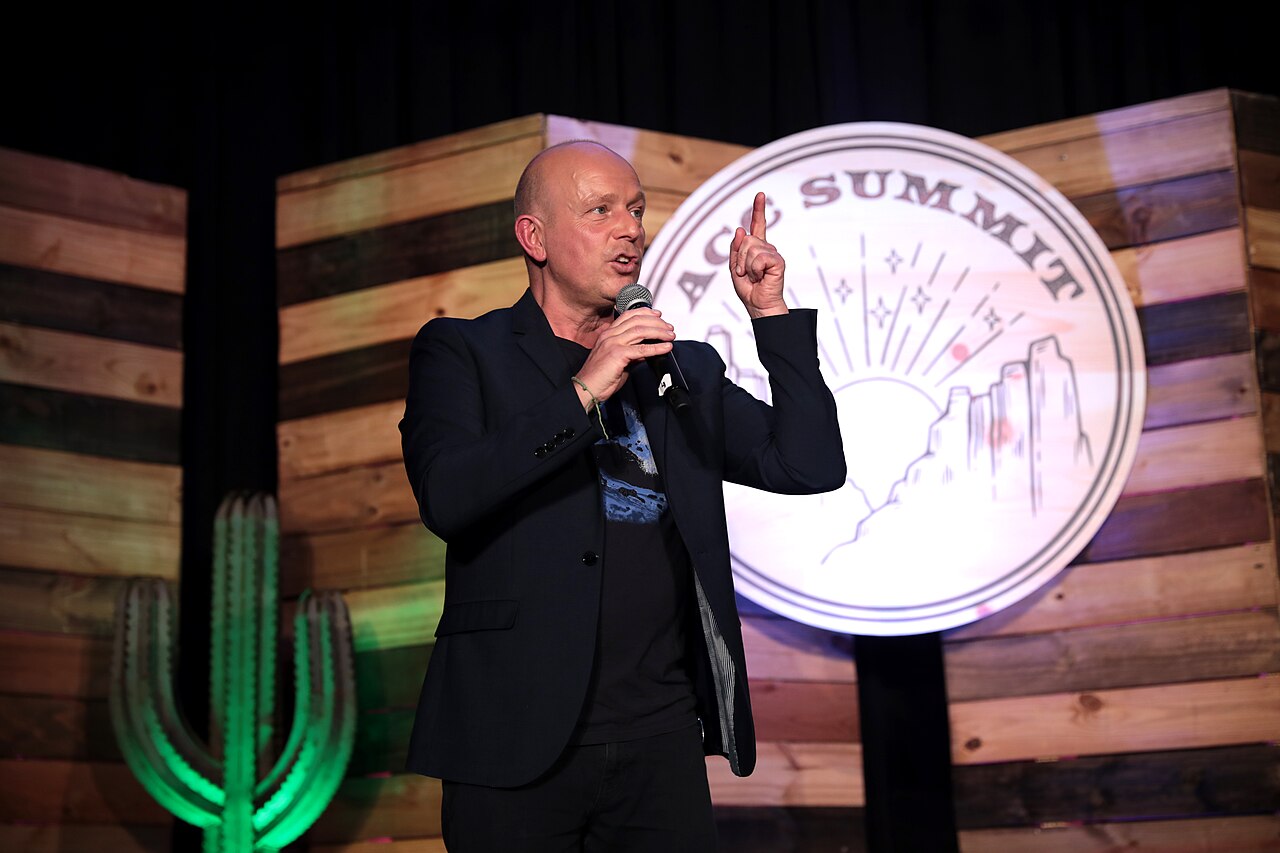
Steve Hilton holds a lead over Democrat Xavier Becerra in California's governor's race, defying the state's nearly 2-to-1 Democratic voter registration advantage and positioning the GOP for its strongest challenge since Arnold Schwarzenegger left office in 2011. The British-born conservative Republican and former Fox News commentator holds approximately 27 percent of early votes against Becerra's 25 to 26 percent, upending expectations in America's most reliably blue state.
California's top-two primary system has produced one of its most consequential results in decades. A conservative Republican now stands poised to challenge a Democrat for governor despite voters holding a 45 percent Democratic registration advantage to 25 percent Republican.
Hilton's competitiveness signals that conservative policies on affordability, deregulation, and taxes resonate with a significant share of the electorate after 16 years of Democratic control. The message strikes a nerve in a state where everyday costs have climbed steadily.
The former Fox News host leads with more than 1 million votes counted, though final results could take days or weeks as California processes mail ballots received up to seven days after Election Day. Tom Steyer trails in third place with approximately 20 percent of votes after spending $213 million of his own money, the most expensive primary campaign in California gubernatorial history.
Hilton's surge stems from a fractured Democratic field and a message centered on California's cost-of-living crisis.
"Change is coming to California, and it's long overdue," Hilton told supporters at his Huntington Beach watch party. "Everything is too expensive in California. We're going to cut people's costs."
The Republican candidate proposes eliminating state income tax on the first $100,000 of earnings, capping vehicle registration at $71 per year, ending the $800 annual franchise tax on small businesses, and expanding oil production to target $3-a-gallon gas. He also advocates rolling back environmental regulations and ending state-funded health coverage for undocumented immigrants.
Sixty-one candidates appeared on the ballot, creating a crowded field that splintered Democratic support. The Democratic Party convention ended in a stalemate with no candidate clearing the 60 percent threshold for endorsement, while labor unions, environmental groups, and traditional power centers split among multiple contenders.
Former Rep. Eric Swalwell's campaign imploded in April over sexual assault allegations, with Becerra absorbing more than 500 of his donors. Three candidates — Katie Porter, Matt Mahan, and Antonio Villaraigosa — conceded on election night after failing to crack the top two.
Spending dynamics favored Hilton's grassroots approach over billionaire-backed campaigns. While Steyer spent $213 million and Mahan received approximately $22 million in outside spending from tech billionaire committees, Hilton raised $6.6 million from 20,000-plus donors, the most of any candidate. Nearly a quarter of his donors live outside California.
"It may sound facetious to say that you can have too much money in a campaign, but in fact the way these rich self-financing candidates spend their money becomes a liability," Democratic strategist Garry South told CalMatters. "They wear out their welcome."
Ballot-tracking data revealed strategic voting patterns that benefited Hilton. Republicans voted early by mail while Democrats held onto mail-in ballots until the last minute, the reverse of recent patterns.
"Democrats have been fearful of a double Republican result," said Kimberly L. Nalder of Sacramento State University. "Many waited until the last moment to gauge who the frontrunners were so they could be most strategic."
President Donald Trump endorsed Hilton on April 6, helping him pull away from rival Republican Chad Bianco. The endorsement came as Hilton emphasized his frustration with one-party rule.
"I think people who aren't here don't realize how sick we all are of what's been going on, the one-party rule, for 16 years now," Hilton told Fox News in May.
Becerra, who would be California's first Latino governor since 1875, struck a more conciliatory tone at his Los Angeles watch party. "Here in Hollywood's hometown, we love a good underdog success story," the former U.S. Health and Human Services secretary said. "Guess what? The underdog stayed in the fight."
Steyer acknowledged his uphill battle but refused to concede. "Together, we've scared the hell out of the corporate interests used to getting their way," the billionaire environmentalist told supporters. "It might take some time to figure out where this is going."
California's top-two "jungle primary" system, enacted via Proposition 14 in 2010, puts all candidates on one ballot regardless of party, with the top two advancing to November. The system has historically produced Democratic-versus-GOP general elections in statewide contests, but this year's crowded field created unusual uncertainty.
Hilton appears positioned to face Becerra in November, a contest in which Democrats still hold their nearly 2-to-1 registration advantage. Yet Hilton's competitiveness in the primary — backed by 20,000-plus donors, a Trump endorsement, and a message centered on affordability — signals a shift in at least a portion of the California electorate.
"Something has to change," Hilton told KTVU. "The Democratic candidates acknowledge that. They just don't have any alternative options."
The outcome will determine which two candidates advance to replace term-limited Gov. Gavin Newsom. For the voters who flocked to Hilton's watch parties and sent in their ballots early, the election felt like more than a contest. It felt like a chance to rewrite the rules.