Trump Closes Financial Borders to Starve Cartels, Undocumented Operations
New executive order targets bank accounts funding cartels and unauthorized immigration, directing Treasury to overhaul regulations while banking leaders warn against compliance burdens that could push citizens out of regulated finance.
Bank accounts fun billions into cartel operations and undocumented labor networks. That flow stops under a new executive order that turns financial oversight into a border enforcement tool.
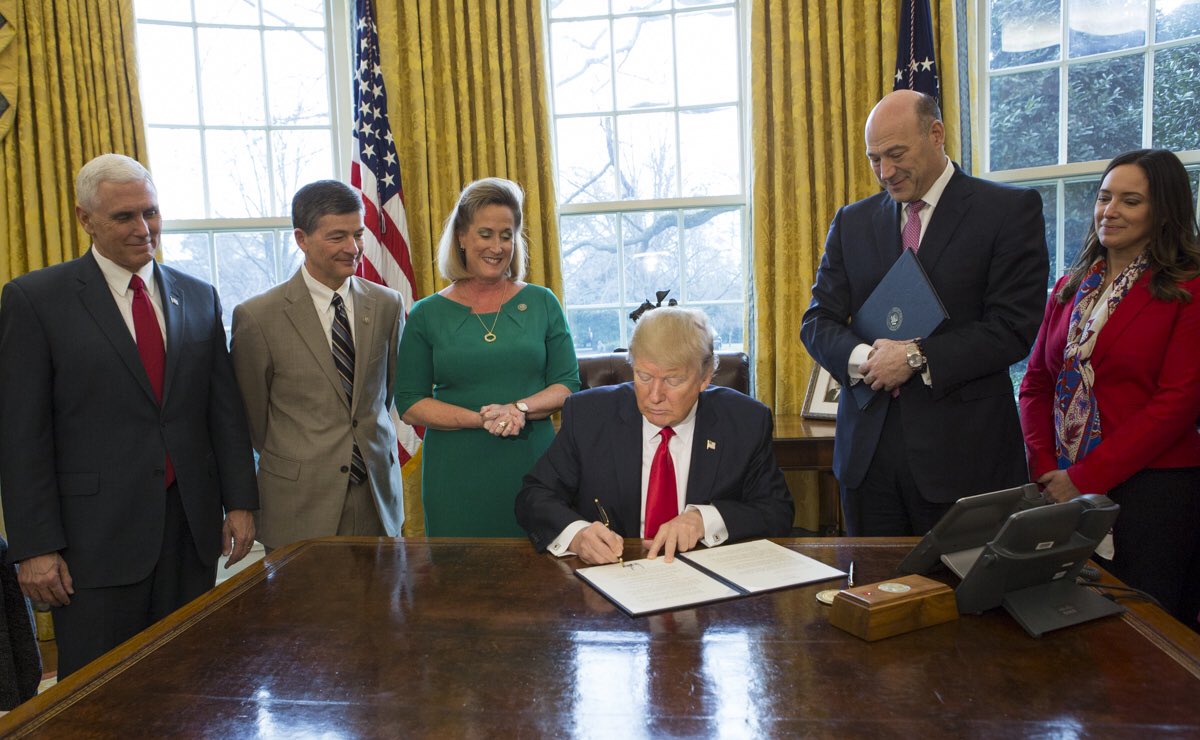
President Trump signed the directive May 19. He amplified it June 2 on Truth Social. The order targets the cash lifelines of criminal networks and unauthorized immigration operations while protecting taxpayer dollars from abuse.
"Restoring Integrity to America's Financial System" closes loopholes that have allowed illicit money to circulate freely through U.S. banking channels. The administration moves from rhetoric to enforcement, striking at the financial infrastructure that enables smuggling, trafficking, and welfare fraud. The approach respects banking sector boundaries. A functional capitalist system requires rules, not confiscation without due process.
"Access to our Nation's Financial Systems must be limited to those who have a Legal Right to be here, and who are engaged in Lawful and Legitimate Commerce," Trump wrote. "Bank Accounts being used to enable Illegal Immigration, or to store the Welfare received by Illegal Aliens, will be shut down, and funds will ultimately face Impoundment and Seizure so they can to be returned to Taxpayers."
The order sets firm deadlines. Treasury must propose Bank Secrecy Act reforms within 90 days. It must identify red flags for labor trafficking, structuring, and Individual Taxpayer Identification Number abuse within 60 days. The directive cites more than $312 billion laundered through U.S. accounts by criminal organizations, including human trafficking networks. Fentanyl-related financial hubs tied to Mexican cartels receive specific attention.
This financial border enforcement fits into a broader security strategy. The administration set a refugee cap of 7,500 in October 2025. It restricted tax credits for certain immigrant groups in November 2025. Treasury Secretary Scott Bessent has questioned how banks can verify customers without checking immigration status. "There should be stricter rules to open bank accounts," Bessent stated.
The actual directive proves more measured than the public rhetoric suggests. The order does not mandate citizenship verification for all customers. That provision reportedly vanished after months of banking industry pushback. Instead, it empowers regulators to flag suspicious activity and assess credit risks tied to work authorization.
"It is not ludicrous, but profoundly dangerous, that any illegal alien can simply present a blue state driver's licence, or Biden border document, and have unrestricted access to the U.S. financial system," Trump stated. The critique targets Democratic-led states that issue identification documents to undocumented immigrants.
Banking leaders support the security objectives but warn against compliance burdens that could push American citizens out of regulated finance. "We share the administration's goal of ensuring a safe, sound and secure financial system," American Bankers Association President Rob Nichols said. "We will continue to work with the administration, law enforcement and other stakeholders to ensure today's actions bolster our financial defenses while maintaining consumer access to banking services."
Independent Community Bankers of America President Rebeca Romero Rainey added that policymakers must avoid information collection requirements that burden community banks. Such rules would undermine their ability to serve local communities and drive citizens away from regulated banking.
The banking industry's successful resistance to mandatory citizenship checks reveals a clear boundary. Even institutions that support enforcement refuse to become government surveillance arms. Banks want financial security. They reject the role of immigration enforcement proxies. That pushback shaped the final order into a policy that strengthens due diligence without imposing impossible compliance demands.
The administration views state policies granting undocumented immigrants unrestricted financial access as complicit in undermining federal border security. Trump's critique zeroes in on what he calls "blue state driver's licence" policies that facilitate illegal financial activity.
Bessent's calls for stricter "know your customer" rules and the 60-day deadline for Treasury advisory guidance signal the opening move in a sustained campaign. The order directs the Consumer Financial Protection Bureau to clarify that potential deportation and wage loss could affect a borrower's ability to repay loans.
The calibrated approach balances aggressive border security with the practical realities of maintaining functional financial markets. The administration leverages public pressure to maximize deterrent effect while preserving regulatory feasibility. The goal is clear: sever financial lifelines for criminal and unauthorized networks without destabilizing the banking sector.
As Treasury develops its red flag advisory and Bank Secrecy Act reform proposals in coming weeks, financial institutions will navigate new compliance requirements. Immigrant communities face potential exclusion from regulated banking. The administration's financial border hardening represents a targeted, legally sustainable strike against illicit networks that have exploited systemic vulnerabilities for years.