DOJ Sues California and Virginia Over Second Amendment Violations
The Justice Department filed federal lawsuits against California and Virginia, challenging state bans on Glock pistols and AR-15-style rifles as unconstitutional violations of the Second Amendment.
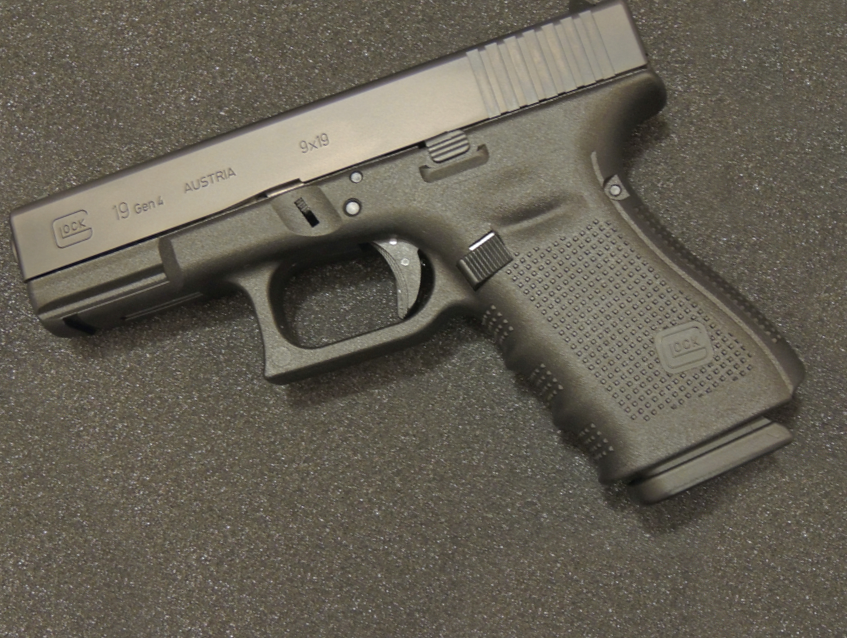
The Justice Department filed federal lawsuits against California and Virginia on July 1, challenging newly enacted laws that ban the most popular firearms in America. The suits target prohibitions on Glock pistols and AR-15-style rifles as unconstitutional violations of the Second Amendment. The legal action arrived just days after the Supreme Court signaled its willingness to hear assault weapons ban challenges. The move represents the most direct federal confrontation yet with state-level gun restrictions.
Millions of Americans now face the prospect of losing weapons they own legally. The Justice Department frames the lawsuits as a defense of fundamental constitutional rights against state overreach. Acting Attorney General Todd Blanche described the action as federal enforcement of the Second Amendment against laws that would disarm citizens.
"The Constitution is not a suggestion, and the Second Amendment is not a second-class right," Blanche said in a July 1 press release. "This Justice Department has done more to protect the Second Amendment than any administration in our nation's history, and we will continue to do so whenever necessary."
The numbers show what these states seek to prohibit. Between 16 million and 24.6 million Americans own or have owned AR-15-style rifles. Roughly 2.8 million entered the market in 2020 alone, representing about 20 percent of all firearms sold that year. Glock pistols control nearly 65 percent of the U.S. handgun market, with more than 23 million sold worldwide. These are not obscure weapons but arms in common use — exactly what the Second Amendment protects under the Supreme Court's 2008 Heller decision.
The legal foundation for this confrontation arrived just six days earlier. On June 25, the Supreme Court ruled 6-3 in Wolford v. Lopez, striking down Hawaii's concealed carry restrictions. The decision reaffirmed that states cannot prevent citizens from using commonly used firearms for self-defense. The Justice Department lawsuits directly invoke that precedent against what they call unconstitutional state gun bans.
Virginia faces a federal complaint targeting SB 749, which Governor Abigail Spanberger signed into law May 14. The statute bans the sale and manufacture of "assault firearms" defined to encompass AR-15-style rifles. Violations carry penalties of up to one year in jail. Assistant Attorney General Harmeet Dhillon said the lawsuit was promised and deliberate.
"On April 10, I promised Governor Spanberger that we would sue Virginia if she signed this unconstitutional weapons ban into law," Dhillon said. "I keep my promises. Law-abiding Americans should not have to live under threat of criminal sanction for simply exercising their Second Amendment right to possess arms owned by millions of their fellow citizens."
Virginia's citizens are voting with their wallets as the federal challenge unfolds. June 2026 saw 123,699 firearm background checks in the state, a 241 percent increase over June 2025's 36,217 checks. The first six months of 2026 totaled 468,778 background checks, a 91 percent increase year-over-year. Two Virginia state judges have already issued preliminary injunctions blocking enforcement. The rulings reveal internal disagreement about the law's constitutionality even within the state.
California faces a separate Justice Department challenge to AB 1127, which Governor Gavin Newsom signed October 10, 2025. The law bans licensed dealers from selling Glock and Glock-style pistols with cruciform trigger bars. The restriction took effect July 1. The federal lawsuit also targets California's Handgun Roster, which prevented any new handguns from being added between 2013 and 2023.
"The Second Amendment is a sacred right belonging to all Americans, even those in California. California cannot ban the most popular type of handgun in America," Blanche said. Dhillon added: "The Civil Rights Division will defend law-abiding citizens from states that seek to disarm them illegally."
The Justice Department filed an emergency temporary restraining order against California's Glock ban on July 1. California Attorney General Rob Bonta opposed the motion July 2, arguing the department's eight-month delay defeats any claim of emergency. Bonta's opposition brief describes AB 1127 as a "reasonable legislative response to the growing spread of, and increasing accessibility to" machinegun conversion devices.
Both lawsuits employ an unprecedented legal strategy. They use 34 U.S.C. § 12601, the pattern-or-practice statute originally designed to combat police misconduct, to challenge state gun laws. The Justice Department argues that state police enforcement of these bans constitutes an unconstitutional pattern of conduct depriving citizens of their Second Amendment rights.
This federal action arrives amid broader constitutional momentum at the Supreme Court. On June 30, the Court agreed to hear consolidated challenges to assault weapons bans in Connecticut and Illinois. Arguments are expected this fall. The Wolford decision and these pending cases create a legal landscape increasingly hostile to state-level gun restrictions.
Rae Pickett, communications director for Attorney General Jay Jones, called the federal lawsuit a "misuse of the Civil Rights Division." She defended what she described as "commonsense" gun laws. "This commonsense law keeps Virginians safe, protects law enforcement, and safeguards communities across the Commonwealth," Pickett said.
Spanberger's office issued a statement on July 1 defending the state's legislation. "Firearms designed to inflict maximum casualties do not belong in our communities, near our kids and schools, or on Virginia's streets," the statement read.
The statistical record contradicts claims that these bans target crime-prone weapons. FBI data shows that in 2019, only 364 homicides were committed with rifles of any type, compared to 6,368 with handguns. California's opposition brief cites a 784 percent spike in machinegun conversion devices recovered at crime scenes between 2019 and 2023. Converting any firearm to fully automatic fire remains illegal under federal law.
The Justice Department's legal filings reveal extensive preparation. In California's case, the department sent a June 24 letter offering to defer the lawsuit if the state agreed to pre-suit negotiations. The terms would require California to "immediately cease enforcement" and "acknowledge the unconstitutionality" of the Glock ban. California refused. The July 1 federal filing followed.
This constitutional confrontation extends beyond specific firearms. The dispute raises fundamental questions about federal authority and individual rights. The Trump administration is using every available legal tool to enforce the Second Amendment against states that have chosen to ignore it. The Supreme Court's conservative majority has signaled it agrees with this enforcement posture.
The stakes transcend Glock pistols and AR-15 rifles. They concern whether the federal government will protect constitutional rights when state governments attempt to nullify them. Two federal lawsuits now hang in the balance. Supreme Court review of similar bans looms ahead. The answer may come sooner than expected.