Trump Pardons Mechanics Prosecuted for Car Repairs Under Biden-Era Emissions Rules
President Trump signs pardons for six mechanics and vehicle owners imprisoned or facing prison time for repairing vehicles under excessive environmental regulations, marking the end of a four-year crackdown.
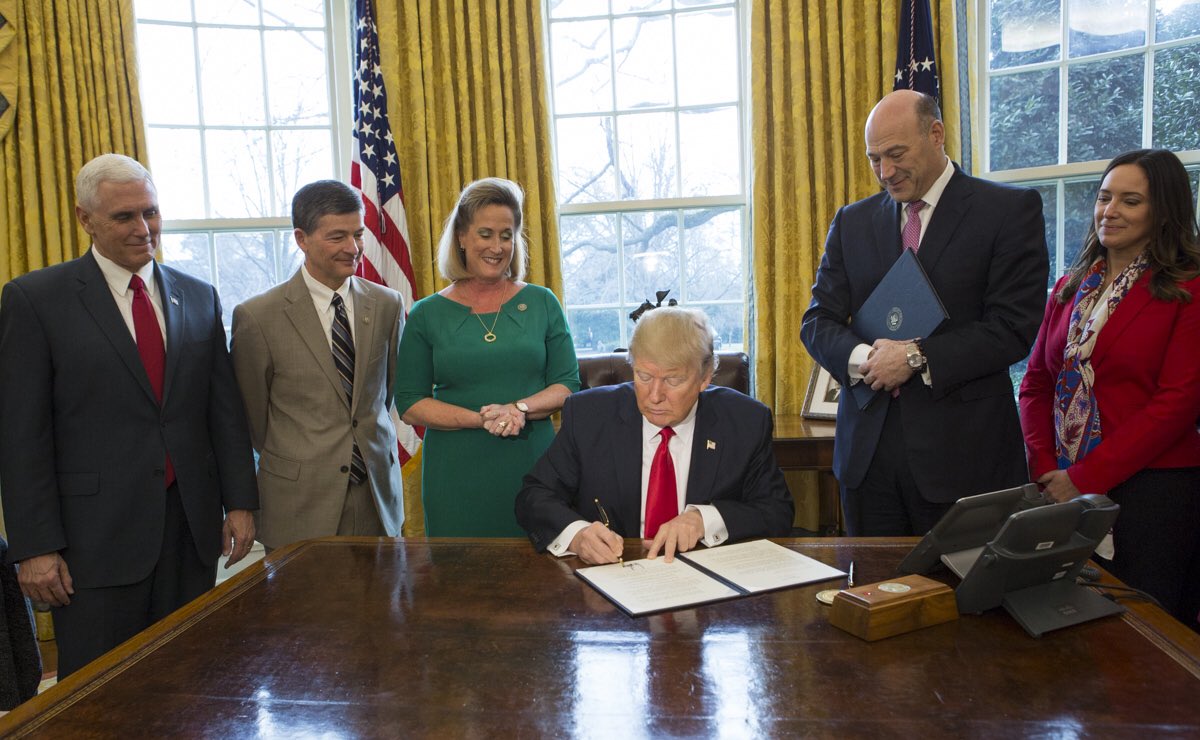
Six mechanics and vehicle owners walked free from federal prison cells on July 3 after President Trump signed their pardons, ending years of criminal prosecution for what amounted to basic car repairs. The White House called the actions a direct response to a weaponized justice system that turned everyday maintenance into a felony.
The pardons arrive alongside a sweeping policy reversal. Trump's "Freedom to Fix" executive order and new EPA guidance dismantle California's monopoly on aftermarket parts certification, restoring Americans' ability to repair their own vehicles without federal interference.
"It is my Great Honor to have just signed Pardons for six people who were persecuted by the Biden Administration, and were in, or being sent to, prison, for 'fixing their car,'" Trump wrote on Truth Social. "While I know this sounds ridiculous, it is nevertheless a fact, and part of the Weaponization and Stupidity that our Country had to endure during four long years of Sleepy Joe Biden. I AM SETTING THEM ALL FREE, RIGHT NOW!"
These individuals represent a broader pattern of enforcement that stretched environmental law beyond its intended scope. The White House released a list of 11 pardons, with nine involving Clean Air Act violations tied to emissions system modifications.
Troy Lake's case illustrates the human cost. The Wyoming diesel mechanic served seven months in federal prison for disabling emissions controls on at least 344 commercial trucks between January 2017 and December 2020. He received his pardon on November 7, 2025. Lake charged customers 2,500 dollars for repairs that manufacturer-authorized channels would have priced at 20,000 dollars.
"I'm grateful that President Trump has pardoned Troy Lake, a Wyoming constituent who was the victim of a weaponized Biden Justice Department that targeted him simply for keeping diesel engines in school buses, ambulances and fire trucks running in our tough western weather," said Sen. Cynthia Lummis, R-Wyo.
Mackenzie Spurlock, an Alaska mechanic and Air National Guard veteran, faced a different kind of intimidation. About 30 armed EPA agents conducted what Sen. Dan Sullivan, R-Alaska, described as a "military-style tactical raid" on her shop four years ago. Spurlock modified emissions controls to keep vehicles from shutting down in subzero temperatures.
The law itself contains exemptions for exactly these circumstances. The Clean Air Act explicitly allows actions to disable or bypass components for "necessary and temporary procedure to repair" when proper functioning is restored. Federal prosecutors stretched the statute to criminalize minor infractions anyway.
"If federal authorities run their theory to its logical conclusion, it produces the absurd result that driving a car with a check engine light is a felony," attorney Justin Savage stated in congressional testimony.
Even the Justice Department eventually acknowledged the overreach. In January 2026, the DOJ announced it would "exercise its enforcement discretion to no longer pursue criminal charges under the Clean Air Act based on allegations of tampering with onboard diagnostic devices in motor vehicles." The department cited "sound enforcement principles, efficient use of government resources, and avoiding overcriminalization of federal environmental law."
That policy shift followed a dramatic surge in prosecutions. Criminal cases involving aftermarket defeat devices jumped from one in 2020 to 16 in 2024 under the Biden administration, according to Savage's congressional testimony. The EPA's National Enforcement and Compliance Initiative finalized 189 defeat device cases totaling 61 million dollars in penalties between 2020 and 2023, with criminal cases accounting for about 9 percent of the total.
Trump formalized the reversal with his June 29 "Freedom to Fix" memorandum, directing the EPA to expand aftermarket parts access and deprioritize civil tampering enforcement. The administration followed through on July 1 with guidance affirming that manufacturers must provide the same service and repair information to consumers and independent shops as to franchised dealers.
"It came to my attention because I noticed they were arresting people for fixing their car," Trump said during an Oval Office news conference. "We rule by common sense."
In separate remarks at the same event, Trump added: "It means a lot to people that own vehicles, cars in particular, but cars and anything else. It's going to save them a lot of money, and they're going to be able to do it themselves."
EPA Administrator Lee Zeldin said the agency moved "at Trump speed" to implement the president's directive within two days rather than the allotted 30. "We are not going to be going after people who are fixing their own vehicle, like other administrations have," Zeldin said. "We're gonna break that monopoly, and no longer will CARB be the only third party certifier for these aftermarket parts."
Environmental groups defended the previous enforcement strategy. Former Environmental Integrity Project director Eric Schaeffer argued that "defeat devices dumped more than 570,000 tons of illegal nitrogen oxides into the atmosphere" between 2009 and 2019. The DOJ's explicit rejection of criminal prosecution for temporary repairs, while maintaining civil penalties for actual pollution, suggests the prior approach exceeded what was necessary.
The six pardons announced July 3 cover a wide range of defendants caught in the enforcement crackdown. Joshua Davis of Illinois faced a 2023 EPA settlement requiring him to stop selling aftermarket defeat devices and pay 600,000 dollars. Matt Geouge of North Carolina operated firms that grossed over 10 million dollars from device sales. Jonathan Achtemeier of Indiana tampered with monitoring devices on hundreds of vehicles nationwide. Tim Clancy, an Army veteran and small business owner, was convicted in Oregon.
Ryan Lalone, owner of Diesel Freak LLC in Michigan, and his employee Wade Lalone received pardons after being sentenced to one year probation, with their company fined 750,000 dollars for disabling emissions controls on semi-trucks. Barry Pierce, who served prison time for modifying trucks, and Aaron Rudolf, convicted of Clean Air Act violations, also received clemency.
Trump has issued more than 1,600 grants of clemency in his second term, with the bulk going to people charged in connection with the January 6, 2021 Capitol riot. These latest pardons clear the slate for individuals caught in what the White House called "crushing environmental regulations" that "killed vehicles but businesses too" under the previous administration.
For the mechanics and small business owners who lost time, money and freedom over routine repairs, the pardons offer more than legal relief. They restore a basic principle that Americans should be able to fix what they own without fearing federal prosecutors at their door.