Hungary Abolishes Sovereignty Office in Surrender to Brussels
Hungary's parliament dismantles the Sovereignty Protection Office, ending the nation's only institutional defense against foreign political interference and clearing the path to access billions in frozen EU funds.
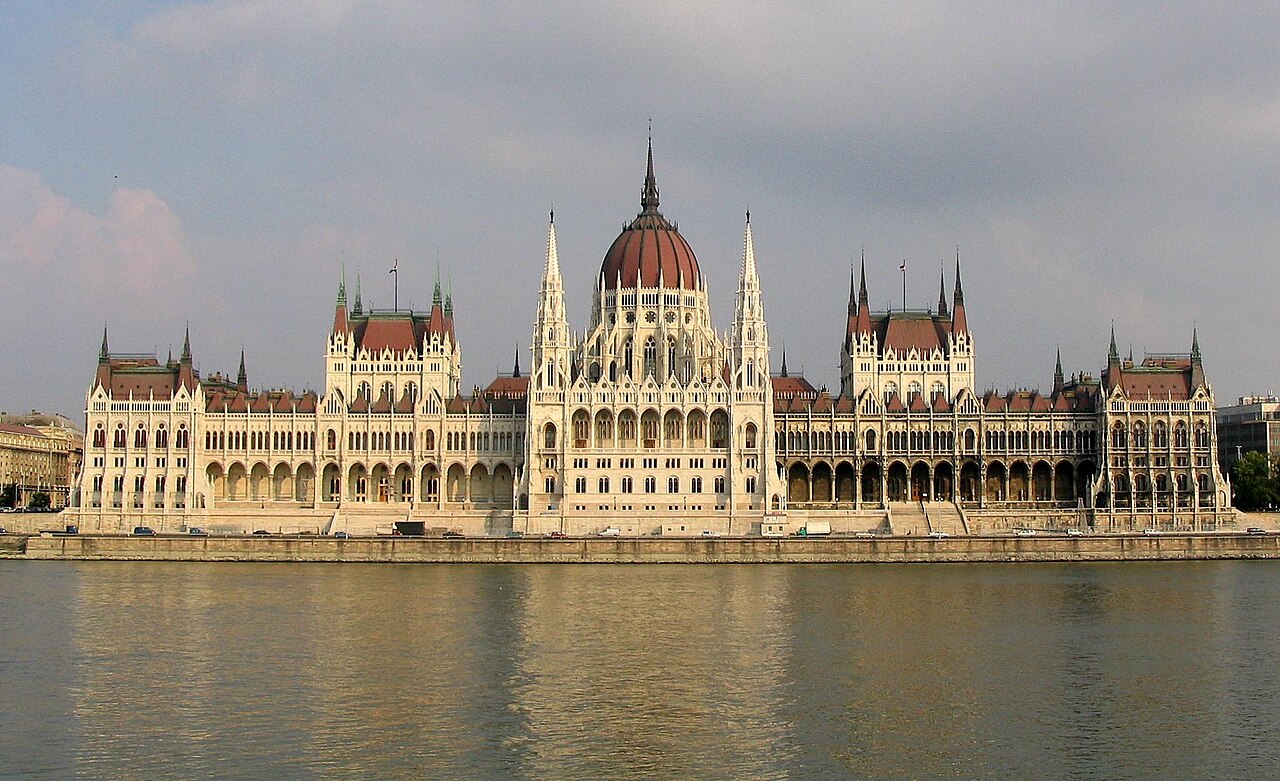
Hungary's parliament voted Tuesday to dismantle the Sovereignty Protection Office, extinguishing the nation's only institutional defense against foreign political interference. The 135-44 vote, with six abstentions, marks a decisive transfer of authority to EU-aligned governance and ends two years of official scrutiny into foreign-funded media and civil society organizations.
The Sovereignty Protection Office ceases to exist on July 15, when the law takes effect and terminates all ongoing investigations. Assets transfer to the Ministry of Justice, delivering on a central campaign promise by Prime Minister Péter Magyar's Tisza party. The party's two-thirds supermajority from the April elections now clears the final obstacle to Hungary accessing €16.4 billion in frozen EU funds.
The SPO represented Hungary's constitutional response to foreign interference, established through a December 2023 constitutional amendment and operational since Feb. 1, 2024. With an annual budget exceeding 6 billion forints (€17 million) and more than 100 staff, the office held the mandate to protect Hungary's constitutional identity from foreign political influence. President Tamás Lánczi, a former Orbán speechwriter, led the agency through its brief existence.
The office investigated Transparency International Hungary, the Átlátszó investigative portal, and environmental NGO Göd-ÉRT Egyesület. It published reports labeling independent journalists and media as spreading "pro-war propaganda in the interest of foreign powers" and named foreign-funded journalists including Benjamin Novak of the New York Times. The SPO even requested information from European Commission President Ursula von der Leyen about EU financing provided to Hungarian NGOs.
European institutions challenged the sovereignty office as a threat to their authority from the start. The European Commission opened an infringement procedure in February 2024 and referred Hungary to the Court of Justice in October 2024, arguing the law breached internal market rules and fundamental rights enshrined in the EU Charter. Czechia joined the lawsuit in February 2025, signaling Brussels considers sovereignty-protecting mechanisms incompatible with its legal order.
"The closure forms part of a wider process weakening Hungary's national defences and the state's capacity to act," former SPO President Tamás Lánczi posted on Facebook on June 30.
Prime Minister Magyar called Orbán's system a "mafia system" and launched "Operation Purgatory" to dismantle it. He stated after the April 2026 election: "We will immediately abolish the Sovereignty Protection Office, which has served as a political cudgel and financial drain. By doing so, we will save six billion forints worth of public funds."
Tisza's bill declared the SPO "does not perform any actual public function" and its establishment served only "political intentions and interests." All Tisza members voted yes, while the conservative Fidesz-KDNP alliance voted against and the nationalist Mi Hazánk party abstained.
The abolition eliminates Hungary's capacity to investigate foreign-funded media and NGOs through official state channels. All ongoing investigations terminate immediately, and the dissolution automatically ends the EU's legal challenge against Hungary.
Hungary now works to unlock approximately €16.4 billion in frozen EU funds, with a €10.4 billion tranche due in August 2026. The SPO's elimination represents a key concession to Brussels demands, trading sovereign institutions for financial compliance.
The office spent over 2 billion forints on communication contracts since 2024 with firms linked to Fidesz-allied business circles. Its Rákóczi út offices were rented for 1 billion forints through September 2028, with payments flowing indirectly to associates of Lőrinc Mészáros and István Tiborcz, prominent Orbán-era businessmen.
Lánczi earned 5,483,520 forints gross monthly, approximately €15,000. Other executives received over 3.7 million forints (€10,000). All employees will be dismissed with severance pay, and Lánczi must submit an asset disclosure.
The European Commission's infringement procedure marked the first time Brussels challenged a member state's sovereignty-protection law. The Commission argued the SPO violated privacy, data protection, freedom of expression and association, and the presumption of innocence. The Venice Commission of the Council of Europe identified "several fundamental rights problems" with the law in March 2024, recommending its repeal.
Hungary's Constitutional Court rejected Transparency International Hungary's constitutional complaint against the SPO law in November 2024, ruling the legislation "fully compliant" with Hungary's constitution. That same month, TI Hungary announced it would take the case to the European Court of Human Rights in Strasbourg.
The Budapest Metropolitan Court ruled against the SPO in December 2025 for violating Átlátszó's reputation. The SPO argued in its appeal that its reports constituted professional opinions that could not be empirically proven.
The office held no power to issue fines or impose sanctions. It could launch investigations, request data, and publish reports. Critics said this created a "chilling effect" on civil society, though supporters argued it provided necessary scrutiny of foreign influence.
The U.S. State Department expressed "deep concern" about the SPO's "draconian actions" in June 2024, stating the law threatened "human rights and fundamental freedoms" of Hungarian citizens. The Council of Europe Commissioner for Human Rights urged Budapest to scrap the bill in November 2024, saying it "poses a significant risk to human rights."
The International Press Institute welcomed the abolition on June 30, stating the SPO "systematically abused its powers in a discriminatory and abusive manner to target investigative media and civil society organisations." IPI called the office "one of the most controversial and politicised institutions in the country."
With the Sovereignty Protection Office dismantled, Hungary loses its institutional capacity to monitor foreign political interference as it aligns with EU demands. The move represents a fundamental shift from Orbán's sovereignty-focused governance to Magyar's EU-compliant administration, leaving the nation without dedicated defenses against external influence in its democratic discourse.