Newsom Turns Independence Day Into Ballot Seizure Campaign
California Governor Gavin Newsom uses July 4 speech to escalate felony penalties for ballot seizures built on an investigation that found zero evidence of fraud, drawing scrutiny from legal experts and political observers.
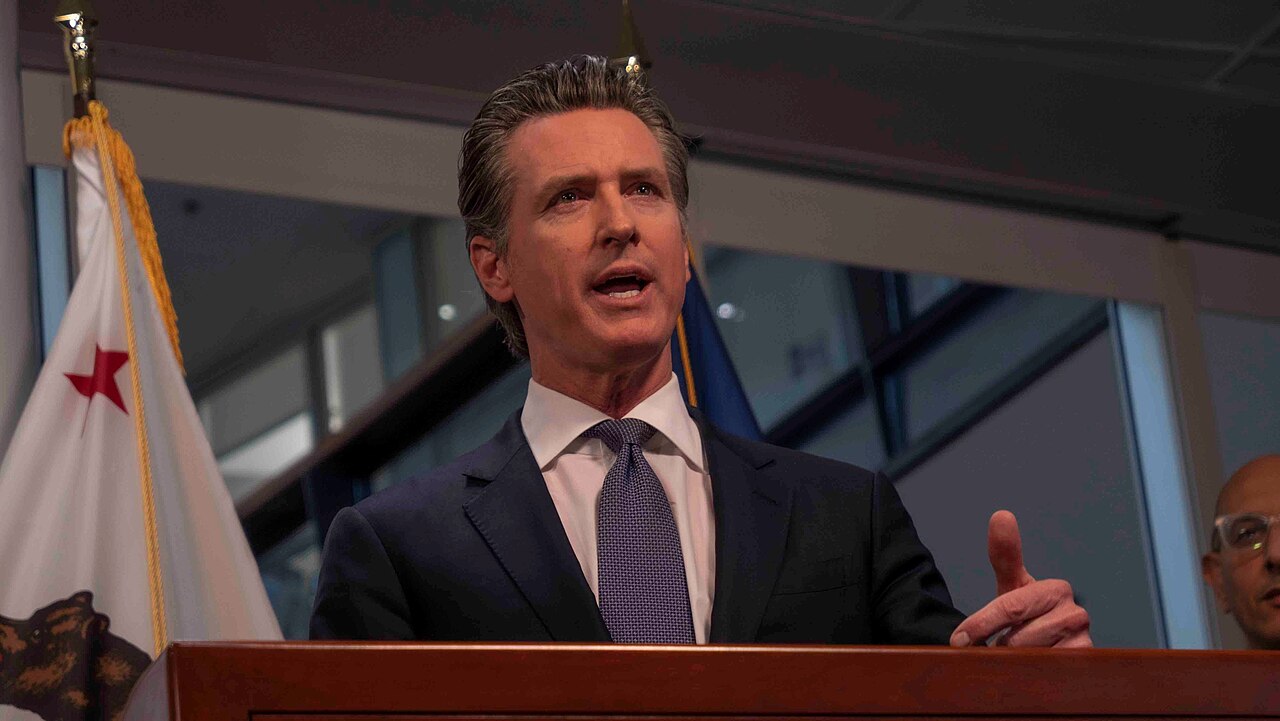
California Governor Gavin Newsom marked America's 250th birthday with a political announcement, escalating felony penalties for ballot seizures built on an investigation that produced zero evidence of fraud. The July 4 speech weaponizes a manufactured crisis for national exposure ahead of the governor's expected 2028 presidential bid. Officials who once dismissed election integrity concerns now frame the issue as an existential threat.
Newsom unveiled new legislation targeting what he calls "Trump's schemes" during the Independence Day address. He signed SB 73 just 38 days ago, a law that already makes unauthorized ballot seizures a felony punishable by up to three years in prison and a $1,000 fine. The governor's office is pushing additional penalties through the gut-and-amend process, bypassing formal legislative deadlines that passed weeks ago.
The crisis Newsom describes stems from Riverside County Sheriff Chad Bianco's seizure of approximately 650,000 ballots last February and March. Bianco acted on claims from the Riverside Election Integrity Team, a conservative activist group that alleged a 45,896-vote discrepancy in Proposition 50 results. Registrar of Voters Art Tinoco stated the actual discrepancy was 103 votes.
"This is not the final word on election integrity," Newsom said when signing SB 73 in May. The foreshadowing proved accurate. Bianco, who finished fourth in California's June gubernatorial primary with 11 percent of the vote, has investigated election irregularities since late 2022. CalMatters reported the sheriff has not found any mass fraud in Riverside County elections.
The legal foundation for Bianco's seizure crumbles under scrutiny. Search warrants identified no specific crime and lacked review from the Riverside County District Attorney's office. No prosecutor signed the affidavits. Judge Jay Kiel, whom Bianco personally endorsed, signed the warrants.
Loyola Law School professor Justin Levitt called the situation alarming. Levitt, a former Department of Justice elections official, stated, "The more information that comes to light about this, the more Sheriff Bianco has proven himself to not just be out of line, but way out of line." He described the warrants' failure to articulate what felony was being investigated as "dangerous and glaring."
The California Supreme Court unanimously halted Bianco's investigation on April 8. Former federal prosecutor Laurie Levenson stated she saw "a lot of speculation and accusations by Bianco but not the evidence that supports probable cause."
State Senator Tom Umberg, a former federal prosecutor, added his concerns. He stated he had "never seen warrants before that didn't identify a specific law investigators suspected may have been broken, nor did they present evidence that investigators had verified the reliability of the group making the allegations."
Attorney General Rob Bonta accused Bianco of defying direct orders. Bonta stated the sheriff "willfully defied my direct orders, seized 650,000 ballots, misused criminal investigatory tools and created a constitutional emergency in the process." The broken chain of custody rendered the ballots unusable for future investigations.
Newsom's July 4 speech frames the legislation as defense against federal overreach. Excerpts obtained by the Washington Examiner reveal his rhetoric: "On America's 250th birthday, we need a declaration of election independence — a proclamation of freedom from the manipulators and deniers, from the threat of imprisonment for refusing to go along with Trump's schemes."
The governor's office simultaneously mocked President Trump's July 4 plans on social media with the caption "Long speech, small crowd..." Newsom faces term limits in California. He is widely expected to launch a presidential campaign in 2028.
The federal precedent Newsom cites differs significantly from Bianco's actions. The FBI seized 2020 election ballots cast in Fulton County, Georgia, earlier this year and subpoenaed 2020 ballots and elections materials from Maricopa County, Arizona. The Department of Justice has sued 30 states for noncompliance with election record demands. Bianco's operation was based on claims proven false within days.
State Senator Sabrina Cervantes acknowledged the damage. As SB 73's lead author, she stated, "We have seen an incident in my own home county of Riverside where ballots were seized and the chain of custody was broken." She represents the district where Bianco conducted his investigation.
Kim Alexander, president of the California Voter Foundation, emphasized the uniqueness of Bianco's action. She stated such a seizure had never happened anywhere in the country before.
The political theater accompanies substantial budget allocations for election infrastructure. Lawmakers approved $29 million to modernize ballot counting, $5 million for county voter outreach, $5 million for statewide voter outreach, and $750,000 to combat misinformation.
Democrats who spent years dismissing election integrity concerns now create felony penalties for actions that, in Bianco's case, were legally deficient and factually baseless. The governor who warned against extremists chasing conspiracy theories now escalates penalties based on an investigation that found nothing after years of searching.
Voters in Riverside County watched 650,000 of their ballots vanish into a legal black hole. They trusted their sheriff to protect their votes. Instead, he handed them to a political machine that needed a crisis.