Rome Book Fair's Political Oath Sparks Free Speech Battle
Italian publisher Paper First withdraws from Rome's premier book fair rather than sign an anti-fascist declaration, igniting a national debate over ideological conformity and freedom of expression.
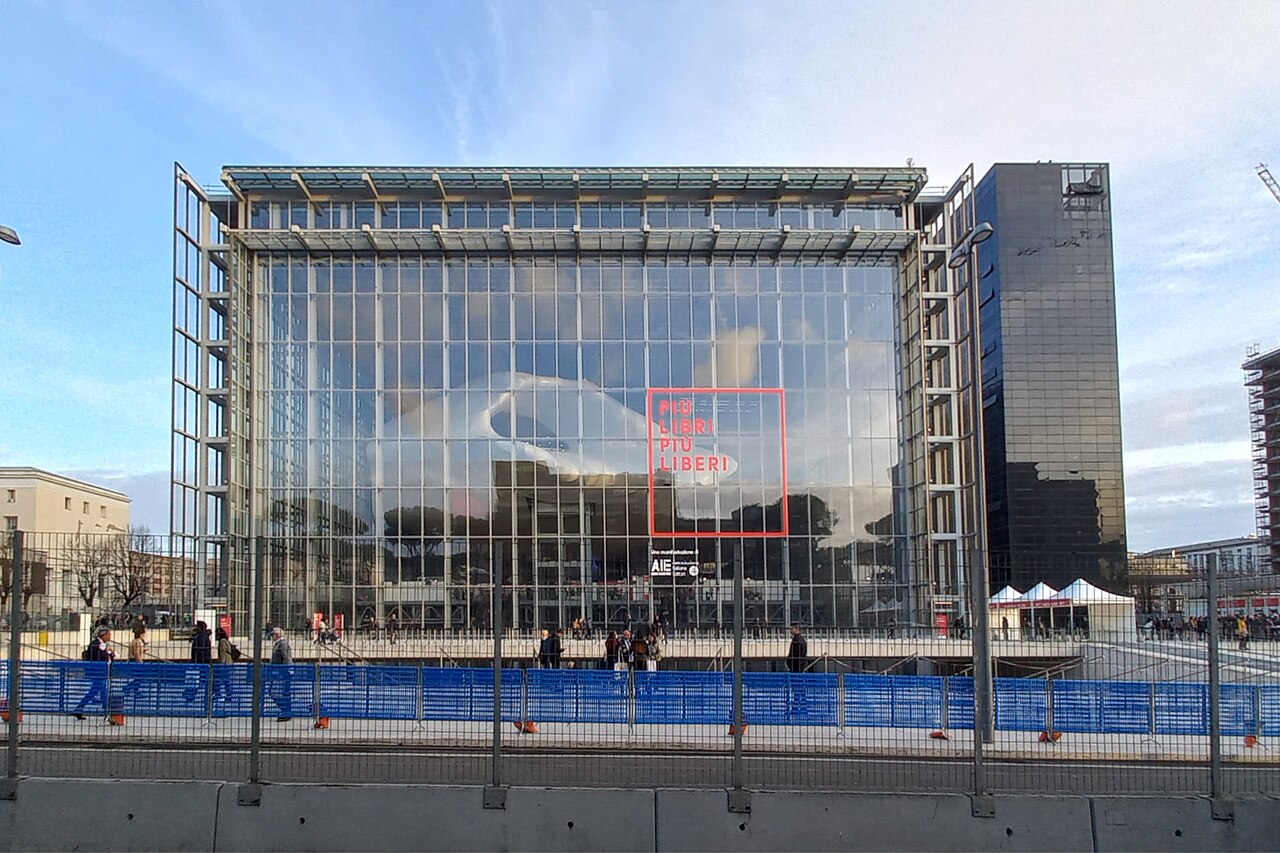
A left-leaning publisher founded by Italy's most prominent independent newspaper has walked away from Rome's premier literary fair. Paper First will not exhibit this December, refusing to sign what critics are calling a "certificate of political purity." The standoff exposes how cultural institutions across Europe are replacing open debate with ideological litmus tests.
CEO Cinzia Monteverdi made the announcement June 26. Paper First, born from Il Fatto Quotidiano, routinely challenges both right-wing and center-left governments. This time, the publisher drew a line at a declaration demanding exhibitors "recognize and share the anti-fascist values underlying the democratic order of the Italian Constitution."
"Paper First will not be at the fair, not because it has been excluded, but because it refuses to sign a declaration that it considers alien to the liberal and democratic tradition it is supposed to defend," Monteverdi said.
Her refusal crosses ideological lines. Opposition to the requirement has united left-leaning publishers and conservative leaders against what they call ideological censorship.
Every publisher applying for space at Più Libri Più Liberi must now sign the document. The fair's online application system blocks any submission that does not accept the clauses. Publishers cannot buy exhibition space without agreeing. Organizers acknowledge the signature "does not involve checking publisher catalogues or preventive selection of titles." The system judges ideological conformity, not actual conduct.
The declaration appeared after last year's controversy over Passaggio al Bosco, a small publisher specializing in conservative and right-wing intellectual history. The publisher's catalogue featured works by Ernst Jünger, Armin Mohler, Romanian fascist leader Corneliu Zelea Codreanu, and Leon Degrelle, founder of the Walloon Division of the Waffen SS.
More than 80 authors and intellectuals signed an open letter demanding the publisher be excluded from the 2025 edition. The Italian Publishers Association rejected the appeal. The contested stand became the most visited among 604 exhibitors.
The 2025 fair already operated under Article 24, which required adherence to the Italian Constitution, EU Charter of Fundamental Rights, and Universal Declaration of Human Rights. The new declaration went further.
Prime Minister Giorgia Meloni condemned the requirement on June 14, calling it "censorship" and "incompatible with any democratic society."
"This is how the Left conceives freedom of thought: you are free, but only if you say what they allow you to say, if you think what they think, if you read what they consider appropriate," Meloni said.
Culture Minister Alessandro Giuli welcomed the fair's announced "further careful reflection," calling the declaration "anachronistic." He argued that existing law already protects these values.
"Our civil rights, our freedom of expression and our popular sovereignty entrusted to the centrality of Parliament are already more than well defended by the 1948 Constitutional Charter," Giuli stated.
Deputy Prime Minister Antonio Tajani weighed in. "I am anti-fascist myself, but no one should be branded a fascist for holding different views," he said.
Justice Minister Carlo Nordio pointed to a bitter irony. Italy's penal code, signed by Mussolini, remains in force unchanged while publishers face mandatory anti-fascist pledges.
Intellectual opposition extends beyond government figures. Historians Massimo Cacciari and Luciano Canfora, journalist Paolo Mieli, and editor Giuliano Ferrara all condemned the declaration as excessive for a trade event.
Il Fatto Quotidiano columnist Alessio Mannino wrote that anti-fascism loses its meaning "when it becomes a fascism of opposite sign, that compresses freedom."
Even Roberto Saviano, typically alarmist about right-wing threats, opposed the campaign to exclude Passaggio al Bosco. "Invoking sabotage is a slippery slope, I'm not afraid of books," Saviano said.
Fair organizers rejected the censorship charge. They called the declaration "a need for clarity and unity" and asserted it was "based on institutional and universal references, free of partisan visions." But they acknowledged the declaration had not been understood that way. The organizers announced "further careful reflection" following the political controversy.
The European Conservative drew a sharp distinction. "The prohibition of the glorification of crimes, incitement to hatred, or totalitarian propaganda is already regulated by law, but the requirement for a prior declaration of allegiance follows a different logic, since it does not penalise behaviour but demands adherence or authorisation."
The 25th edition is scheduled for December 4-8 at La Nuvola in Rome's EUR district. The fair receives public funding from the Ministry of Culture, Lazio Region, Rome Capital, Rome Chamber of Commerce, and ICE-Agency. A new curatorial team led by writer Paolo Di Paolo is guiding the event through a "season of strategic renewal."
Every publisher who wants to exhibit at Italy's largest independent book fair must now pass through an ideological checkpoint. When cultural institutions begin demanding political oaths, freedom of expression ceases to be a right. It becomes a privilege granted by those in power.