Supreme Court Ends 91 Years of Unaccountable Bureaucratic Power
The Supreme Court overturned a New Deal-era precedent in a 6-3 ruling, restoring presidential removal authority over independent agencies and ending decades of unaccountable bureaucratic power.
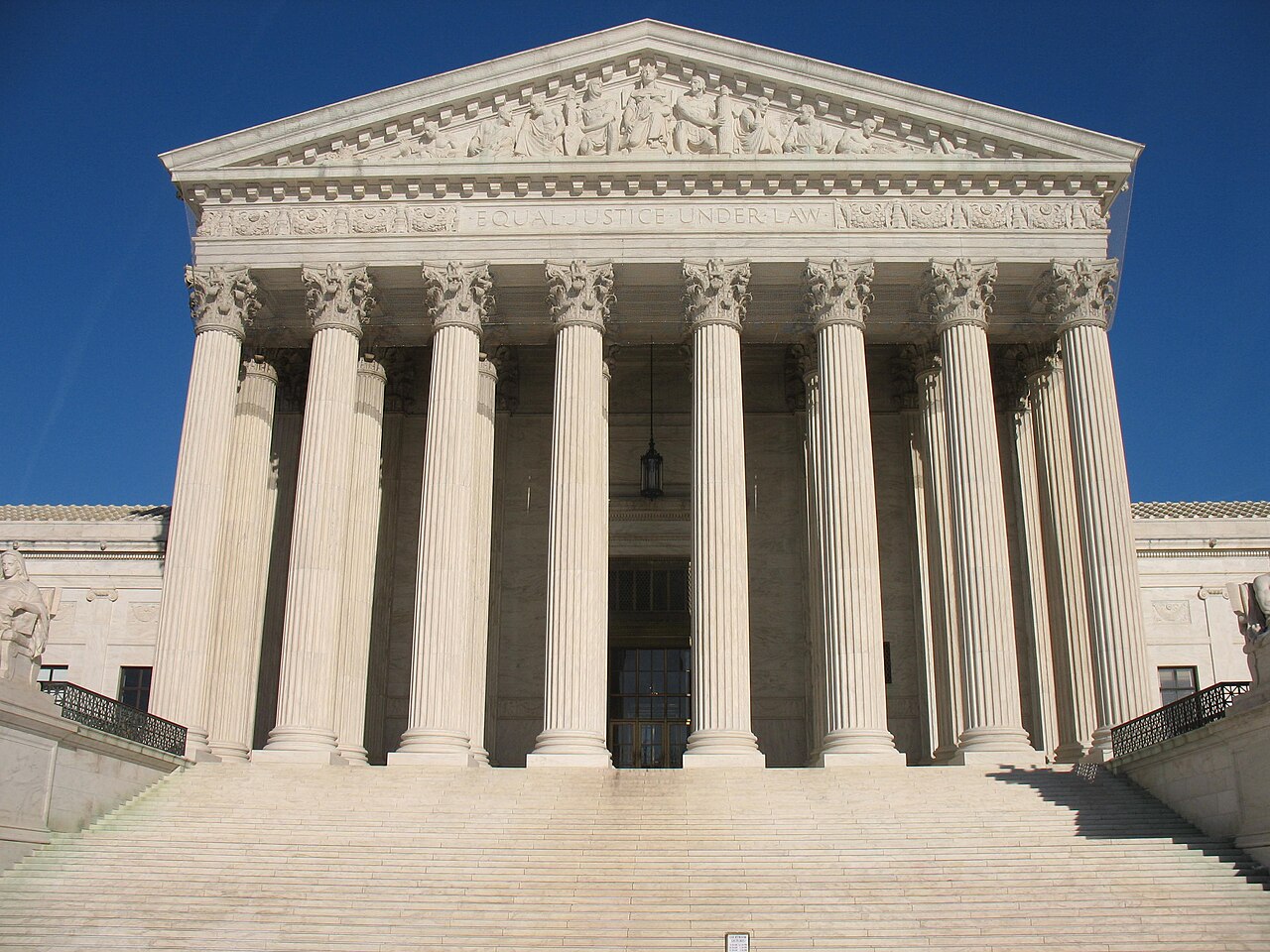
The Supreme Court on Monday ended 91 years of unaccountable bureaucratic power. In a 6-3 ruling, the justices overturned a New Deal-era precedent that had created independent agencies beyond presidential control. Chief Justice John Roberts delivered the culmination of his four-decade campaign to return removal authority over the administrative state to the president. The Constitution holds only one elected official responsible for executing federal law.
"Our Constitution creates three branches, but only one president," Roberts wrote in the 36-page majority opinion in Trump v. Slaughter. "Subordinates who exercise the President's power are subject to removal by him. Then, and only then, can they remain accountable to the President, and the President to the people."
The decision overturns Humphrey's Executor v. United States, a 1935 unanimous ruling that insulated Federal Trade Commission commissioners from presidential removal. Roberts called that precedent's characterization of FTC duties as "quasi-legislative and quasi-judicial" rather than executive a "highly circumscribed and almost fictional view." The FTC today enforces and administers roughly 80 statutes covering nearly every facet of the economy. The agency writes rules, adjudicates disputes, and files civil suits.
Roberts pursued this constitutional correction through strategic patience. He began as a young lawyer in the Reagan White House counsel's office in 1983, writing that "the time is ripe to reconsider the constitutional anomaly of independent agencies." He chipped away at Humphrey's Executor through incremental rulings in 2010, 2020, and 2021 before delivering the final blow with a 6-3 conservative supermajority.
The immediate effect gives President Trump a 2-0 Republican majority at the FTC under Chairman Andrew Ferguson. Trump fired Democratic commissioners Rebecca Slaughter and Alvaro Bedoya in March 2025 without citing statutory cause. Lower courts blocked the dismissals until Monday's ruling. This outcome applies equally to any president, not just the current one.
"This isn't about Trump's power so much as it is about the power of the president generally," said Carrie Severino, president of the Judicial Crisis Network. "The same authority over the executive branch in this case is going to apply to the next president as well."
The ruling potentially affects roughly two dozen multi-member agencies. The National Labor Relations Board, Securities and Exchange Commission, and Consumer Product Safety Commission are among them. Congress can still require bipartisan composition and staggered terms. But it cannot exempt officers who exercise executive power from presidential removal.
The constitutional principle is straightforward. Hans von Spakovsky of the Heritage Foundation compared it to corporate governance: "The Constitution says the president is the head of the executive branch. That means, just like the CEO of a big corporation, they get to supervise and run the entire corporation, or in this case, the entire executive branch, and you can't have Congress taking parts of that away from him."
In a related 5-4 decision the same day, the Court blocked Trump's attempt to fire Federal Reserve Governor Lisa Cook for now. The Fed received a carve-out based on its unique historical tradition dating to the First and Second Banks of the United States. Roberts noted that monetary policy differs fundamentally from antitrust enforcement or securities regulation.
Justice Neil Gorsuch praised the Slaughter ruling as "taking a notable step back toward the Constitution" but warned in a 16-page solo concurrence that the administrative state's powers persist. "The fourth branch's powers still exist; they have just been reassigned to the President," Gorsuch wrote. He argued the next step must be restoring legislative power to Congress and judicial power to the courts.
Justice Sonia Sotomayor read her 49-page dissent from the bench, a rare occurrence signaling profound disagreement. She called the decision "grievously wrong." She claimed it gives the president power "unknown even to the English Crown against which the Founders revolted."
Rebecca Slaughter, the fired commissioner whose name graces the case title, said in an interview with NPR that independence allows boards and commissions to make decisions based on merits and facts, protecting the interests of the American people. But the constitutional reality is simpler. When commissioners serve seven-year staggered terms and can only be removed for inefficiency, neglect of duty, or malfeasance in office, they answer to no one voters can replace. The Framers vested executive power in one president precisely to ensure accountability.
Stephen Vladeck, a Georgetown Law professor, acknowledged the ruling's significance. "There's no sugar-coating Slaughter," he wrote. "It's an enormously important ruling (far more important than the other three decisions handed down today). It's a huge win for Trump/the executive. And it's going to have massive ramifications for the functioning of the government long after Trump is gone."
The Court did not invent presidential authority Monday. It reclaimed what Congress spent 91 years slowly carving away. The decision restores the Founders' vision of a single elected executive accountable to the people for every exercise of federal power.