Supreme Court Rules States May Exclude Transgender Athletes From Women's Sports
The Supreme Court ruled 6-3 that states may ban transgender athletes from girls' and women's sports teams, affirming biological sex definitions in Title IX while leaving further legal battles ahead.
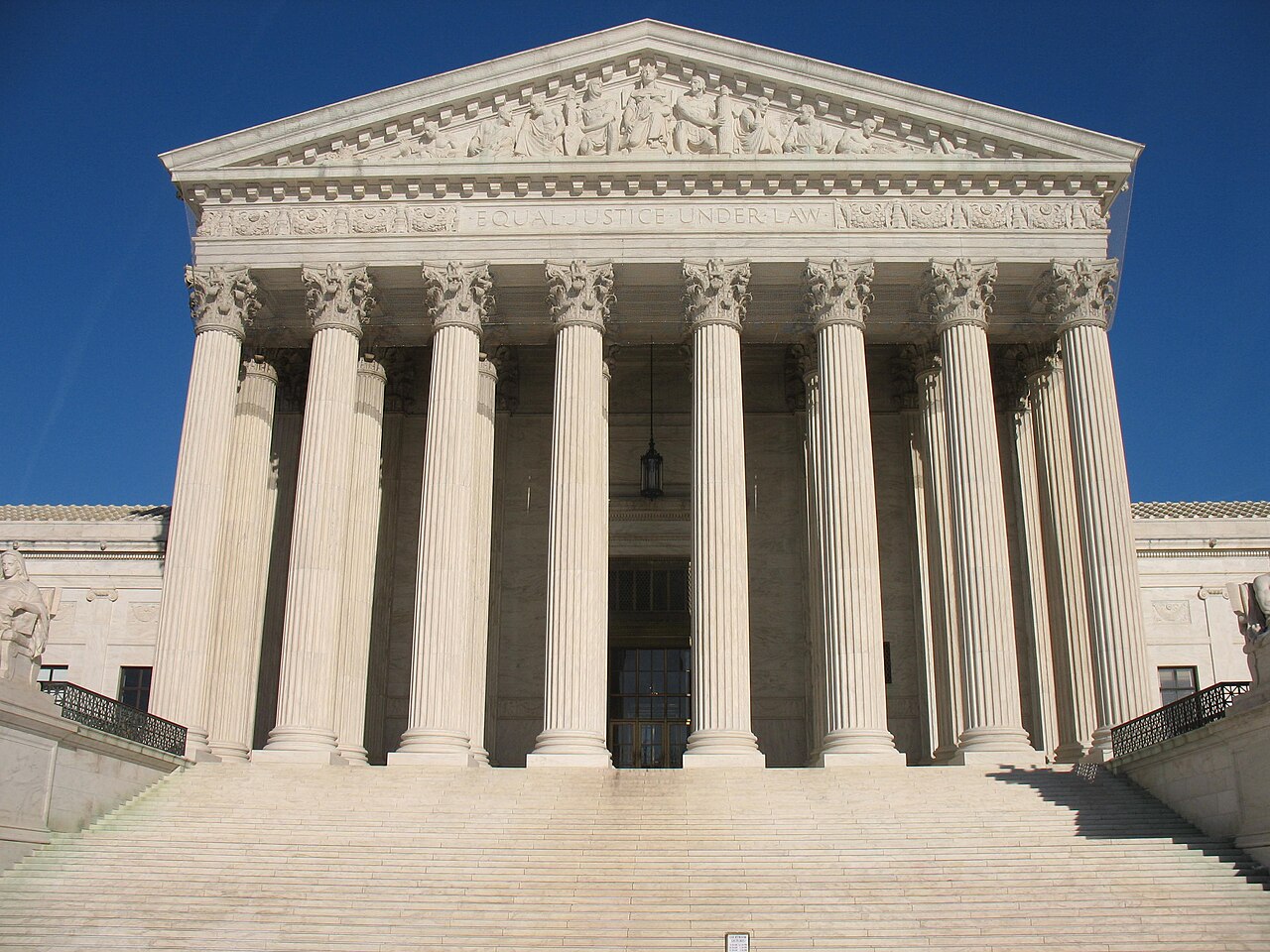
For millions of girls and women who compete in athletics across the United States, the Supreme Court delivered a clear ruling on June 30: states may preserve women's sports for biological females.
In a 6-3 decision in West Virginia v. B.P.J., the Court held that states can limit participation in girls' and women's teams based on biological sex to ensure safety and competitive fairness. The ruling marks the first time the nation's highest court has confronted the question of gender identity in sports.
Justice Brett Kavanaugh authored the majority opinion, tracing the original intent of Title IX when Congress enacted it in 1972. The law permitted separate athletic teams for "members of each sex," Kavanaugh wrote, and the Court declined to upend that framework.
"The Constitution and Title IX do not require an overhaul of women's and girls' sports throughout America," Kavanaugh wrote.
The case traces back to a West Virginia high school track meet. Becky Pepper-Jackson, a 15-year-old transgender student, won the state girls' shot put championship in May, throwing more than 2 feet farther than the runner-up. That victory sparked the legal challenge that reached the nation's highest court.
The decision carries weight far beyond one state's track field. Title IX protections have grown girls' sports participation from 300,000 to 3.4 million since 1972, and the Court's ruling safeguards those hard-won gains for the millions of female athletes who now compete.
Public opinion tracks with the justices. Two-thirds of Americans support bans on transgender athletes in women's sports, including 44 percent of Democrats, according to an April Reuters/Ipsos poll. A 2025 New York Times poll found nearly 8 in 10 Americans oppose biological males competing in women's sports.
"Consistent with Title IX and the Equal Protection Clause, we hold that the States may maintain women's and girls' sports for biological females," Kavanaugh stated. "They may determine eligibility for women's and girls' sports based on biological sex."
Justice Clarence Thomas wrote a concurrence that drew a sharper line. "Men and boys with gender dysphoria are not women or girls, even if they believe that they are," Thomas wrote. "Sex is an immutable, 'biological' characteristic; it is binary."
Education Secretary Linda McMahon hailed the ruling as vindication against what she called progressive overreach. "Today's ruling affirms the common sense right of states to prohibit men from competing in women's sports," McMahon said. "For years, ideologues distorted Title IX to advance a radical transgender agenda, subjecting women to immeasurable harm."
West Virginia Attorney General John McCuskey called it "a monumental victory for every female athlete who has ever competed, or dreamed of competing, on a fair and safe playing field."
Yet the legal battle extends well past West Virginia. Kavanaugh included a footnote that explicitly left open whether states currently allowing transgender athletes may continue to do so. The ruling grants states permission to ban transgender athletes; it does not mandate a nationwide prohibition.
Twenty-three states lack bans on transgender athletes in women's sports. Twenty-two of those states have laws requiring the inclusion of transgender athletes, creating a patchwork of policies across the country.
Jonathan Adler, a professor at William & Mary Law School, pointed to the Court's deliberate restraint. "It was not deciding the question of whether — which is pending in some lower courts — or not there could be a Title IX violation if a state or school fails to exclude biological males from female sports in certain circumstances," Adler said at a July Federalist Society panel.
Conservative legal groups have already pressed forward with new challenges. The Alliance Defending Freedom filed K.M.K. v. Washington Interscholastic Activities Association on June 9, alleging that a 15-year-old girl was sexually assaulted by a male athlete she unknowingly wrestled in a girls' tournament. The lawsuit targets Washington's inclusive sports policy.
Kristen Waggoner, ADF's CEO, declared victory while signaling further action. "Women's sports win 2-0 at SCOTUS! Blue states with boys on girls' podiums… you're next," Waggoner posted on social media following the ruling.
Additional transgender-related cases are already working their way to the Supreme Court, according to legal experts. The Department of Justice is suing California, Minnesota, Maine and other states over their transgender athlete policies. Colorado voters will decide a November ballot measure that could mandate biological sex categories for school sports.
The ruling mirrors international trends. The International Olympic Committee announced in March that women's sports would be restricted to "biological females." NCAA President Charlie Baker testified that fewer than 10 out of 510,000 college athletes are known to be transgender.
Twenty-seven states now have bans on transgender athletes in women's sports, and the Supreme Court's decision provides constitutional cover for their enforcement. The 6-3 split on Equal Protection fell along ideological lines, with Justices Sonia Sotomayor, Elena Kagan and Ketanji Brown Jackson dissenting.
The decision represents a significant victory for those advocating preservation of women's sports categories based on biological sex against what critics call the "transgender industrial complex." With lower court cases pending and new lawsuits emerging, the legal conflict over gender identity in athletics continues despite the Supreme Court's clear statement on biological reality.