Supreme Court Upholds Birthright Citizenship, Conservatives Vow Legislative Fight
The Supreme Court's 6-3 ruling preserving birthright citizenship sparks immediate legislative action from Republicans, who cite constitutional concerns and national security risks as they push alternative statutory measures.
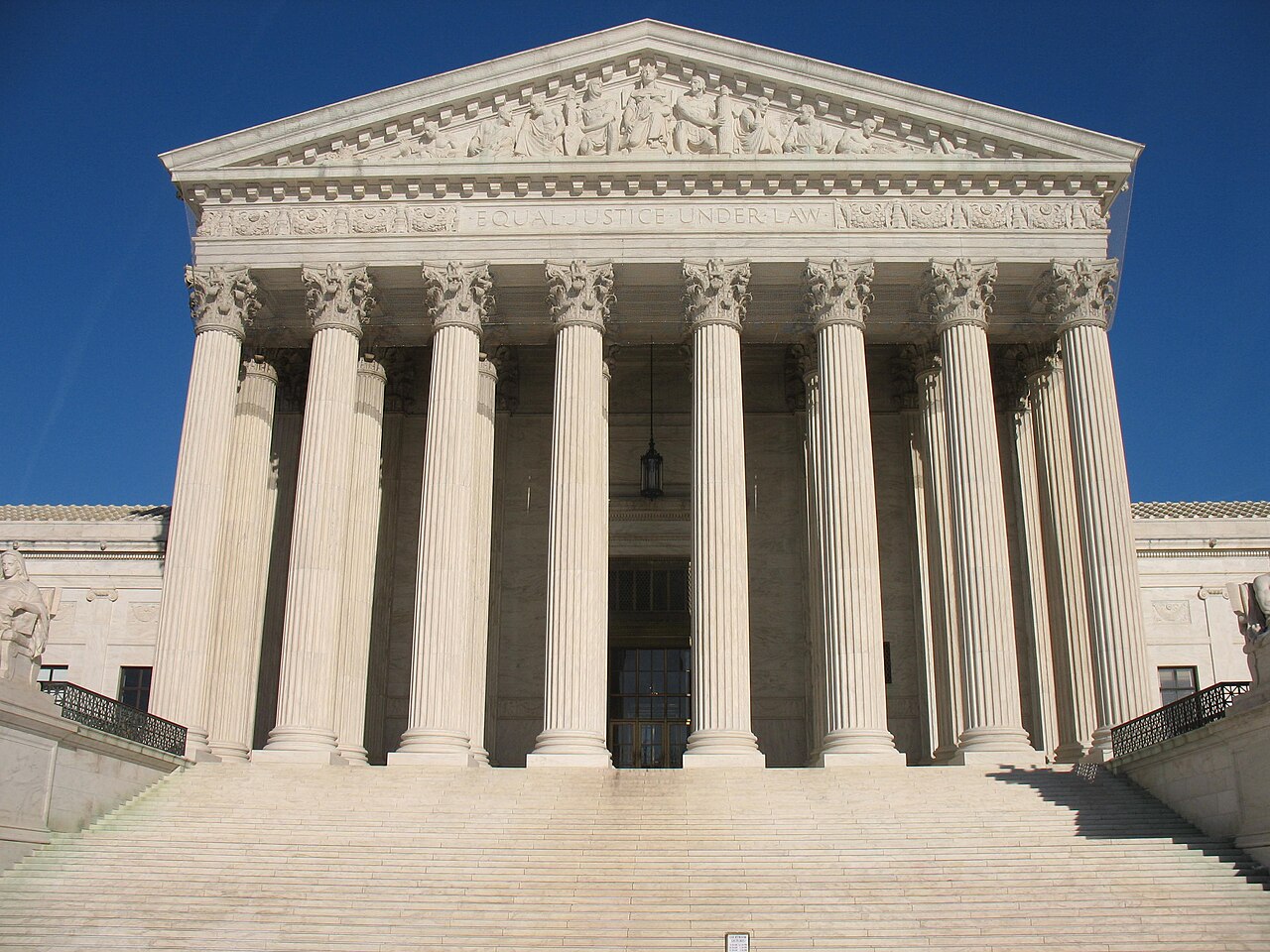
Justice Clarence Thomas called the Supreme Court's decision to uphold birthright citizenship a "devaluation of American citizenship" that ignores the Constitution's original intent. In a 91-page dissent joined by Justice Neil Gorsuch, Thomas argued the majority rewrote the 14th Amendment to grant automatic citizenship to children of foreign nationals. The 6-3 ruling, he contended, creates a loophole that rewards illegal immigration and birth tourism.
"Today's opinion devalues that citizenship," Thomas wrote. "I am not sure that today's opinion will stand the test of time."
The conservative justices argue the majority opinion in Trump v. Barbara ignores the 14th Amendment's requirement that citizenship applies only to those "subject to the jurisdiction" of the United States through domicile and allegiance. Foreign temporary visitors and undocumented immigrants lack those constitutional qualifications, they assert. The ruling, in their view, represents a historical misreading of the document's original purpose.
Thomas traced the Citizenship Clause to its Reconstruction-era origins, writing that the provision was "designed and understood to secure equal rights for the freed blacks but has instead been repurposed for political projects that the Reconstruction Congress did not support." He argued the Civil Rights Act and 14th Amendment guaranteed citizenship only to persons born and domiciled in the United States regardless of race, not to those merely present on U.S. soil.
The practical consequences warned by the dissenting justices extend beyond legal theory. Justice Samuel Alito wrote that the ruling "preserves a powerful incentive to enter or remain in this country illegally." He described a hypothetical national security nightmare where a child born to foreign nationals from an adversarial power could be "inculcated with hatred of this country" and plot against it while enjoying U.S. citizenship protections.
Justice Brett Kavanaugh provided conservatives a legislative roadmap in his concurrence. He stated Congress "could — consistent with the Fourteenth Amendment — amend §1401(a) or otherwise enact new legislation establishing exceptions to birthright citizenship for children born to foreign citizens unlawfully or temporarily in the country." Republicans immediately seized this opening, launching a legislative offensive to achieve through statute what the Court rejected through executive order.
Senator Bernie Moreno of Ohio reintroduced the Immigration Stabilization Act of 2026, which includes provisions restricting birthright citizenship. Representative Andy Ogles of Tennessee introduced the "Anchors Away Act" to make pregnant unmarried foreigners inadmissible. Senator Tim Scott of South Carolina is drafting birth-tourism-specific legislation. These bills follow Senator Rand Paul's constitutional amendment introduced in April seeking to limit citizenship to children of legal residents.
The executive branch is already fighting back against the Court's ruling. Deputy Attorney General Colin McDonald directed U.S. attorneys to "prioritize the investigation and prosecution of birth tourism schemes." The Justice Department cited three recent prosecutions, including the 2024 conviction of Michael Wei Yueh Liu and Jing Dong, who ran the USA Happy Baby operation charging Chinese clients tens of thousands of dollars for birth tourism services.
Homeland Security Secretary Markwayne Mullin announced plans to restrict travel visas for women late in pregnancy, citing national security and infant health concerns. These enforcement actions target what immigration experts estimate as 5,000 to 10,000 annual birth tourism cases, though some organizations claim the number reaches 33,000.
The human scale of the issue draws sharp focus from the data. Approximately 245,000 babies were born to both parents without full legal status in 2023, according to Pew Research data. Another 15,000 were born to mothers legally but temporarily present. The Migration Policy Institute estimates that 255,000 children born on U.S. soil annually would start life without citizenship if birthright citizenship were repealed for children of unauthorized immigrants.
Chief Justice John Roberts wrote the majority opinion, joined by Justices Sonia Sotomayor, Elena Kagan, Amy Coney Barrett and Ketanji Brown Jackson. Roberts stated the Court was keeping the promise that citizenship "was the right to have rights — to freely participate in our political community." Justice Ketanji Brown Jackson directly challenged Thomas's race-based argument, saying his "narrow vision of the Fourteenth Amendment bears little relationship to the history of its ratification."
The ruling strikes down Executive Order 14160, which President Trump signed on Jan. 20, 2025, to deny birthright citizenship to children of parents unlawfully or temporarily present when the father is not a citizen or lawful permanent resident. U.S. District Judge Joseph Laplante blocked the order in February 2025, leading to the Supreme Court appeal.
Thomas's dissent provides the constitutional foundation for future challenges. He argued foreign temporary visitors "were attached to their home country, lacked similar bonds to this country, and would not be called upon in time of war." Americans, he wrote, "believed that citizens were the people who called a place home."
With Kavanaugh's explicit statutory roadmap and Republican legislative momentum, the Supreme Court's rejection of the executive order has become a catalyst for congressional action. The ruling ensures birthright citizenship remains a central issue in the immigration debate. For millions of families who built their lives within American borders, the question of what it means to belong remains as urgent as ever.