OpenAI CFO Warns $1.5 Trillion in Computing Pledges Outrun Revenue
OpenAI's CFO warns the company may not be able to pay massive computing commitments as revenue targets are missed, Microsoft ends exclusivity, and board scrutiny intensifies over trillions in spending pledges.
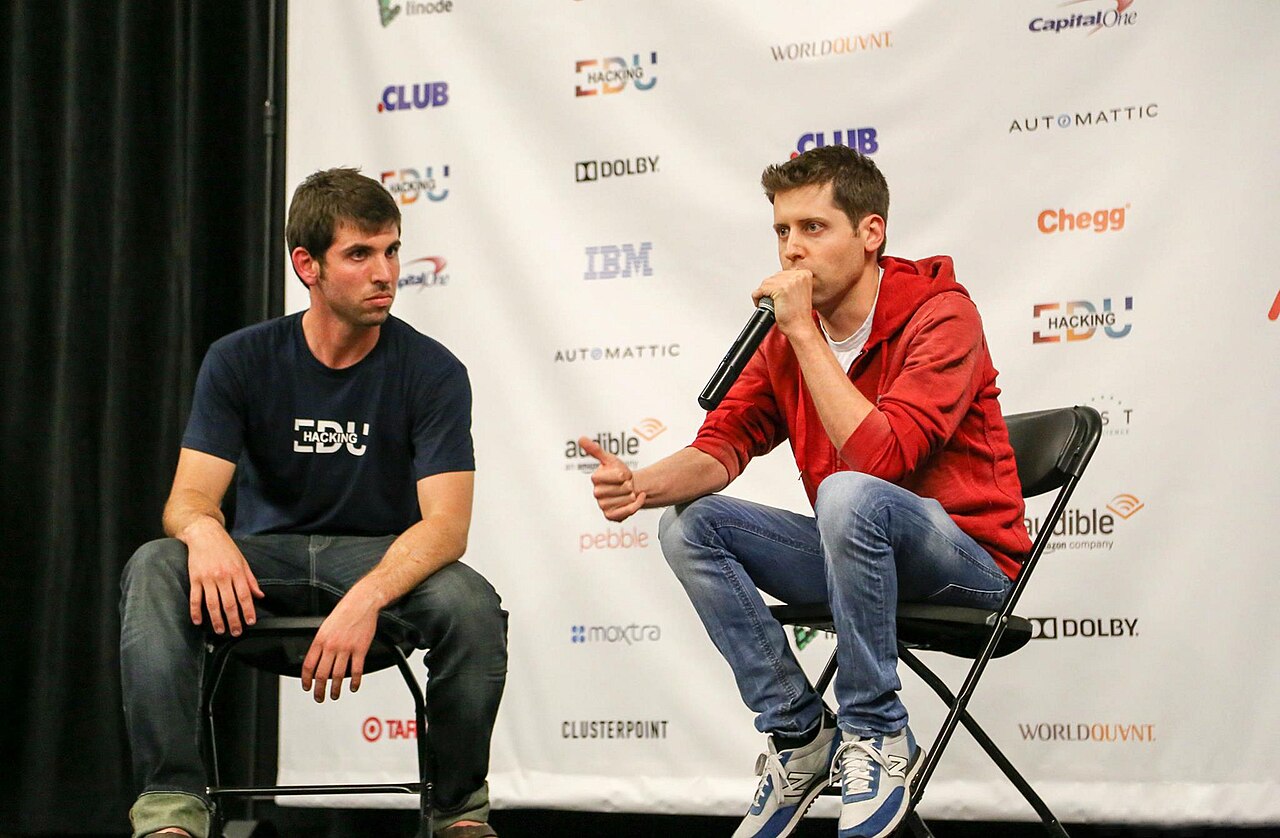
Sam Altman spent last year promising $1.5 trillion to data centers, graphics processors and chip suppliers without a disclosed funding plan, without independent advisers and without most of the financial terms existing on paper. Now OpenAI's own chief financial officer warns the company may not be able to pay those bills. The company has already missed revenue targets, failed to hit user growth goals and lost key market share to competitors. The board is pushing back. Microsoft ended its exclusivity deal. And if AI stocks account for 45 percent of the S&P 500, as Goldman Sachs analysts warn, OpenAI's reckoning could ripple through the entire market.
CFO Sarah Friar told company leaders she fears OpenAI might not be able to pay for future computing contracts if revenue does not grow fast enough, according to Wall Street Journal reporting. Her warning arrives as the company missed internal revenue targets for the first quarter of 2026 and multiple monthly targets in early 2026. ChatGPT failed to reach its goal of 1 billion weekly active users by the end of 2025. The company raised $122 billion in April 2026 at an $852 billion valuation but expects to burn through that amount within three years even under optimistic revenue assumptions.
The spending commitments total approximately $1.5 trillion across seven major contracts. Analysts estimate OpenAI's spending commitments across those seven major vendors at approximately $1.15 trillion, including $350 billion to Broadcom, $300 billion to Oracle, $250 billion to Microsoft, $100 billion to Nvidia, $90 billion to AMD, $38 billion to Amazon AWS and $22.4 billion to CoreWeave. The exact figures for several vendors have not been officially disclosed. Many contracts include "take-or-pay" provisions requiring payment even if capacity is not fully used. The company expects to spend roughly $600 billion on computing capacity through 2030.
Financial Times reporting reveals OpenAI still does not know exactly how it will fund these commitments. The terms mostly do not exist, and advisers were overwhelmingly shunned. Altman came up with the "bold vision" himself and leaned on a small number of lieutenants to push deals through with little involvement from bankers or lawyers. This represents a critical governance failure. A CEO committed trillions with no independent financial or legal review.
Companies in the AI sector have invested in each other, inflating valuations without corresponding cash flow. Nvidia agreed to buy CoreWeave's unsold computing capacity through 2032. This circular financing lifted AI valuations substantially even though no actual revenue or cash flow was created. Virtually every company in the AI sector became wrapped up in such structures.
Competitive pressures mount as revenue reality sets in. Anthropic has taken market share in coding and enterprise markets. Google Gemini's growth eroded OpenAI's consumer market share. ChatGPT's share of generative AI web traffic fell from 86.7 percent to 64.5 percent in January 2026. Deutsche Bank estimates OpenAI could post $143 billion in negative cumulative free cash flow between 2024 and 2029. HSBC says OpenAI may need another $207 billion in financing by 2030.
On April 27, 2026, Microsoft ended its exclusive partnership with OpenAI, stopped paying revenue share to the company and capped OpenAI's payments to Microsoft through 2030 only. Microsoft's license to OpenAI intellectual property became non-exclusive. The move signals that even the biggest AI cheerleaders are losing confidence. Microsoft stock initially fell more than 4 percent on the news.
AI stocks now account for roughly 45 percent of the S&P 500, as Goldman Sachs analysts warn. "Equities are being driven by one thing…AI spend," Goldman Sachs Delta-One head Rich Privorotsky said. "It's hard not to respect the strength of the AI bid, but the velocity has been extreme." Meanwhile, jury selection began April 27 in the Elon Musk fraud lawsuit, which alleges OpenAI's nonprofit mission was hijacked and converted to for-profit. The trial includes Greg Brockman's 2017 diary entry: "I cannot say that we are committed to the non-profit … if three months later we're doing b-corp then it was a lie."
Board members have been scrutinizing data center deals. Friar and Altman issued a joint statement dismissing reports of disagreements. "We are totally aligned on buying as much compute as we can and working hard on it together every day," they said. Any suggestion that the pair are divided or pulling back on securing new computing resources is "ridiculous." The denial itself underscores the crisis. Friar has expressed reservations about Altman's preferred aggressive IPO timeline, emphasizing the need for improved internal controls. OpenAI's second-in-command, Fidji Simo, took unexpected medical leave in April.
Behind the spreadsheets and the stock tickers, investors and employees alike are waiting to see whether the trillions in promises will become the foundation of an industry or a cautionary tale about what happens when vision outpaces verification.