U.S. Chip Bans Accelerate Chinese AI Self-Reliance
DeepSeek's new AI models, optimized for Chinese hardware and priced far below U.S. rivals, demonstrate that three years of American export controls have backfired and accelerated China's technological independence.
Nvidia CEO Jensen Huang warned last week that DeepSeek running on Huawei chips would prove "a horrible outcome for the United States." The Chinese AI startup proved him right within days, releasing a frontier-level model built for domestic hardware and priced at a fraction of American competitors. The V4 launch stands as the clearest evidence yet that three years of U.S. semiconductor export controls have failed, and may have accelerated the very threat they were designed to prevent.
DeepSeek unveiled V4-Pro and V4-Flash as open-weight models under the MIT license, both featuring 1-million-token context windows. V4-Pro carries 1.6 trillion total parameters with 49 billion active per token. V4-Flash offers 284 billion total and 13 billion active parameters, optimized for speed and cost. The company's technical report states V4 "falls marginally short of GPT-5.4 and Gemini-3.1-Pro, suggesting a developmental trajectory that trails state-of-the-art frontier models by approximately 3 to 6 months."
That narrow gap masks a deeper strategic shift. Reuters reported Feb. 25 that DeepSeek withheld V4 optimization access from Nvidia and AMD while granting Huawei a multi-week head start. The startup replaced Nvidia's cuBLAS library with its own DeepGEMM software and validated V4 on Huawei Ascend NPUs. These moves demonstrate China's deliberate pivot away from American hardware dependency.
The pricing structure delivers the sharpest blow to U.S. companies. V4-Pro costs $3.48 per million output tokens through its API. OpenAI's GPT-5.5 charges $30 for the same output. Anthropic's Claude Opus 4.7 costs $25. This 85 to 95 percent price differential between Chinese open-source models and American closed-source equivalents threatens the subscription revenue model every major Western AI company depends on.
Washington responded with accusations rather than solutions. A White House OSTP memo from April 23 by Michael Kratsios accuses Chinese entities of "industrial-scale campaigns" to distill U.S. AI models. "The U.S. government has information indicating that foreign entities, principally based in China, are engaged in deliberate, industrial-scale campaigns to distill U.S. frontier AI systems," Kratsios states. OpenAI's Feb. 12 memo to the House China Select Committee specifically names DeepSeek for using "obfuscated third-party routers" to access American models.
Investors have already priced in this new reality. Chinese chip stocks rallied on the news: HHS surged 15.2 percent and SMIC rose 10 percent. Competitors fell: Minimax dropped 9.4 percent and Knowledge Atlas declined 9.1 percent. "The stock market has already priced in the reality that Chinese AI, like DeepSeek, is competitive and cheaper to use than U.S. alternatives," Morningstar senior equity analyst Ivan Su told CNN.
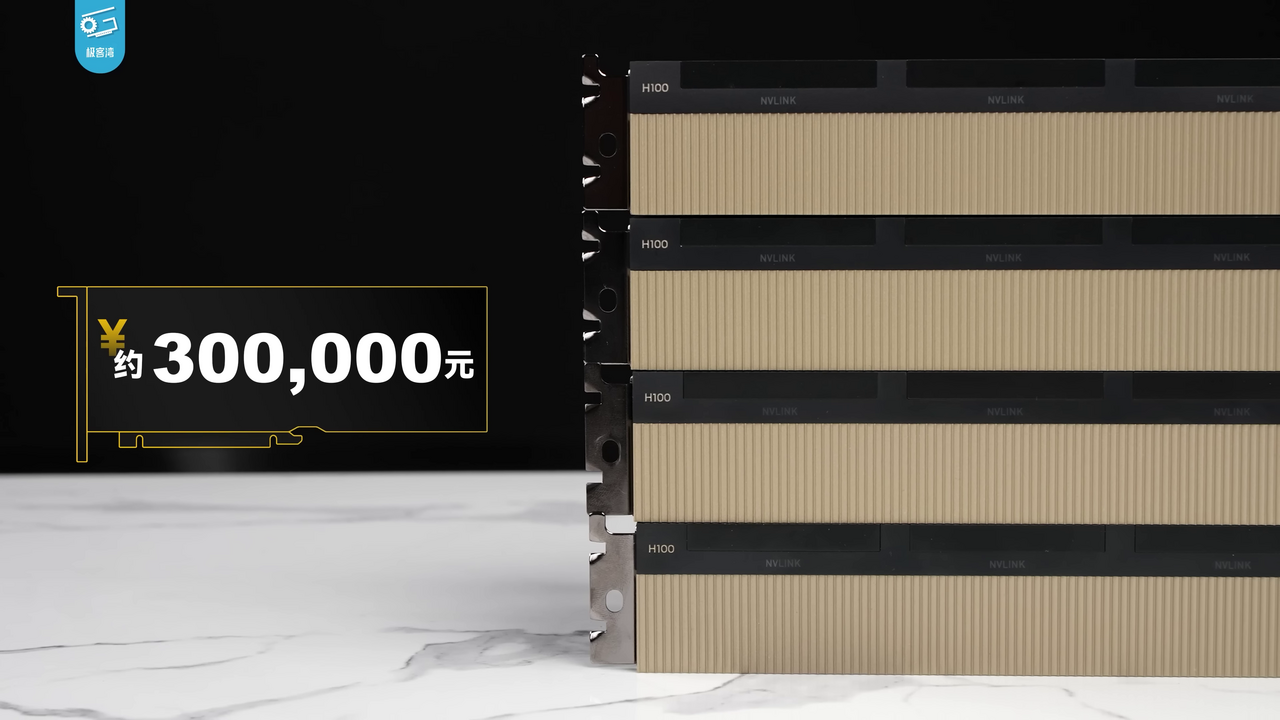
The broader stakes involve trajectory, not current performance. Huawei targets 750,000 AI chip shipments in 2026. Its Ascend 910C still delivers roughly 60 percent of H100 inference performance. That gap is projected to widen to 17 times by 2027. Huang's concern centers on software-hardware co-design. If DeepSeek validates a parallel AI ecosystem built on CANN rather than CUDA, the dependency that made Nvidia the foundation of global AI development begins to erode.
The Musk v. OpenAI trial begins April 27, three days after V4's launch. The timing underscores how American AI's corporate struggles unfold alongside China's open-source momentum. As U.S. companies face internal governance battles and maintain closed, expensive models, Chinese labs deliver competitive AI for free on hardware Washington tried to prevent them from developing.