Private Capital Achieves What State Policy Cannot: SpaceX Files for Record IPO
SpaceX's $1.75 trillion IPO filing demonstrates how private-sector innovation drives humanity's greatest technological leaps while European regulators debate precautionary frameworks.
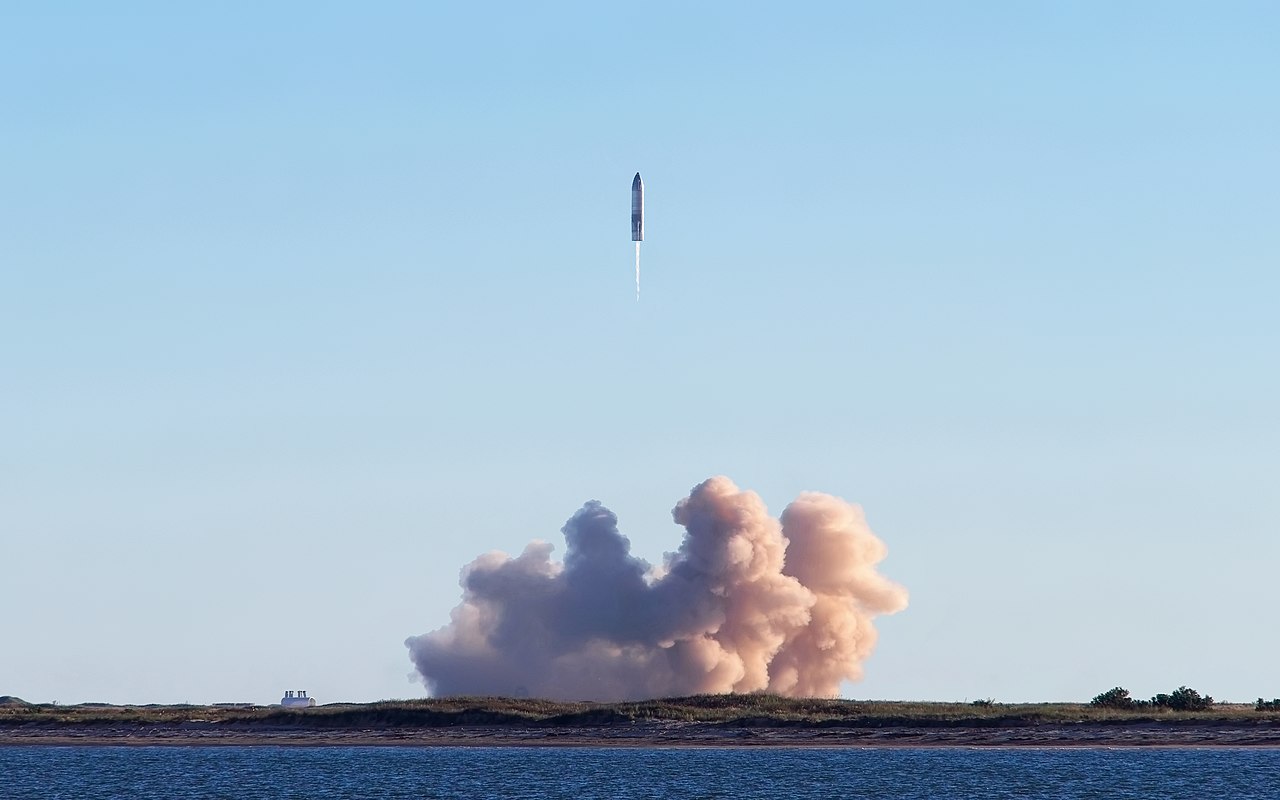
SpaceX's confidential filing for a $1.75 trillion initial public offering proves that private-sector innovation, not government-managed industrial policy, drives humanity's greatest technological leaps. The world's most ambitious private enterprise proved April 1 that unfettered capitalism funds moon bases and orbital data centers while European regulators debate precautionary frameworks.
SpaceX submitted an S-1 registration with the Securities and Exchange Commission on April 1, targeting a June listing that would raise $50 to $75 billion. The offering would become the largest IPO in history, dwarfing Saudi Aramco's $29.4 billion 2019 listing and Alibaba's $22 billion offering. Five investment banks—Bank of America, Citigroup, Goldman Sachs, JPMorgan Chase and Morgan Stanley—lead the underwriting syndicate.
"SpaceX will be far and away the largest IPO in history at the sizes being discussed now," said Samuel Kerr, global head of equity capital markets at Mergermarket. The company plans to reserve up to 30 percent of shares for retail investors.
SpaceX generated approximately $8 billion in profit on $15 to $16 billion in revenue during 2025, according to Reuters reporting. Starlink, the satellite internet service, accounts for roughly two-thirds of company revenue. This commercial success stems from private innovation, despite $24.4 billion in federal contracts awarded since 2008.
While SpaceX earned those contracts through competitive bidding, the $1.75 trillion valuation reflects commercial market value creation. The company conducted 165 orbital flights in 2025 alone, demonstrating operational scale that European state-managed programs cannot match.
The European Union's Space Act imposes top-down regulatory requirements that contrast sharply with America's entrepreneurial approach. The U.S. commercial space sector commands 60 percent of the global market worth $480 billion, according to Asia Times analysis.
"Europe advocates for a top-down, precautionary approach—regulating first, innovating later," the Asia Times reported. "The U.S. favors an entrepreneurial model—innovating first, regulating later."
Elon Musk owns approximately 42 percent of SpaceX equity with 79 percent voting control. His stake would be worth roughly $735 billion at the $1.75 trillion valuation. Combined with his Tesla holdings, Musk could become the world's first trillionaire through private enterprise rather than inheritance or state connections.
The IPO timing coincides with Musk's April 27 trial against OpenAI, where he alleges the AI company breached its founding agreement. That legal battle demonstrates how private capital markets, not political intervention, enable competition in the technology sector.
"The narrative around SpaceX is that it's early and they've got the pole position," said Gene Munster, managing partner at Deepwater Asset Management. "I could see it go vertical right out of the gate."
SpaceX plans to use IPO proceeds to finance what a December 2025 company memo described as an "insane flight rate" for Starship rockets. Funds will also develop orbital AI data centers and establish a moon base—projects that exemplify private-sector ambition at its most audacious.
Market experts acknowledge valuation concerns but note SpaceX's track record of accomplishing technically impossible feats. "You can have a great company, with great fundamentals and a lot of investor interest—and an IPO can still flop if the markets have turned south," said Reena Aggarwal, professor of finance at Georgetown University.
SpaceX acquired Musk's artificial intelligence company xAI in a February merger valued at $1.25 trillion combined. The integration positions SpaceX to compete directly with OpenAI and Anthropic, both of which also plan eventual public offerings.
The IPO represents SpaceX's first major listing among AI and space companies, beating competitors to public markets. This timing reinforces America's entrepreneurial advantage over regulatory-first approaches that prioritize bureaucratic process over technological progress.
Private capital has achieved what decades of government space programs could not—commercially viable space access at scale. As European regulators debate precautionary frameworks, American entrepreneurs build the infrastructure for humanity's multiplanetary future.