82nd Airborne Deploys as Iran Warns Soldiers Will Fall to Netanyahu's Delusions
As Iran's parliament speaker warns U.S. troops will fall victim to Israeli delusions, the Pentagon moves elite paratroopers to the Middle East amid ongoing military pressure on Tehran.
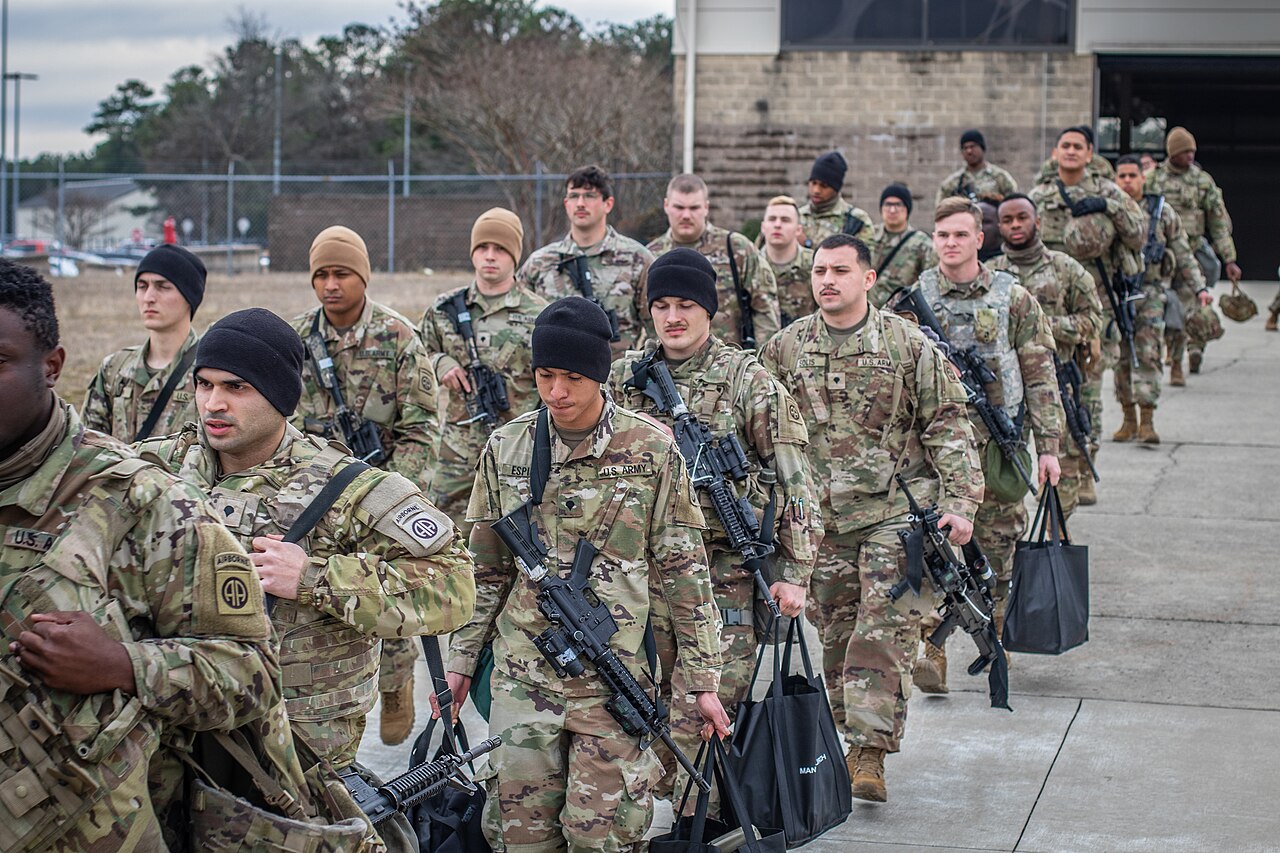
As Iranian Parliament Speaker Mohammad Bagher Ghalibaf warned U.S. troops they would "fall victim to Netanyahu's delusions," the Pentagon prepared to deploy 3,000 soldiers from the elite 82nd Airborne Division to the Middle East. Each paratrooper boarding transport planes represented the silent pressure Washington applies to a regime whose military capabilities have been shattered over four weeks of conflict. These men and women carry the weight of America's resolve on their shoulders.
"What the generals have broken, the soldiers can't fix; instead, they will fall victim to Netanyahu's delusions," Ghalibaf posted on X Wednesday morning. His statement attempted to reframe Iran's military collapse as a political betrayal, coming hours before the 82nd Airborne's deployment order was issued. The rapid-response division can deploy anywhere in the world within 18 hours as America's Immediate Response Force. Their readiness means they stand between escalation and restraint.
The Pentagon declined to confirm specific deployments. "We don't have anything to provide at this time," a spokesperson told the Fayetteville Observer. They join 50,000 U.S. service members already positioned across the Middle East. These troops wait in uncertainty while their families at home wonder when they'll return.
Iran's military infrastructure has suffered catastrophic damage since Operation Epic Fury began Feb. 28. U.S. forces have struck over 9,000 targets inside Iran and destroyed more than 100 Iranian naval vessels. Defense Secretary Pete Hegseth declared March 13 that Iranian missile volume is down 90 percent and one-way attack drones have plummeted 95 percent from early war levels. The numbers tell a story of overwhelming force applied with precision.
"Iran has no air force. Iran has no navy. Their missiles, their missile launchers and drones are being destroyed or shot out of the sky." Hegseth said at a Pentagon briefing on March 13. The conflict has wounded 290 American service members, with 255 returning to duty and 10 remaining seriously injured. Behind each statistic lies a family waiting for news from a loved one.
The strategic centerpiece of U.S. coercive diplomacy remains Kharg Island, which handles approximately 90 percent of Iran's crude oil exports. On March 13, U.S. forces destroyed over 90 military targets on the island while deliberately sparing its oil infrastructure. That choice signaled seizure remains an option, not an inevitability. The restraint itself becomes a weapon.
"We can do that on five minutes' notice. It'll be over," President Donald Trump declared March 16. Retired Lt. Gen. Keith Kellogg, a former 82nd Airborne commander, called for taking Kharg Island. Senator Lindsey Graham echoed the assessment, stating "he who controls Kharg Island, controls the destiny of this war." Military leaders understand that geography can determine outcomes.
Trump asserted Wednesday that negotiations are underway despite Iran's denials. "We're in negotiations right now," the president told reporters. "They want to make a deal and who wouldn't? If you were there, look, their navy's gone, their air force is gone, their communications are done — that's the biggest problem." Diplomacy follows the shadow of force.
The White House demands complete dismantlement of Iran's nuclear program in exchange for ending hostilities. Any agreement would require the United States to take possession of Iran's enriched uranium stockpiles. Trump announced a five-day pause on planned strikes against Iranian energy infrastructure March 23, citing "constructive talks." Time becomes a variable in the equation.
Iranian officials label reports of talks "fake news" used to manipulate markets. They insist any deal must include an end to the war, guarantees against future military action, compensation for wartime losses, and Iranian control of the Strait of Hormuz. Tehran's conditions clash with Washington's bottom line.
Oil markets reflect the tightening economic stranglehold. Brent crude reached $112.68 per barrel March 23 after the deployment news erased earlier peace-talk optimism. Iran now charges approximately $2 million per tanker for safe passage through the Strait of Hormuz, attempting to monetize its remaining leverage. Every barrel carries the cost of freedom.
The 82nd Airborne's deployment represents not mission creep but the calibrated climax of a strategy designed to force Iran's choice between surrender and ruin. With its navy decimated, air force eliminated, and economic lifeline vulnerable, Tehran faces Washington's ultimate pressure: trade nuclear ambitions for survival on American terms. Somewhere in a barracks at Fort Bragg, a paratrooper packs his gear and thinks of home.