US Has Won Iran War Militarily — But Who Will Rule Iran?
Three weeks of U.S. and Israeli strikes have shattered Iran's military, but the regime survives. Now Washington must decide: accept a ceasefire — or press for collapse.
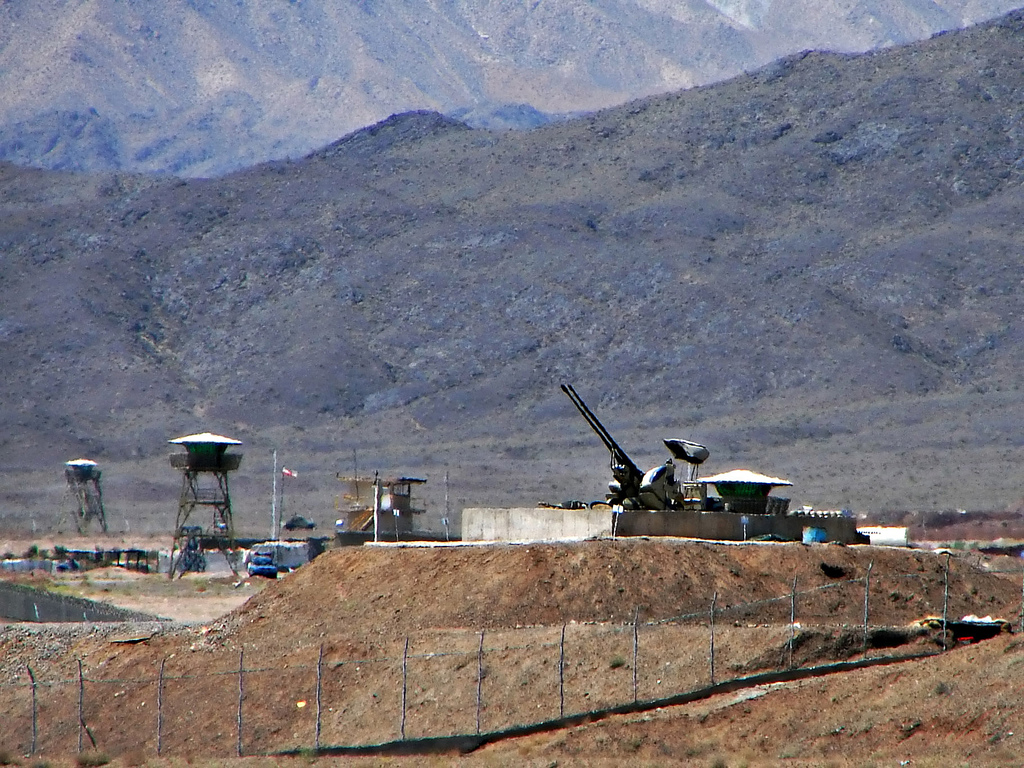
The missiles are gone, the ships are sunk, the Supreme Leader is dead — but Iran's theocracy still stands, and America is on the brink of choosing whether to let it live. Three weeks of relentless U.S. and Israeli strikes have obliterated Iran's military capacity, destroying 92 percent of its ballistic missile launchers, sinking over 120 naval vessels, and eliminating its two most powerful leaders. Yet the Trump administration now faces a strategic cliff: a ceasefire that preserves the regime would cement victory without liberation, leaving a nuclear-capable enemy intact.
U.S. forces conducted over 8,000 strikes against Iranian targets during the conflict's first three weeks, according to Senator Ted Cruz, who described the campaign as "the largest naval defeat since World War II."
Despite this devastation, the regime endures. Mojtaba Khamenei now serves as Supreme Leader following his father's assassination on the conflict's first day. Ali Larijani, Iran's de facto leader and top national security official, died in an Israeli strike. The old guard is gone — but the system it built remains.
The administration faces deep internal fractures over what constitutes victory. Vice President JD Vance frames the objective as preventing nuclear resurgence, stating "President Trump will not let his country go to war without a clearly defined objective." But Cruz and other hawks argue any deal short of regime collapse is surrender. "If we see this regime fall, if we see Iran have a government that is no longer led by a radical Islamist who wants to murder Americans, that will be a dramatic national security improvement," Cruz told JPost. The distance between those two positions may define the war's legacy.
Trump demands six commitments from Iran: no missile program for five years, zero uranium enrichment, decommissioning of nuclear facilities at Natanz, Isfahan and Fordow, strict outside observation, arms control with a 1,000-missile cap, and cessation of proxy financing. Tehran counters with three demands: ceasefire, guarantees attacks won't resume, and compensation. The gap between those two sets of terms is not a negotiating distance — it is a chasm.
Fox News chief political analyst Brit Hume articulated the central dilemma on March 22. "For a moment, let's turn the situation around and assume a situation in which the United States is under attack from a major enemy," Hume said. "Do you think anyone would be saying that this is, as Walter Russell Mead put it today, a stalemate? I don't think so." Hume argued the liberal media's "stalemate" narrative ignores military reality but acknowledged the political endgame remains undefined.
A ceasefire that leaves the regime intact preserves the entity that sponsors global terror, enriches uranium, and seeks America's destruction. Iranian Armed Forces threatened on March 21 to launch retaliatory strikes against U.S. energy infrastructure if attacks continue. Tehran retains between 100 and 200 active missile launchers, and its new leadership shows no signs of capitulation. Defiance, not defeat, defines the regime's posture.
That defiance stands in sharp contrast to vocal American voices demanding clarity at home. Cruz insists Washington must "insist" on regime collapse. Former National Counterterrorism Center Director Joe Kent resigned March 17, declaring "Iran posed no imminent threat to our nation" and alleging the war started "due to pressure from Israel and its powerful American lobby." The resignation exposed fissures within the national security apparatus that the White House has yet to address publicly.
Economic pressure mounts on all sides. Oil prices plunged after Trump announced negotiations, dropping from nearly $99 per barrel to approximately $85. The Pentagon requested $200 billion from Congress to fund continuing operations. Yet Iran's threats against Gulf allies and U.S. infrastructure prove the regime's defiance persists despite military devastation.
The human cost is written in the rubble. The war has killed 1,354 civilians in Israeli strikes on Iranian sites including houses, hospitals, schools and cultural landmarks, according to the Carnegie Endowment. Israel expanded targets to Iranian water and energy infrastructure on March 8, while U.S. attacks on Kharg Island on March 14 struck only military installations. Behind every statistic are neighborhoods that no longer exist.
The conflict is still escalating. Elements of the 82nd Airborne Division arrived in the Middle East on March 23 as U.S.-Israeli strikes hit gas facilities in Isfahan and Khorramshahr. U.S. intelligence detected 12 underwater mines in the Strait of Hormuz — a chokepoint that handles roughly a fifth of the world's oil supply.
The central question remains: Is a world with a weakened but intact Iranian theocracy truly safer, or merely a temporary reprieve before the next attack? Military victory without political transformation threatens to become not peace, but a delayed threat — and the clock is already running.