Pentagon Warns China Wins Taiwan War by 2027 — While U.S. Looks Away
Beijing races toward military dominance in the Taiwan Strait by 2027, while Washington's attention shifts to Iran and Taiwan's own defense budget stalls in political gridlock.
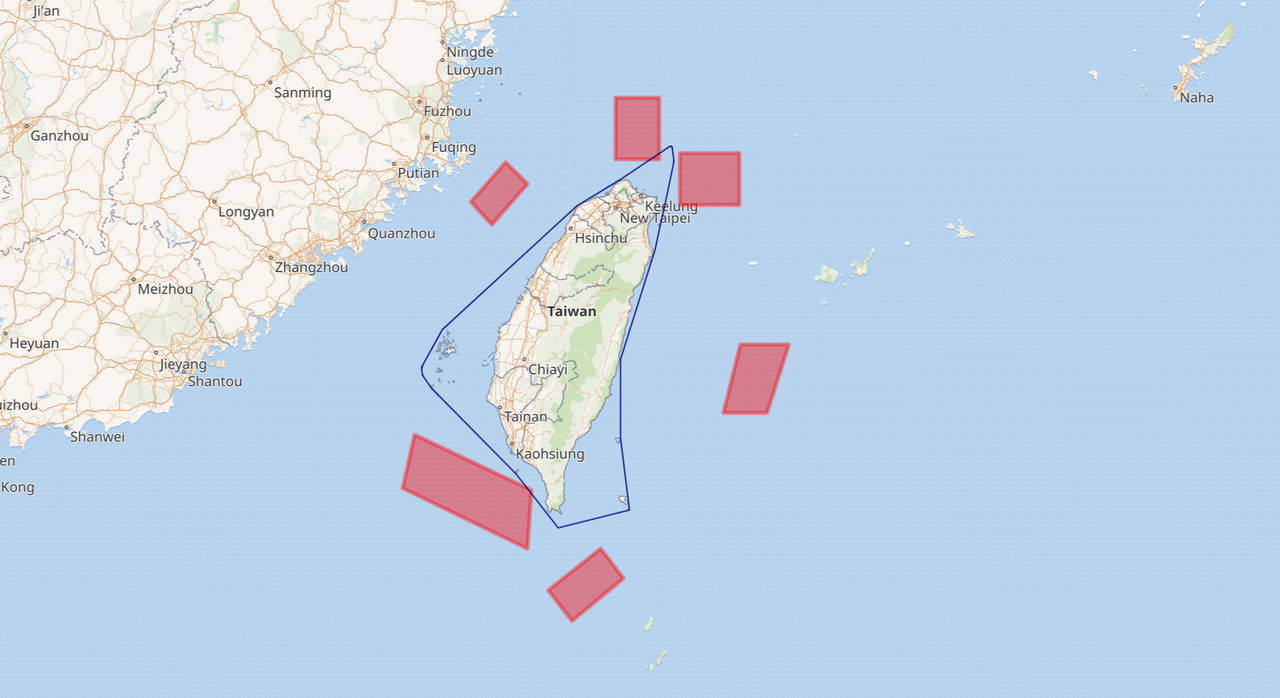
While American eyes fixate on Tehran, the People's Liberation Army is rehearsing the invasion of Taiwan — with the Pentagon's own 2025 report confirming Beijing will be ready to win a war there by the end of 2027. The U.S. Department of Defense states China expects to "fight and win a war on Taiwan" within two years, a deadline now reinforced by China's accelerating military exercises and record defense spending.
The PLA is refining four major military options to force Taiwan unification by "brute force," according to the Pentagon report. These include amphibious invasion, joint firepower strikes, blockade campaigns, and escalating coercion short of war. "China expects to be able to fight and win a war on Taiwan by the end of 2027," the Defense Department assessment states unequivocally.
China's actual defense spending reaches $541 billion — 59 percent of U.S. military expenditure — according to former CIA officer David Sauer. Beijing announced a 7 percent increase for 2026 on March 5, sustaining momentum toward Xi Jinping's strategic goals. "Xi Jinping has been crystal clear about his strategic intent," Sauer told the Washington Times. "He wants to reunify with Taiwan, and he's made that very clear to everyone."
Recent military actions demonstrate China's preparedness. The PLA conducted "Justice Mission 2025" exercises around Taiwan in December, showcasing PCH191 rocket artillery and FD280 ballistic missile systems. PLA warplane activity around Taiwan resumed to daily levels in mid-March 2026 after a brief lull during political meetings in Beijing.
This sustained buildup contrasts sharply with U.S. distraction. President Trump announced on March 17 he would postpone a summit with Xi Jinping "five or six weeks" to prioritize the Iran conflict. The delay also holds up a $13-14 billion arms package to Taiwan pending the summit. "What they want to do is to win Taiwan without a war," said Piero Tozzi of the America First Policy Institute, describing China's "cognitive warfare" targeting Taiwan's political system.
Taiwan's Legislative Yuan authorized four U.S. arms agreements worth $9 billion on March 13, meeting a deadline for expiring offers. Yet the island's NT$1.25 trillion ($40 billion) special defense budget remains stalled in the opposition-controlled legislature, creating a dangerous gap between China's readiness and Taiwan's preparations.
Strategic asymmetry favors Beijing's clear timeline over Washington's reactive posture. "Intentions can change in a New York second," said retired Navy Captain Brent Sadler of the Heritage Foundation. "Xi Jinping could wake up and decide, 'I don't want to go to war today,' but he could wake up tomorrow in the morning and say, 'Yeah, today's the day.'"
The Pentagon warns China's historic military buildup has made the U.S. homeland "increasingly vulnerable." Beijing now fields nuclear intercontinental ballistic missiles, cyber operations, and long-range strike systems capable of threatening American soil. China detonated a secret underground nuclear blast in 2020 using decoupling techniques to hide from international monitors, according to Assistant Secretary of State Christopher Yeaw.
While the U.S. Intelligence Community's 2026 assessment states Chinese leaders "do not currently plan to execute an invasion of Taiwan in 2027," the Pentagon's capability-focused report emphasizes China could achieve strategic decisive victory by that deadline regardless of intent. The PLA doubled ship and aircraft activity around Taiwan in 2025 compared to previous years, according to Taiwan's vice defense minister.
"An actual invasion of Taiwan would be very bloody," Tozzi said. "If you had a maritime invasion of Taiwan and the casualties, you'd be talking about wiping out entire family lineages in the tens of thousands. That would lead to serious internal unrest within China, and that would threaten the regime."
China's nuclear arsenal reached approximately 600 warheads in 2024 and is projected to exceed 1,000 by 2030. The PLA fields DF-27 variants including conventional ICBMs with 5,000-8,000 kilometer ranges capable of threatening the U.S. mainland from Chinese territory. Beijing plans to build six additional aircraft carriers by 2035, reaching nine total compared to America's 11.
Taiwan President William Lai announced a seventeen-point plan to counter national security threats in March 2025, supporting development of a "T-Dome" missile defense system. Yet the island's political divisions continue to hamper defense funding as China's military momentum accelerates toward the 2027 deadline first warned by then-Indo-Pacific Command chief Admiral Phil Davidson in 2021.