Mossad Promised Iran Regime Change — Then War Began
U.S. and Israeli bombs reshaped Iran's leadership — but not as promised. Mossad's regime-change gamble collapsed as the Supreme Leader's hardline son seized power.
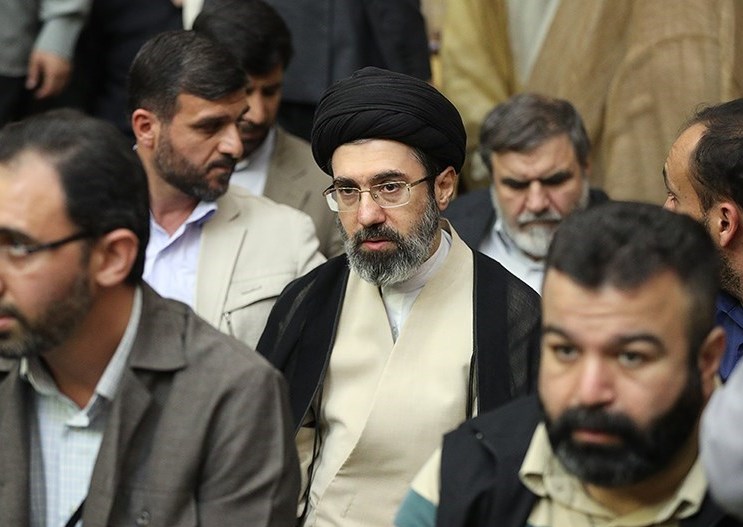
Three weeks after U.S. and Israeli bombs shattered Iran's infrastructure, the Supreme Leader's son assumed his father's throne. The Iranian people, contrary to intelligence promises, stayed home.
Mojtaba Khamenei — believed to hold more hardline views than his slain father — now leads the Islamic Republic. His ascension on March 8 demolished the central premise behind January's war decision: that eliminating Iran's leadership would spark a popular uprising capable of toppling the regime.
Days before the conflict, Mossad chief David Barnea personally assured Israeli Prime Minister Benjamin Netanyahu that his agency could ignite mass protests and collapse the Iranian government. Barnea promised Mossad could "galvanize the Iranian opposition" through intelligence operations, according to a March 19 Channel 12 report confirmed by U.S. and Israeli officials.
In mid-January, Barnea carried that same assurance to Washington. He told senior Trump administration officials that killing Iranian leaders would create the conditions for regime change, according to a New York Times investigation published March 22. That intelligence fueled President Donald Trump's public rhetoric as the bombs began falling.
"Finally, to the great, proud people of Iran, I say tonight that the hour of your freedom is at hand," Trump declared on Truth Social on Feb. 28, 2026. "When we are finished, take over your government. It will be yours to take. This will be probably your only chance for generations."
The CIA delivered a starkly different assessment in February. Agency analysts concluded that killing Iran's leaders would produce "a more radical leadership" likely drawn from hardline Islamic Revolutionary Guard Corps figures, the Jerusalem Post reported. The U.S. National Intelligence Council separately determined that neither limited strikes nor prolonged war would likely achieve regime change.
Israeli military intelligence, known as Aman, disputed Mossad's regime-change premise from the start, the Times investigation found. Intelligence analysts in both countries warned that no unified opposition coalition existed to seize power — and that Iranians feared protesting under bombing campaigns. Those warnings went up the chain. They did not come back down as policy.
U.S. senators emerged from a late February classified briefing and declared the administration had no actual plan for regime change. "We have no plan for regime change," senators told reporters after the session. "We have no plan for the Strait of Hormuz," Middle East Eye reported.
Behind closed doors, Netanyahu expressed frustration that Mossad's promises had failed to materialize. In an early war security meeting, the prime minister complained the plan wasn't working and warned that Trump might "decide to halt the campaign at any moment," according to March 23 reports.
The CIA and Mossad's divergent predictions reflect institutional pressures familiar from past intelligence failures. Elite operatives, facing political demands for actionable intelligence, offered leaders a fantasy of regime collapse — one that ignored the IRGC's entrenched power and a population's well-founded fear of reprisals.
Barnea's plan depended partly on supporting an invasion by Iranian Kurdish militia groups from northern Iraq, according to Axios and Jerusalem Post reports. Mossad predicted regime change would likely take about one year, though the agency presented multiple scenarios with varying timelines.
Instead, Iran's security apparatus has consolidated control. Director of National Intelligence Tulsi Gabbard stated March 18 that "the regime in Iran appears to be intact, but largely degraded." Intelligence assessments indicate the government has "dug in" rather than collapsed.
The January protest movement that initially inspired regime-change optimism ended in a bloody crackdown that chilled further dissent. Iranian health officials estimate 30,000 died in the first 48 hours, while human rights groups place the toll between 6,000 and 7,000. Trump claimed 35,000 deaths.
"Protesters fear being shot," said Nate Swanson, a former Trump administration Iran negotiating team member. Approximately 60 percent of Iran's population "just want a better life" and don't want to die opposing the regime, Swanson said. Courage, he implied, has its limits — especially when the bombs are still falling.
Defense Secretary Pete Hegseth emerged as the war's most vocal proponent within the administration. Trump said Hegseth was "the first one to speak up" in support, telling colleagues "let's do it," The Hill reported. Vice President JD Vance expressed skepticism about the campaign's prospects, according to senior administration officials.
Senator Chris Murphy of Connecticut warned the administration would "spend hundreds of billions of your taxpayer dollars, get a whole bunch of Americans killed, and a hardline regime — probably a more anti-American hardline regime — will still be in charge."
The intelligence community's caution went unheeded. Analysts warned U.S. military leaders that Iranians wouldn't take to the streets while bombs fell, assessing the chances of a mass uprising as low. Those assessments contradicted Mossad's optimistic briefings — the very briefings that helped secure Netanyahu's backing for military action.
Israeli Ambassador to the United States Yechiel Leiter maintained hope that military pressure might eventually trigger change. "We need boots on the ground but they've got to be Iranian boots, and I think they're coming," Leiter told reporters last week.
The war's architects now confront the intelligence failures that propelled their decision. What began as a strike intended to liberate Iran has instead solidified the IRGC's grip — leaving the country more dangerous, more entrenched, and led by a man more extreme than the one the bombs were meant to remove.