China Supplied Drones to Iran Days Before U.S.-Israeli Strikes Killed Supreme Leader
A congressional report reveals Beijing sold Tehran offensive drones and nearly finalized an anti-ship missile deal days before U.S.-Israeli strikes killed Ayatollah Khamenei on Feb. 28.
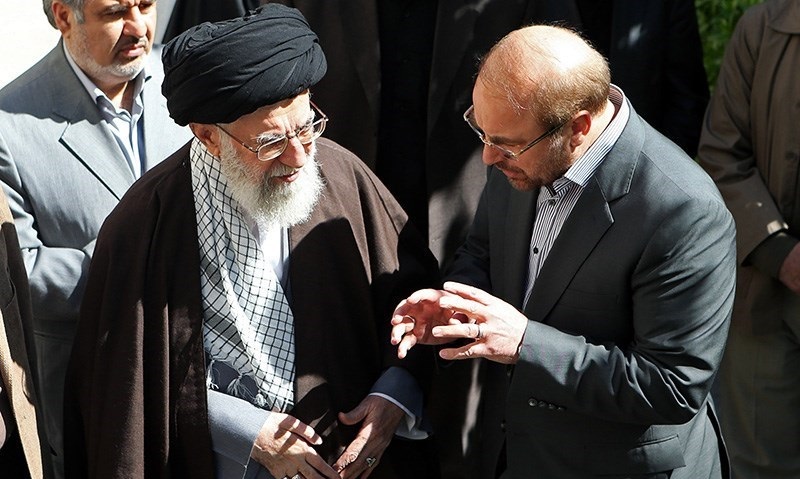
In the hours and days before American and Israeli missiles struck, China was selling Tehran the very weapons its forces would use to survive.
A congressional report released March 16 reveals Beijing supplied offensive drones to Iran and was nearly finalizing a deal for anti-ship cruise missiles when U.S.-Israeli forces struck Iran on Feb. 28, killing Supreme Leader Ayatollah Ali Khamenei. The report from the U.S.-China Economic and Security Review Commission describes a "less restrained" approach to Beijing's ties with Tehran as the Middle East conflict unfolds.
"China enables Iran to mitigate global sanctions through trade and financial networks, technology transfers and dual-use trade," the commission stated. "Chinese banks, front companies and intermediary firms facilitate oil transactions, the shadow fleet that transports Iranian oil, access to controlled technologies that support Iran's missile and drone programs and money laundering that enables it all."
Beijing's support runs deeper than weapons — it underwrites the entire economic infrastructure keeping Iran's war machine alive. China purchases approximately 90 percent of Iran's exported oil — roughly 1.4 million barrels per day in 2025, accounting for about 12 percent of China's total crude imports. Those purchases generated approximately $31.2 billion in revenue for Iran in 2025, funding roughly 45 percent of Tehran's government budget.
Iran sells that oil at a steep discount of $8 to $10 per barrel below the global benchmark. The arrangement fills Beijing's state-run refineries and shores up its energy security while simultaneously bankrolling Iran's military operations.
The sanctions evasion apparatus runs on a shadow fleet of tankers, many flagged to third countries and tracked through dark pool transactions. Chinese "teapot refineries" — small, often unregistered facilities — process Iranian oil before it enters legitimate supply chains. Proceeds then flow through financial networks that launder the money through Hong Kong and other jurisdictions where enforcement is lax.
China granted Iran full military access to its BeiDou satellite navigation system in 2021, handing Tehran a positioning system that operates entirely beyond Western-controlled GPS — and beyond Western jamming. BeiDou offers precision to less than 1 meter, a capability that has quietly reshaped Iran's strike accuracy on the battlefield.
"One of the surprises in this war is that Iranian missiles are more accurate compared to the war that took place eight months ago, raising many questions about the guidance systems of these missiles," said Alain Juillet, former French Foreign Intelligence director.
The commission's report details specific shipments that cleared Chinese ports even as diplomatic tensions mounted. Two Iranian state-owned vessels, the Shabdis and Barzin, departed China's Gaolan Port during the week of March 2 carrying suspected sodium perchlorate — a key precursor for solid rocket fuel used in ballistic missiles. Beijing watched them leave.
"China could have held these vessels at port, imposed an administrative delay, invented a customs hold — any number of bureaucratic tools, but didn't," said Isaac Kardon, senior fellow at the Carnegie Endowment for International Peace. "That's a deliberate policy choice."
Beijing's calculations appear designed to sustain influence without triggering direct military confrontation with Washington. China won't defend Iran on the battlefield, but it keeps Iran viable economically and technologically — betting Washington cannot simultaneously squeeze Chinese commercial interests and prosecute a war in the Middle East.
"China may not be willing — or able — to defend partners the way that the United States does," said Zichen Wang, deputy secretary-general at the Center for China and Globalization. "Yet it is unlikely to remain passive if it concludes that U.S. policy is shifting from contesting states to systematically squeezing lawful Chinese commercial interests with no direct military character."
The report identifies 366 China and Hong Kong entities on the U.S. SDN List for Iran-related sanctions programs. As of March 2026, 40 million barrels of Iranian and Venezuelan oil sat in Chinese floating storage — a quiet signal of how much pressure Beijing can simply absorb, and for how long.