Cuban President Hosts Ideological Tourists as Blackouts Consume the Island
As Cuba's second nationwide blackout in a week left families without food or water, President Díaz-Canel welcomed 650 foreign leftists to a palace reception — while ordinary Cubans boiled rainwater to survive.
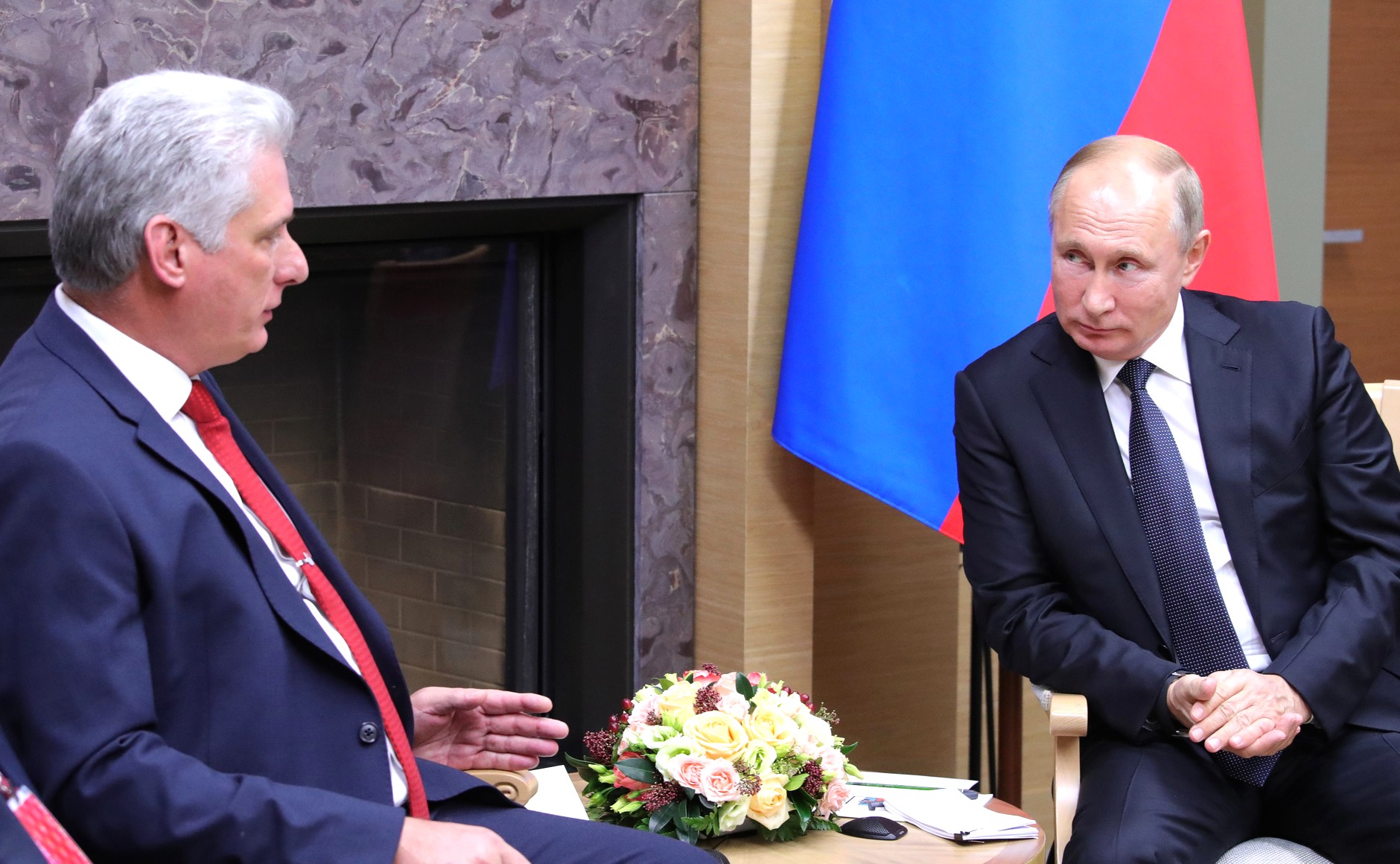
Hours after the second nationwide blackout in a week swallowed the island in darkness, Cuban President Miguel Díaz-Canel stood before 650 foreign guests at the Palacio de las Convenciones and declared that revolutionary Cubans remain optimistic. The choreographed welcome of the Our America Convoy offered its audience a Cuba that most Cubans no longer recognize.
The gap between the palace and the street was not symbolic — it was existential. Across the island, families watched refrigerated food rot. Hospitals ran on backup generators. Water pumps sat idle. The grid's effective capacity has collapsed to roughly 590 megawatts, less than a third of normal levels, forcing daily blackouts exceeding 15 hours in Havana and more than 40 hours in some interior provinces.
The convoy arrived bearing 20 tons of aid — medicines and solar equipment valued at €500,000 — and framed its mission as humanitarian solidarity. Among the delegation: former British Labour leader Jeremy Corbyn, former Spanish Vice President Pablo Iglesias, and U.S. Congresswoman Rashida Tlaib. The optics were global. The itinerary was narrow.
Participants met almost exclusively with government officials. They never visited the neighborhoods where residents had spent days boiling rainwater. Organizers declined meetings with independent dissidents or citizens seeking relief — precisely the people the convoy claimed to represent.
After his sessions with Communist Party officials, Iglesias told reporters the situation in Cuba was "not as bad as it is being presented from outside." The remark landed hard among Cubans watching the convoy from their darkened homes.
All aid flows through ICAP, the Cuban government's official agency, with no independent oversight. Cuban activists expressed little confidence the supplies would reach ordinary citizens. "We are not a theme park," Havana-based journalist Yoani Sánchez wrote. "Take your ideological tourism elsewhere. We are suffering here."
The regime's desperation surfaced publicly on Friday, when First Deputy Minister of Energy and Mines Argelio Jesús Abad Vigoa stepped before cameras and said what officials had avoided admitting for months. "We have run out of the ability to produce electricity through distributed generation," Vigoa said at a press conference.
Díaz-Canel confirmed in March that Cuba had received zero fuel shipments in three months. The Trump administration's fuel blockade, imposed in January after the U.S. captured Venezuelan President Nicolás Maduro, severed Cuba's traditional oil supply. But decades of failure to diversify suppliers or invest in energy infrastructure left the island with no margin, and nowhere to turn.
The Economist Intelligence Unit projects a 7.2 percent GDP contraction for 2026, extending cumulative economic losses to 23 percent since 2019.
Repression has tracked the collapse. Rights organization Cubalex documented 47 arrests in March alone, most on charges of crimes against state security. On March 13-14, protesters in the city of Morón stormed and burned the local Communist Party headquarters. Authorities arrested at least 14 people, including minors.
"The suffering of the Cuban people is a direct result of the mismanagement of the Cuban state," said Kiele Alessandra Cabrera, a Cuban-American activist. "The Castro regime and its military apparatus are worth billions, while the average Cuban struggles to find scraps of food on the street."
Progressive International, which organized the convoy, carries deep ties to Havana. Mariela Castro — daughter of former Cuban leader Raúl Castro and director of the National Center for Sex Education — sits on the group's advisory council. David Adler, Progressive International's co-coordinator, placed blame on regional governments. "We saw a tremendous failure — an abrogation of responsibility by states of the region," Adler told WLRN. Officials in those same countries have pointed to Cuba's own mismanagement: the grid has collapsed repeatedly over the past two years, with infrastructure decay that long predates current sanctions.
In Havana, Ofelia Oliva, 64, measured her exhaustion in weeks. "It hasn't even been a week since we experienced a similar situation," she said. "It is getting tiresome."
Nilo Lopez, 36, drives a taxi through streets that go dark before dinner. "I wonder if we're going to be like this our whole lives," he said. "You can't live like this." While foreign dignitaries clinked glasses at the Palacio de las Convenciones, Lopez's city had no lights to drive home by.