Underground Missile Cities Turned into Iranian Death Trap
Decades of Iranian engineering meant to guarantee a second-strike capability became a predictable kill zone as U.S. and Israeli forces destroyed 60–70 percent of Iran's missile launchers in weeks.
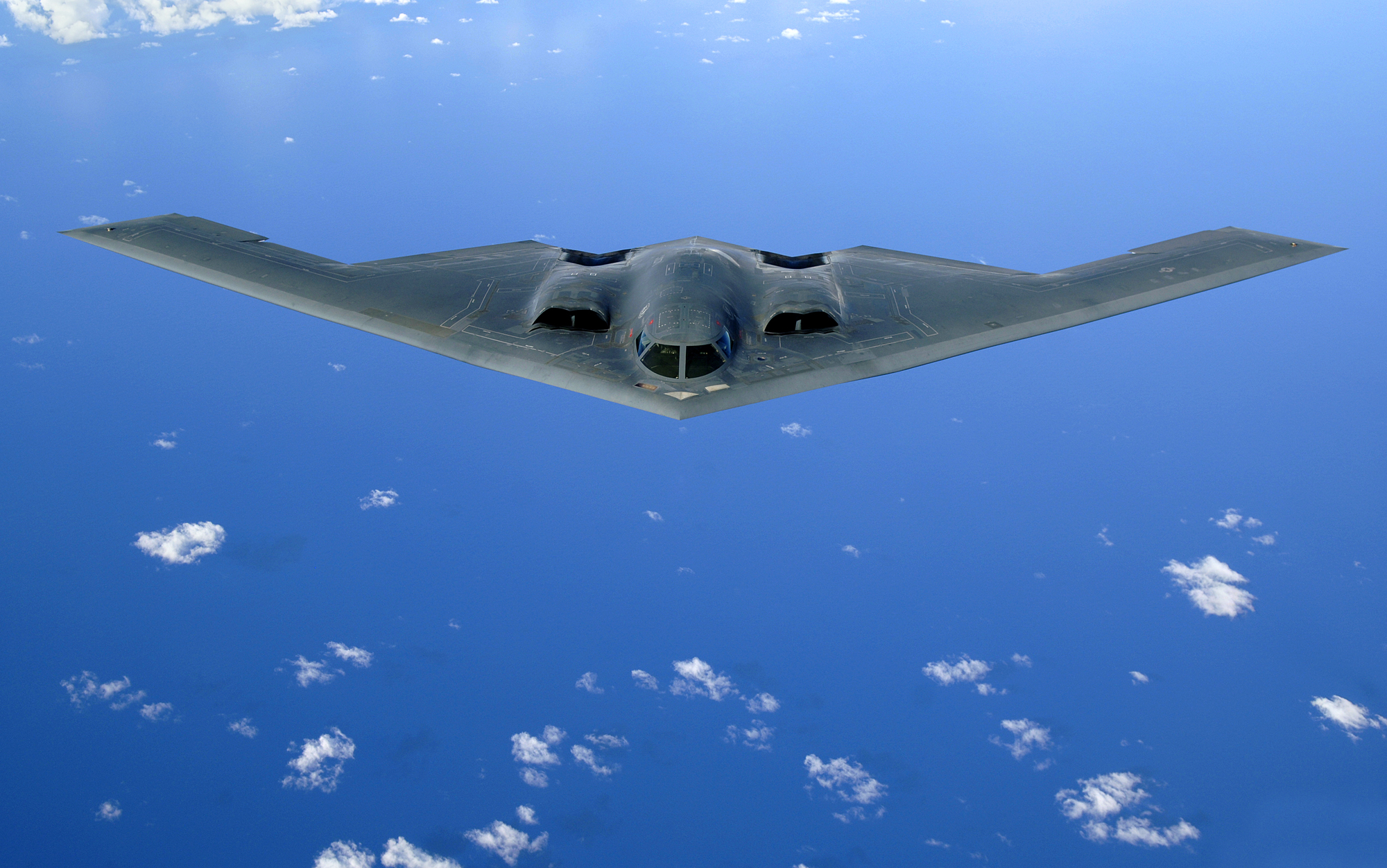
Iranian engineers spent decades carving concrete-lined caverns into mountainsides — missile cities engineered to guarantee Tehran could annihilate Israel even after absorbing a first blow. Now U.S. and Israeli warplanes circle overhead, picking off launchers as they emerge from the very tunnels built to make them invulnerable.
The strategy became a death trap.
Air superiority and years of painstaking intelligence gathering turned Iran's greatest defensive asset into a predictable target. Satellite imagery captured launchers destroyed in canyons after exiting their underground shelters — before a single missile could fly.
On Feb. 28, four B-2 Spirit bombers flew 18-hour missions from Whiteman Air Force Base in Missouri, dropping dozens of 5,000-pound penetrator bombs on hardened underground facilities. Pentagon officials confirmed the use of GBU-72 Advanced 5K Penetrator munitions — weapons engineered to punch through layers of concrete and earth before detonating.
Strikes hit facilities at Tabriz, Khomein, and Esfahan North. At the Tabriz base in northwestern Iran — positioned to threaten Eastern and Central Europe — fresh bomb craters and collapsed tunnel entrances marked the destruction. At least 3 support structures were demolished at the Khorgo site in Hormozgan Province, home to underground launch silos. Satellite imagery confirmed additional damage at the Haji Abad facility in central Iran.
The results are stark. The Institute for the Study of War, citing Israeli military officials, reported that 260 to 290 launchers have been destroyed out of an estimated 410 to 440 — representing 60 to 70 percent of Iran's launcher inventory. U.S. Central Command reported Iranian missile fire fell 86 percent within four days.
Iran fired more than 500 missiles since Feb. 28, targeting Israel, U.S. bases in the Gulf, and Arab states including the United Arab Emirates, Kuwait, Bahrain, and Qatar. But the pace of that fire tells the story of a military machine being systematically dismantled.
What made the dismantling possible was geography working against Iran. The underground facilities, however well-hidden, were fixed locations that U.S. and Israeli military planners had mapped over years. With Iranian air defenses degraded, surveillance aircraft loitered overhead and struck the moment launchers rolled out to fire. Mobile launchers stored underground became less mobile — and far more predictable — than dispersed surface units would have been.
"What used to be mobile and difficult to locate is now less mobile and easier to strike," said Sam Lair, a researcher at the James Martin Center for Nonproliferation Studies.
The broader consequences have been severe. Supreme Leader Ali Khamenei was killed in the opening strikes on Feb. 28, along with former President Mahmoud Ahmadinejad and Defense Council Secretary Ali Shamkhani. Oil prices surged more than 40 percent to above $100 per barrel since the war began, rippling across global markets and household budgets far from the battlefield.
"We're hunting Iran's last remaining ballistic missile launchers to eliminate what I would characterize as the remnants of their ballistic capability," Adm. Brad Cooper, U.S. CENTCOM Commander, stated. "We're seeing Iran's ability to hit us and our partners is declining."
The operation is not over. Israel announced a second phase on March 5, shifting focus to underground bunkers storing ballistic missiles and equipment. The IDF reported 2,200 Iranian regime targets demolished, mostly in Tehran and western Iran. High-resolution imagery from March 11 showed three bunker-buster impact craters at the Taleghan 2 facility near Tehran.
"The hope from the initial week of strikes was that Iran's ruling system would begin to disintegrate earlier, more quickly," said Eran Lerman, former Israeli Deputy National Security Adviser. "But this has yet to happen and as long as it doesn't, the system needs to be further and further degraded."
Iran rebuilt roughly 200 launchers in eight months after strikes in June 2025. With the tunnel networks now compromised, whether that industrial capacity still exists is the question hanging over every future calculation — and over every city within range of whatever Iran has left.