Iran Foreign Minister Rejects Trump's Claim Tehran Seeks Deal
Iranian Foreign Minister Abbas Araghchi flatly denied Tehran sought any ceasefire or talks, directly contradicting President Trump as war casualties and global energy prices climb.
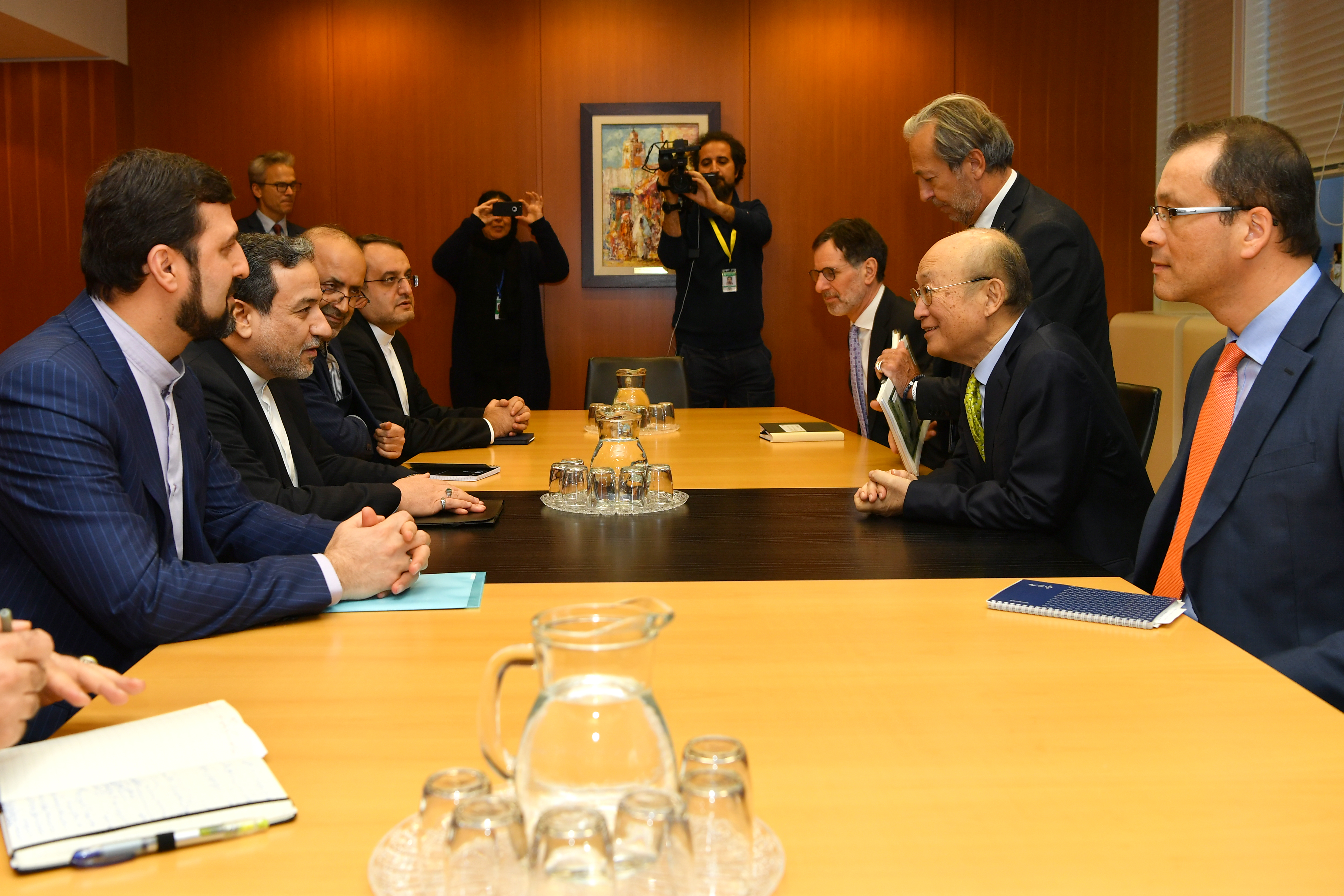
Families are burying their dead across Iran, gasoline prices are climbing at American pumps, and the two governments at the center of it all cannot agree on a single basic fact: whether anyone has asked for peace.
Iranian Foreign Minister Abbas Araghchi declared Friday that Tehran has never asked the United States for a ceasefire or negotiations — directly contradicting President Donald Trump's assertion that Iran is seeking a deal. Speaking on CBS News' "Face the Nation," Araghchi told host Margaret Brennan, "We never asked for a ceasefire, and we have never asked even for negotiation. We are ready to defend ourselves as long as it takes."
Two days earlier, Trump told NBC News, "Iran wants to make a deal, and I don't want to make it because the terms aren't good enough yet." The president offered no details about what specific terms Iran allegedly proposed, leaving the nature of any agreement shrouded in uncertainty.
The contradiction lays bare a deeper fracture between Washington and Tehran as the war enters its fifth week. The conflict erupted Feb. 28 with surprise U.S.-Israeli airstrikes across Iran that killed Supreme Leader Ayatollah Ali Khamenei. Tehran retaliated with Operation True Promise IV, launching missiles at Israel and U.S. bases spanning multiple Gulf states.
Diplomacy had preceded the violence — and collapsed under the weight of irreconcilable demands. Three rounds of indirect negotiations unfolded in February: the first in Muscat on Feb. 6, followed by two sessions in Geneva on Feb. 17 and Feb. 26. U.S. officials said Iran offered "political wins and some concessions" but refused to surrender what they called "the building blocks of what they needed to preserve to get to a bomb."
"We were very clear from the first meeting that we had with Araghchi that President Trump's goal was to leave the region and the world safer than before, and if they wanted to act like a normal country, then we can have a really amazing relationship," a senior U.S. official told The Times of Israel on March 10.
Hope briefly lit the corridors of diplomacy. Oman Foreign Minister Badr Al-Busaidi, serving as mediator, said in a CBS News interview on Feb. 28 that a peace deal was "within our reach" and noted Iran had agreed not to stockpile nuclear material capable of producing a bomb. That optimism evaporated as positions hardened on both sides.
The human cost mounts daily. More than 1,300 people have died in Iran, among them the Supreme Leader and dozens of senior officials. The U.S. military confirmed 13 active service personnel killed and 140 wounded. Across the region, hundreds more have perished, including 773 in Lebanon.
Iran named Mojtaba Khamenei, the late Supreme Leader's son, as his successor on March 8 — defying Trump's push for regime change. Trump and Defense Secretary Pete Hegseth have questioned whether Mojtaba Khamenei is alive or severely wounded, pointing to his absence from public view. Iranian officials have not addressed these assertions.
The war has sent economic shockwaves far beyond the battlefield. U.S. gasoline prices rose from $2.94 per gallon on March 1 to $3.66 per gallon on March 14, a 25 percent increase in under two weeks. The Strait of Hormuz effectively closed to U.S. and Israeli vessels, stranding approximately 150 freight ships, including many oil tankers.
Military operations continue unabated. On March 14, the U.S. conducted strikes on 90 military targets on Kharg Island. Trump said afterward, "We totally demolished Kharg Island. Except, as you know, I didn't do anything having to do with the energy lines, because having to rebuild that would take years." He added, "We may hit it a few more times just for fun."
Those words landed hard in Tehran. "And you know, there are people being killed only because President Trump wants to have fun," Araghchi said Friday. "This is what he has said." The foreign minister also stated that Tehran sees no reason to negotiate with Washington, citing the surprise attacks as proof of bad faith.
"We don't see any reason why we should talk with Americans, because we were talking with them when they decided to attack us, and that was for the second time. There is no good experience talking with Americans," Araghchi said.
He rejected the notion that the war represents an existential threat to Iran. "No, it's not a war of survival," Araghchi said. "We are stable and strong enough. We are only defending our people from this act of aggression."
Araghchi also addressed the status of Iran's nuclear program, stating that enriched uranium remains buried under the rubble of destroyed facilities. No independent verification of this assertion has been provided.
Washington and Tehran now insist on incompatible realities. If Iran never requested a ceasefire, as Araghchi asserts, the terms Trump declined remain undefined — and the people caught between two governments trading contradictions keep paying the price.