Iran's New Supreme Leader Inherits €400M Property Empire
Nine days after U.S.-Israeli strikes killed his father, Mojtaba Khamenei assumed supreme power — and, investigators revealed, quiet control of a €400 million global property empire.
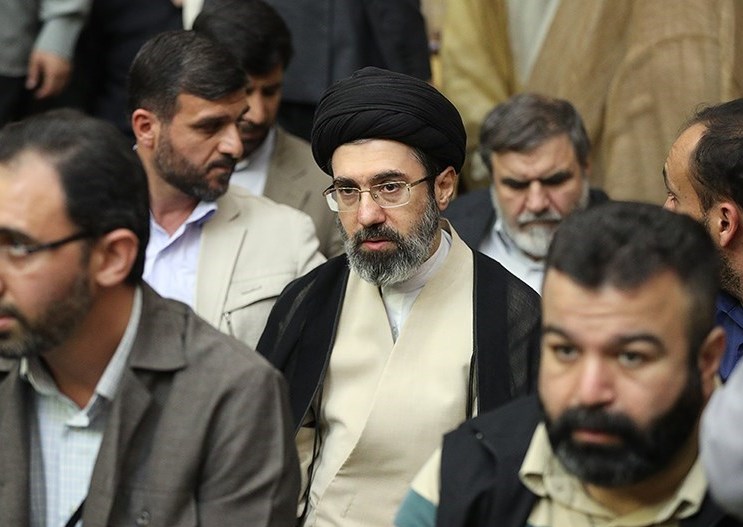
Nine days after U.S.-Israeli strikes killed his father, Mojtaba Khamenei stepped into the nation's most powerful position. Within days, Western investigations revealed Iran's new Supreme Leader controls a global property empire worth an estimated €400 million.
The revelation cuts to the heart of Iran's crisis. The Assembly of Experts appointed Khamenei on March 7, and evidence has since emerged showing the nation's highest religious authority simultaneously oversees luxury assets ranging from London homes on Billionaire's Row to a Dubai villa and a five-star hotel in Frankfurt.
Khamenei's name never appears on ownership documents. Every acquisition traveled through intermediaries — primarily construction magnate Ali Ansari, who holds a Cyprus passport and operates entities in St. Kitts and Nevis, the Isle of Man, and other offshore jurisdictions.
"Mojtaba has major stakes or de facto control in various entities throughout Iran and abroad," said Farzin Nadimi, a senior fellow at The Washington Institute for Near East Policy. "When you analyze his financial network, Ali Ansari is the main account holder for him. This positions Ansari as one of the most influential oligarchs in the country today."
The portfolio spans dozens of London properties, a Mallorca resort, an Austrian ski hotel, and holdings in Paris and Toronto. Iranian oil revenues, routed through UAE, Swiss, Liechtenstein and British financial institutions, funded the purchases.
Western governments have begun dismantling the network. The United Kingdom sanctioned Ansari in October 2025, freezing more than £150 million in London properties. The U.S. Treasury sanctioned Mojtaba Khamenei in 2019. In January 2026, Washington sanctioned Ali Larijani, former secretary of the Supreme National Security Council, for allegedly directing funds toward state repression and terrorist organizations.
"This behavior has created widespread distrust in society," said Mohammad Mehdi Shahriari, an Iranian MP and former envoy to Germany. "People see the children of officials — those who just a few years ago couldn't even afford a motorcycle — now owning ships, planes and industry monopolies. It raises serious questions."
The corruption extends far beyond individual holdings. Parastatal organizations controlled by the Islamic Revolutionary Guard Corps and the Supreme Leader's office form a vast economic empire. SETAD, the Execution of Imam Khomeini's Order foundation, controls assets valued at approximately $95 billion, acquired partly through court-ordered seizures of properties sometimes based on false claims of abandonment.
"It's increasingly clear that those close to Iran's political leaders have invested heavily in the UK," said Ben Cowdock, senior investigations lead at Transparency International UK. "Our property market should not serve as a safe deposit box for cronies who finance repressive regimes."
Domestic unrest erupted in December 2025 as citizens protested economic conditions and elite corruption. Human Rights Activists News Agency reported 34 deaths in the protests. Social media has exposed the opulent lifestyles of the aghazadeh — the children of the political elite — and stoked public fury.
"They're the equivalent of the Iranian Gossip Girl: luxury cars, living in opulent high-rises in north Tehran," said Ella Rosenberg, a senior researcher at the Jerusalem Centre for Foreign Affairs. "Their lifestyle has enraged, not only made angry, but enraged the citizens of Iran, specifically Gen Z in their age group, mainly because they see how these rich kids live — with no accountability for anything that they do."
The U.S. Justice Department seized $15.3 million in March 2026 from a network linked to Hossein Shamkhani, son of the late security chief Ali Shamkhani. Iranian officials who also died in the Feb. 28 strikes included Ali Larijani, whose network held an estimated $5-20 million in assets.
"If legal action is taken fairly and equally, people will have confidence in the judiciary," Shahriari said. "But when people see that there is discrimination and the hardships are not shared equally, frustration builds."
Mojtaba Khamenei now confronts mass protests, documented evidence of elite corruption, and expanding Western sanctions. His appointment came nine days after his father's assassination, leaving little time for preparation or public consensus-building.
For millions of Iranians watching luxury villas and offshore accounts eclipse any promise of accountability, the question is no longer whether the system is broken — it is whether anyone in power has the will, or the standing, to fix it.