Iran's Wounded Successor Vows to Keep Hormuz Closed as War Continues
Seventeen days into U.S.-Israeli strikes on Iran, a wounded new supreme leader vows to keep the Strait of Hormuz closed — even as 168 die in a school strike.
A Tomahawk missile hit a primary school in Minab on the first day of the war. At least 168 people died — 110 of them children. A preliminary U.S. military investigation concluded that outdated targeting data guided the strike.
Amnesty International's satellite analysis found the school building had stood separate from an adjacent IRGC compound since at least 2016. "This harrowing attack on a school, with classrooms full of children, is a sickening illustration of the catastrophic and entirely predictable price civilians are paying," the organization said. The investigation remains open, with results not yet public and no charges brought against any personnel.
Seventeen days into the conflict, the United States and Israel have struck more than 7,000 targets across Iran. The campaign killed Supreme Leader Ali Khamenei, his wife, daughter, son-in-law and grandchild, along with dozens of senior officials including Defense Minister Aziz Nasirzadeh and Army Chief of Staff Abdolrahim Mousavi. The Islamic Republic's top tier of command has been gutted — yet the regime fights on.
Defense Secretary Pete Hegseth said Iran's leadership is "cowering like rats." But in Tehran, a wounded successor to the slain supreme leader has vowed to keep the war going.
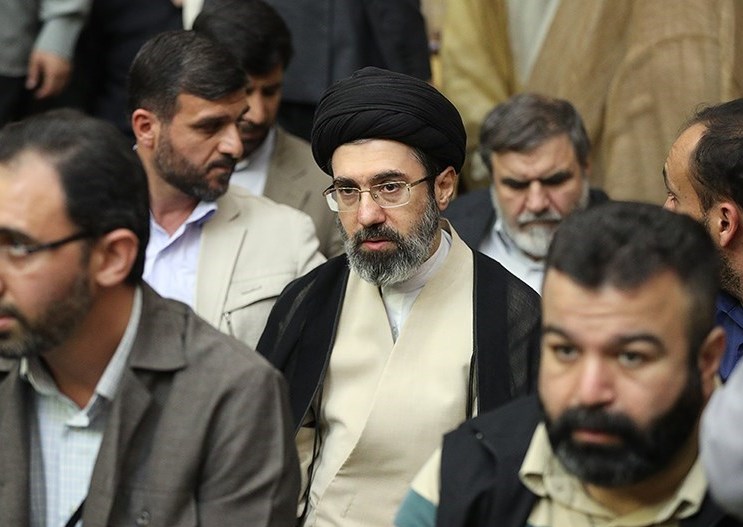
Mojtaba Khamenei's first public statement, read by a state television anchor, declared that Iran would maintain the closure of the Strait of Hormuz and continue striking American bases. The 56-year-old cleric, appointed supreme leader on March 8, has not appeared in public since taking office — a silence that only deepens the uncertainty surrounding his grip on power.
Hegseth told reporters on March 13 that Khamenei was "wounded and likely disfigured." Leaked audio suggests the cleric suffered a leg injury in the strike that killed his father. Iranian Foreign Minister Abbas Araghchi pushed back, insisting Khamenei "is in excellent health and in control of the situation." The regime's insistence on his health, paired with his continued absence, has left the question unresolved.
Despite the decimation of Iran's leadership and military infrastructure, the regime continues to function. Hegseth said Iran's entire ballistic missile production capacity has been "functionally destroyed," and the IDF has eliminated more than 300 Iranian ballistic missile launchers — roughly 60 percent of Iran's total launcher stockpile.
Ballistic missile launches from Iran have dropped 90 percent from the war's opening day, according to Adm. Brad Cooper, the CENTCOM commander. The U.S. has also degraded Iran's navy, with more than 60 ships and 30 minelayers targeted. The numbers speak to a military in collapse — but not a government willing to surrender.
The Strait of Hormuz remains effectively closed. Iranian officials say the conflict will end only with recognition of Iran's "legitimate rights" and payment of reparations — terms Washington has not entertained.
The economic shockwaves have spread far beyond the Persian Gulf. The International Energy Agency released a record 400 million barrels from emergency reserves to stabilize global markets. Bangladesh closed its universities early. Pakistan and the Philippines declared four-day workweeks to conserve energy. IMF Managing Director Kristalina Georgieva warned that every 10 percent increase in energy prices over 2026 is expected to push global inflation up by nearly half a percent. Ordinary families from Dhaka to Manila are absorbing the cost of a war they did not start.
One government has profited handsomely. Russia's Kremlin is earning up to $150 million per day from elevated oil prices — a windfall delivered by the chaos in the Gulf.
Regional tensions show no sign of easing. Hezbollah launched roughly 200 rockets and 20 drones at Israel in mid-March. Israeli forces responded with extensive airstrikes and limited ground operations. The Houthis in Yemen have voiced solidarity with Iran but have not reopened hostilities — analysts suggest Tehran may be holding them in reserve, or that they are hedging against a potential regime collapse.
The war has cost American lives, too. At least 13 U.S. service members have been killed: 7 by hostile action and 6 in a non-hostile aircraft crash.
President Trump has offered mixed signals about the administration's objectives. Early statements framed the strikes as an opportunity for Iranians to "take back their country." Later remarks suggested a negotiated settlement might be in view. The gap between those two positions — liberation and negotiation — defines the strategic ambiguity at the heart of the campaign.
Seventeen days in, the missiles have fallen, the leadership has fractured, and the children of Minab are gone. Whether that adds up to victory depends entirely on what the word still means.