Iranian Soccer Captain Withdraws Asylum Bid as Family Threats Mount
Iran's women's soccer captain abandoned her Australian asylum bid after her mother was targeted by authorities — the fifth player to reverse course as Tehran's pressure campaign tightened on families back home.
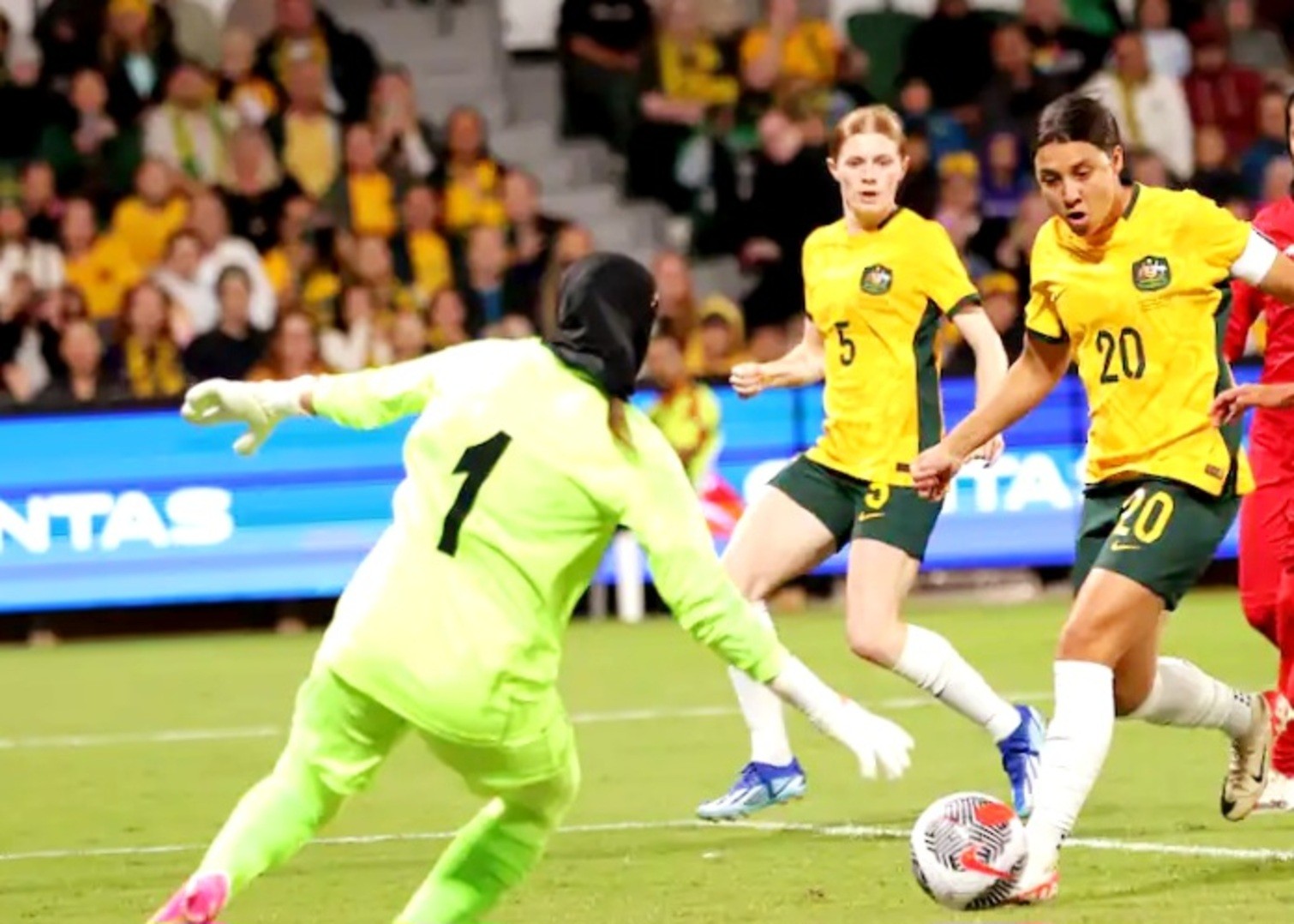
The message arrived unsigned, but Zahra Ghanbari knew exactly who sent it: "Your families are missing. We don't know what has happened to them." Five days after fleeing her Sydney hotel to seek asylum in Australia, the Iranian team captain withdrew her bid and boarded a flight home. She had just buried her father. Now her mother was being targeted.
Ghanbari became the fifth member of Iran's women's national soccer team to reverse her asylum decision and return to Iran. The Iranian Football Federation did not confirm her departure Saturday. Instead, five players and a staff member joined the remaining team in Kuala Lumpur, awaiting a flight to Tehran. Only two members remain in Australia: Atefeh Ramezanizadeh, 33, and Fatemeh Pasandideh, 21.
The chain of events began Feb. 28, when the United States and Israel launched joint airstrikes on Iran, killing Supreme Leader Ayatollah Ali Khamenei. Two days later, Iran's women's team played the opening match of the Women's Asian Cup in Australia. Before kickoff, the players refused to sing the national anthem — a silent protest against Tehran's brutal crackdown on dissent.
Iranian state media branded them "wartime traitors." The team's next two matches featured players singing the anthem. After their elimination from the tournament, fans surrounded the team bus, chanting "save our girls" and waving the Lion and Sun flag, symbol of the pre-1979 monarchy.
Six players and a support staff member accepted humanitarian visas to remain in Australia before the rest of the Iranian contingent flew from Sydney to Malaysia on March 9. Two more joined them shortly after, bringing the total to seven. By March 15, five had withdrawn their asylum bids and returned to Iran.
Activists in the Iranian diaspora describe a systematic campaign of coercion. "According to information I received from Australia, the Iranian Football Federation, working with the Islamic Revolutionary Guard IRGC, has placed intense and systematic pressure on the players' families in Iran," said Shiva Amini, an exiled Iranian former futsal player and human rights activist. "They have even targeted the family of Zahra Ghanbari. Despite the fact that she has just lost her father, authorities are putting pressure on her mother."
Sydney councilor Tina Kordrostami confirmed the reports. "I know families have even been detained. I know family members are missing," she told Fox News. "One thing I really would like for people in the West to understand is that Iranians within the country have in many ways given up on the West, and they are only relying on one another to survive this regime."
Australian immigration lawyer Ian Avayee laid bare why the threats worked. "It meant their loved ones were in the IRGC's hands and what were they going to do with them," he said. "I haven't gone back to Iran in 17 years since I left. If they told me that about my remaining siblings, I would probably go back — maybe I would do the same."
The pressure extended beyond threats. Players reportedly held bonds worth 10 billion Tomans — approximately $67,000 — that authorities could confiscate if they failed to return. The Australian government denied visa applications to Iranian officials with IRGC ties, including Football Federation president Mehdi Taj.
Home Affairs Minister Tony Burke defended Australia's handling of the situation. "The Australian government has done everything we could to make sure these women were provided with the chance for a safe future in Australia," Burke said. "While the Australian government can ensure that opportunities are provided and communicated, we cannot remove the context in which the players are making these incredibly difficult decisions." Federal Minister Kristy McBain echoed that defense, telling ABC News the government had been "very open with the Australian people about the steps that we've taken to ensure that these women in the Iranian soccer team and support staff had every opportunity to make their own decisions."
The players' time in Australia was anything but free. Reports indicate they were confined to their hotel, escorted to conference rooms for meals, and had their phones confiscated upon arrival. The Asian Football Confederation reportedly barred journalists from asking questions beyond sports topics.
The backdrop is staggering in its brutality. At least 7,000 people died in January 2026 during a nationwide crackdown on protests. Hundreds remain detained across multiple provinces. A nationwide internet blackout persists. Police commander Ahmadreza Radan warned his forces would be "ready to pull the trigger" if demonstrations resumed.
Melbourne lawyer Kambiz Razmara offered a stark forecast for those who returned. "The women who had decided to return are heroes at the moment, but they will cop it," he said. "I have absolutely no doubt."
Activists and legal experts describe the tactics as transnational repression — authoritarian reach that stretches across borders, combining family detention, financial leverage, and surveillance to render freedom impossible without placing loved ones in danger. A player who defects does not pay alone. Her mother pays. Her siblings pay.
Two players remain in Australia. Whether they too will bend under the same pressure is unknown. Their families' fates are unknown. In Tehran, silence has always been the most dangerous answer.