Israel Strikes World's Largest Gas Field in Major Escalation
Israeli bombs struck the South Pars gas field Wednesday, holding 20 percent of global reserves, as Iran threatened Gulf energy infrastructure and Brent crude surged to $108.
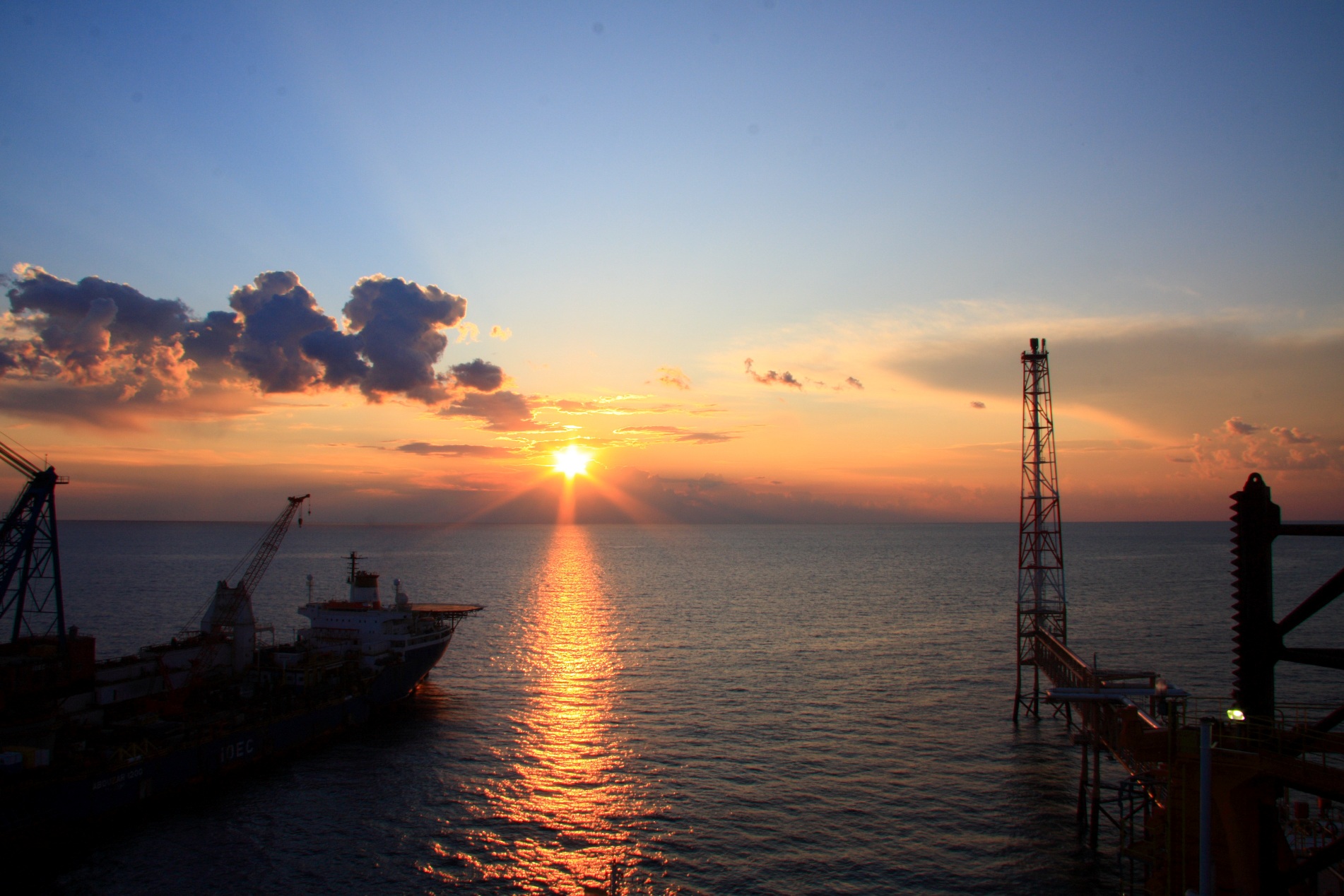
Fires burned across South Pars on Wednesday as Israeli bombs struck the world's largest natural gas field, transforming a regional war into a direct assault on global energy infrastructure. Hours later, Iran vowed to retaliate against oil and gas facilities in Qatar, Saudi Arabia and the United Arab Emirates — countries that have so far refused to join the fight despite repeated Iranian attacks.
The strikes on South Pars and petrochemical facilities in Asaluyeh and Kangan, Bushehr Province, mark the first time upstream energy production assets have been targeted since the war began Feb. 28. Iranian state television reported that phases 3, 4, 5 and 6 of the field were hit, forcing emergency shutdowns as firefighters worked to contain multiple blazes.
South Pars holds 1,260 trillion cubic feet of recoverable natural gas reserves — 20 percent of global known gas reserves. The field is jointly operated by Iran and Qatar, which calls its side the North Field. At peak production in 2025, Iran processed a record 730 million cubic meters of gas daily at South Pars.
Iranian state media outlets Fars and Tasnim identified specific facilities as legitimate targets for retaliation: the Ras Laffan refinery and Mesaieed Petrochemical Complex in Qatar; the Samref refinery and Jubail petrochemical complex in Saudi Arabia; and the Al-Hasan gas field in the UAE.
The escalation comes as the Strait of Hormuz blockade reaches unprecedented severity. Traffic through the critical waterway has collapsed 98 percent from normal levels — from 12 to 18 tankers daily in February to just 1 or 2 per day in March. Fifteen million barrels per day have vanished from Persian Gulf exports.
Despite the blockade, Iran continues exporting approximately 1 million barrels per day through the strait. Foreign Minister Abbas Araghchi stated the waterway remains "open" but closed to "enemies and their allies."
Qatar's Foreign Ministry spokesperson, Dr. Majed bin Mohammed Al Ansari, condemned the Israeli strike in a statement Wednesday. He called the targeting of facilities linked to South Pars "a dangerous & irresponsible step" that constitutes "a threat to global energy security, as well as to the peoples of the region & its environment."
The strike deepens a fraught calculation for Gulf states already absorbing Iranian aggression. Iran's attacks have expanded from Israel to target Saudi Arabia, the UAE and now infrastructure that cuts directly into Qatar's energy revenues — and the livelihoods of the millions who depend on them.
"There is a wide feeling across the Gulf that Iran has crossed every red line with every Gulf country," said Abdulaziz Sager, chairman of the Saudi-based Gulf Research Center. "At first we defended them and opposed the war. But once they began directing strikes at us, they became an enemy."
That shift in sentiment carries a price tag that dwarfs any battlefield calculation.
"If any member of the GCC decided to join this offensive, it would obligate the rest of the GCC countries to join at the same time," said Bahraini analyst Abdullah Aljunaid. "You could imagine what the oil prices would be. We are definitely talking about north of $150 per barrel."
The economic pain is already reaching kitchen tables. Brent crude rose to $108 per barrel Wednesday following news of the South Pars strike. The national average for regular gasoline in the United States has climbed to $3.70 per gallon, up 77 cents in one month. Diesel averages $4.97 per gallon, up $1.31. American consumers have spent nearly $2.5 billion more on gasoline since the war began.
Rapidan Energy's Fernando Ferreira noted that Iran has "calibrated its strikes on Gulf energy infrastructure to signal capability without triggering extended outages." He warned that the question now is whether Tehran shifts "from signaling to targeting critical components that could take months, if not years, to repair."
Bloomberg commodities analyst Javier Blas framed the broader strategic gamble in stark terms.
"Both sides are now targeting upstream (i.e., production) oil and natural gas assets," Blas wrote Wednesday. "Is this an attempt to escalate to de-escalate? Or is it simply a sign that escalation is spiraling out of control?"
Israeli sources said Wednesday's strike on South Pars was coordinated with the United States. Earlier in the day, Iran launched multiple-warhead missiles at central Israel, killing two people in Ramat Gan.
The blockade's severity has forced emergency rerouting across the region. Iraq restarted exports through the Ceyhan pipeline to Turkey, adding 250,000 barrels per day alongside 210,000 bpd from Kurdistan. Saudi Arabia has begun using its East-West pipeline to Red Sea ports. The UAE is directing more exports through the ADCOP pipeline to Fujairah.
The maneuvers buy time, but Kpler oil analyst Muyu Xu sees a harder reckoning approaching. "The blockade is now the worst disruption to oil flows ever," Xu said. "Real barrels are now disappearing from global oil markets, which can lead to demand destruction in the weeks to come." For the families already stretching budgets at the pump, the worst may not have arrived yet.