IRGC Celebrates as U.S. Refinery Burns
A massive explosion at Valero's Port Arthur refinery sent oil past $90 a barrel and drew celebrations from pro-Tehran accounts — raising urgent questions about American energy security.
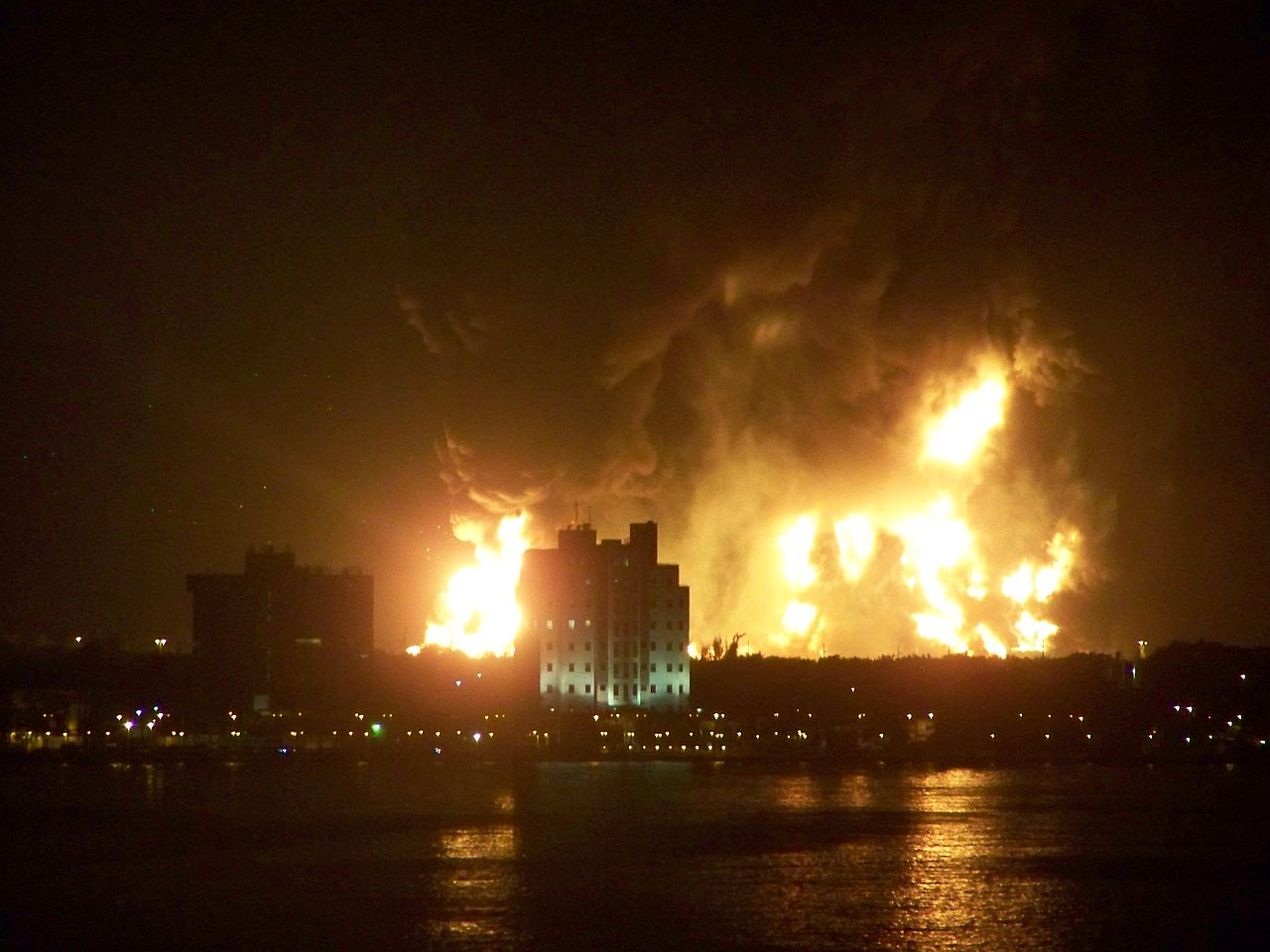
At dusk on Monday, a deafening explosion tore through the Texas sky, shooting flames above the smokestacks of one of America's largest refineries and forcing residents across three towns to shelter in place. Within hours, Iranian operatives were cheering the inferno on social media — as crude oil prices blew past $90 a barrel and gasoline hit its highest level in years.
The fire erupted at Valero's Port Arthur refinery on the evening of March 23, rattling homes miles away with a boom that rattled windows across three Texas towns. The 435,000-barrel-per-day facility — one of the 10 largest refineries in the United States — supplies gasoline, diesel and jet fuel across the Gulf Coast and beyond. The City of Port Arthur issued shelter-in-place orders for residents west of Port Arthur, Sabine Pass, Pleasure Island and areas south of Highway 73 as firefighters rushed to contain the blaze.
Global oil markets responded within minutes. West Texas Intermediate crude jumped to $90.62 per barrel; Brent crude reached $102.83. The national average for regular gasoline climbed to $3.91 per gallon — a 33 percent increase from just one month prior, according to AAA data. That spike landed on top of already strained Gulf Coast refining capacity, itself battered by ongoing Middle Eastern hostilities.
Local authorities offered a preliminary cause even as smoke still hung over the facility. "The explosion was likely caused by an industrial heater," Jefferson County Sheriff Zena Stephens told KFDM television on March 24. Valero public affairs manager Carol Hebert confirmed all personnel had been accounted for and said the company's emergency response team was coordinating with local authorities. The fire originated in a diesel hydrotreater unit near a fluid catalytic cracker, according to people familiar with the incident cited by Bloomberg.
But while investigators worked through the wreckage, a separate narrative blazed across social media. Pro-Tehran Iranian accounts on X posted footage of the Texas inferno and labeled it sabotage. "Pro-Tehran Iranian social media accounts celebrated the explosion at the Valero facility, with some reporting sabotage, but no evidence has been provided," said Joe Truzman, a senior research analyst at the Foundation for Defense of Democracies. The celebration was swift, loud — and deliberate.
The timing aligns with Iran's publicly declared strategic shift. Lebanese news outlet Al Mayadeen reported last week that Iranian Revolutionary Guard Corps commander Ali Abdollahi announced a move from "defensive" to "offensive" operations against U.S. and Israeli interests.
America's energy vulnerability has deepened over decades. U.S. crude distillation capacity has grown from roughly 18.4 million barrels per day in 2000 to about 19 million barrels per day in 2025 — modest growth that has left little margin for disruption. Iranian proxies have already demonstrated the ability to target global oil infrastructure: Houthi rebels in Yemen have attacked tankers in the Red Sea, and Iranian-backed militias have struck facilities across the Middle East. Now the question is whether those tactics could reach American soil.
Washington's response has been conspicuously quiet. Neither the FBI nor the Department of Homeland Security has addressed the sabotage allegations circulating online. Valero confirmed all personnel were accounted for, but its chief executive has not spoken publicly. That silence raises sharp concerns about whether the federal government is taking seriously the threat of foreign attacks on critical infrastructure.
The economic stakes extend far beyond Texas. "If oil were to hold above $100 for the next three months, we'd likely see very challenging economic conditions in the United States," said Tim Rezvan, managing director of oil and gas equity research at KeyBanc Capital Markets. Dan Doyle, founder of Reliance Well Services and Arena Resources, added that the longer Middle Eastern conflicts drag on, the greater the recessionary risk becomes.
The Port Arthur explosion lays bare America's precarious energy security position. With refining capacity stretched thin and global supply chains exposed to geopolitical disruption, the nation's critical infrastructure functions as both an economic lifeline and a potential military target. What investigators may ultimately rule an industrial accident still demands scrutiny through a national security lens.
As Texas fire crews monitor the smoldering complex and investigators search for definitive answers, the market reaction speaks louder than any official statement. The price spike reveals how exposed America's energy system has become — and the celebrations from Tehran's proxies confirm that foreign adversaries recognize that exposure. The next shock at the pump may not trace back to weather patterns or OPEC decisions, but to a deliberate strike on American soil.