Europe's Open Borders Fuel Iranian Terror Campaign
Four Jewish ambulances were torched outside a London synagogue at 1:45 a.m., the latest in a string of Iranian-linked attacks across Europe that intelligence officials had warned was coming.
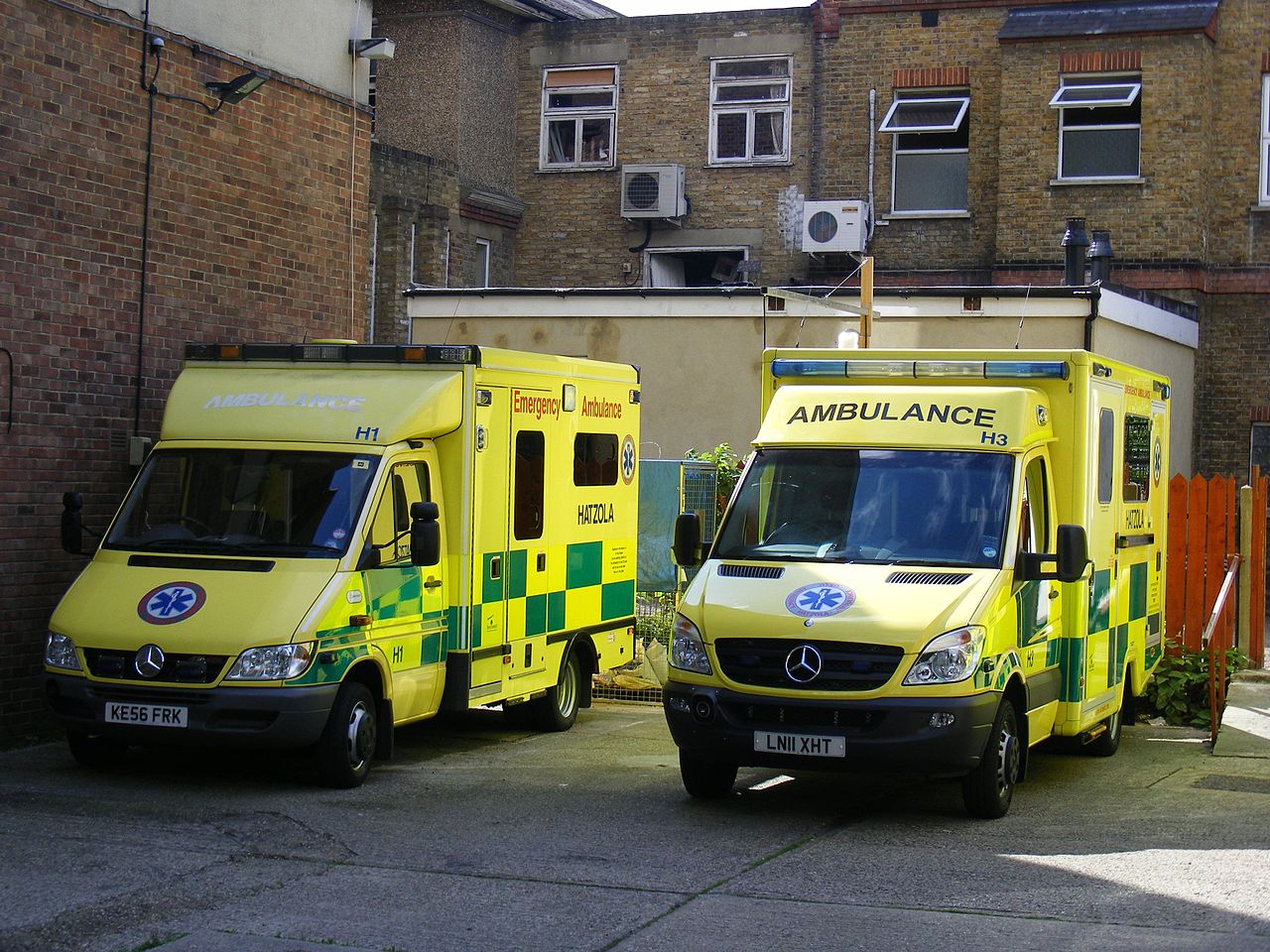
At 1:45 a.m. on March 23, suspects doused four Hatzola volunteer ambulances with accelerant outside a Golders Green synagogue in North London and set them ablaze. The oxygen cylinders onboard exploded, shattering windows in a neighboring apartment block and forcing 34 residents from their homes — reduced to watching from the street as the vehicles burned to ash.
Harakat Ashab al-Yamin al-Islamia, a previously unknown group, claimed responsibility for the arson via Telegram channels linked to Iran's Revolutionary Guard. The group's logo features a raised hand gripping a Dragunov sniper rifle — structurally identical to emblems used by Hezbollah and IRGC units. The Golders Green attack was not an isolated incident. The same group has claimed attacks in Liège, Rotterdam, and Amsterdam.
The violence landed on a continent already bracing for exactly this. On March 1, Marc Henrichmann, chair of Germany's Parliamentary Control Committee, warned that "retaliatory measures, including by Iranian sleeper cells in Europe, cannot be ruled out." His words followed the U.S.-Israel strike that killed Supreme Leader Ali Khamenei on Feb. 28, triggering Iranian vows of global retaliation. Europe, it turns out, was listening. Iran's networks were already in place.
MI5 has disrupted at least 10 Iran-backed plots since January 2022 — and more than 20 in 2025 alone. Over 25,000 Iranian nationals arrived in Britain via small boats since 2018, according to the Henry Jackson Society, a porous flow that allowed operatives to embed undetected across the continent. The numbers expose a security architecture that prioritized open borders over public safety.
Analysts who track Iranian proxy networks say the link to Tehran is unambiguous. "This group is an Iranian creation," Phillip Smyth of Homeland Security Today's Counterterrorism Advisory Board told The Telegraph. "The scope of their actions, branding, and Iran's own messages all demonstrate a clear link."
Matthew Levitt, a former FBI terrorism expert, confirmed the pattern fits the regime's playbook. "Iranian operations abroad are definitely part of the regime's toolkit for responding to attacks, including war," Levitt stated. "The regime carries out such attacks wherever it can, including in Europe." That toolkit, deployed for years against Iranian dissidents on European soil, has now turned on Jewish communities — with potentially lethal consequences.
Prime Minister Keir Starmer condemned the Golders Green assault as a "deeply shocking antisemitic arson attack," and the Metropolitan Police classified it as a hate crime. Yet Counter Terrorism Policing leads the investigation, a designation that signals stakes far beyond routine vandalism. Detective Chief Superintendent Luke Williams acknowledged the specialized terrorism unit's involvement while stopping short of formally declaring it a terrorist incident — a careful legal distinction that does little to reassure the families still unable to return to their homes.
Europe's open-border policies and lax vetting created a security time bomb. It is detonating now, block by block, city by city. If governments fail to dismantle these networks and harden their borders, the next target could be a school, a synagogue, or an embassy — in any European city, on any given night.