Russian Satellite Eyes Guided Iranian Strike That Killed Six Americans
Russia fed Iran satellite imagery of U.S. forces before a drone strike in Kuwait killed six American service members, intelligence officials say, exposing a deepening Moscow-Tehran military partnership.
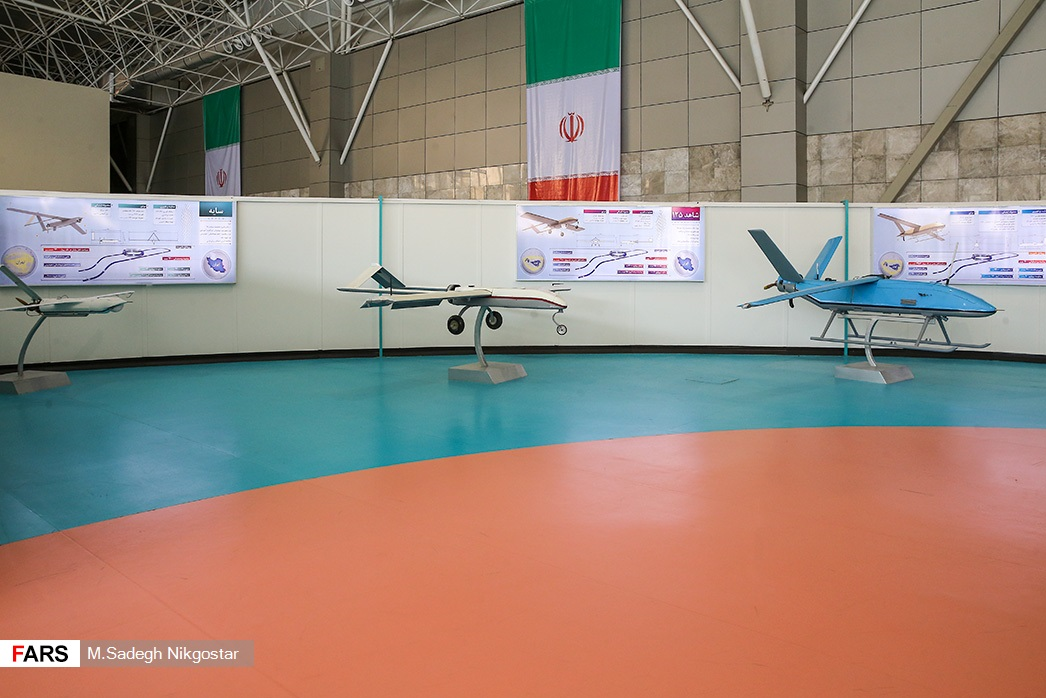
Six Americans died in Kuwait when an Iranian drone found its mark on a temporary military structure — and U.S. intelligence officials say Russia helped pull the trigger.
Since the U.S.-Israel air campaign began Feb. 28, Russia has fed Iran satellite imagery pinpointing American warships, aircraft and military personnel across the Middle East, intelligence officials told CNN. The Wall Street Journal confirmed Moscow also supplied advanced drone technology, helping Tehran sharpen its strikes against U.S. forces with lethal precision.
The contradiction cuts deep. Russia wages war in Ukraine under the banner of resisting NATO expansion, yet simultaneously helps Iran hunt American troops across the Middle East — a brazen double game that strips away any pretense of Moscow's stated grievances.
Iran fields only a small number of military reconnaissance satellites, leaving it ill-equipped to track fast-moving naval assets and other mobile targets. Russia's sophisticated overhead constellation fills that gap, giving Tehran the targeting resolution to punch through radar and command infrastructure where U.S. forces operate.
The results show. Dara Massicot, a Russian military expert at the Carnegie Endowment for International Peace, noted Iran has made "very precise hits" on radar and command infrastructure, striking in a highly targeted way. Nicole Grajewski of Harvard Kennedy School's Belfer Center pointed to "sophistication" in Iran's retaliatory strikes — both in target selection and the capacity to overwhelm U.S. and allied air defenses.
The technology transfer runs deeper than satellite imagery. Russia upgraded the communications systems on Iran's Shahed suicide drones and advised Tehran on tactics forged during the Ukraine war. According to the Institute for the Study of War and the Critical Threats Project, those adaptations include equipping Shaheds with Verba shoulder-fired MANPADS, extending the drone's reach to enemy aircraft.
This partnership stretches back years. Russia launched Iran's Khayyam spy satellite from the Baikonur Cosmodrome in Kazakhstan in August 2022 and has since lofted additional Iranian spacecraft, including three domestically developed satellites in December 2025. That same month, Iran purchased 500 Verba MANPADS and 2,500 infrared homing missiles from Russia.
Ukrainian President Volodymyr Zelensky, speaking to CNN on March 15, said intelligence confirms Iran struck U.S. bases with Russian-produced Shaheds carrying "Russian details." "Russia is supplying Iran with Shahed drones to use against the US and Israel," Zelensky said. "It is 100% facts that Iran has used Russian-made Shaheds to attack US bases."
Zelensky described how radically the weapon has evolved. "You can't even compare the first class of Shahed, what was at the very beginning of the war, and today's Shahed," he said, adding that Ukraine served as "kind of an experiment place for these drones." American troops in Kuwait absorbed the lessons of that laboratory.
The Trump administration offered measured responses. President Donald Trump told Fox News on March 14 that Putin "might be helping them a bit," then added, "And he probably thinks we're helping Ukraine, right?" When pressed, he said, "I think he might be helping them a bit, yeah they do it, and we do it." White House press secretary Karoline Leavitt dismissed the satellite intelligence reports outright. "It clearly is not making any difference with respect to the military operations in Iran because we are completely decimating them," she said. Defense Secretary Pete Hegseth told CBS's "60 Minutes" that the administration is "tracking everything."
Moscow offered neither denial nor confirmation. Kremlin spokesman Dmitry Peskov said only, "We are in dialogue with the Iranian side, with representatives of the Iranian leadership, and will certainly continue this dialogue." What Russia receives in exchange for its assistance remains unclear.
What is not unclear: a CIA station at the U.S. Embassy in Riyadh sustained limited fire and material damage in Iranian strikes. And six Americans — whose names have not yet been released — came home in flag-draped coffins from a war no one has officially declared.