Three Cargo Ships Burn in Hormuz as Iran's Drone Chokehold Tightens
Three crew members are missing after projectiles struck the Thai-flagged Mayuree Naree and two other vessels in the Strait of Hormuz, deepening a global shipping crisis.
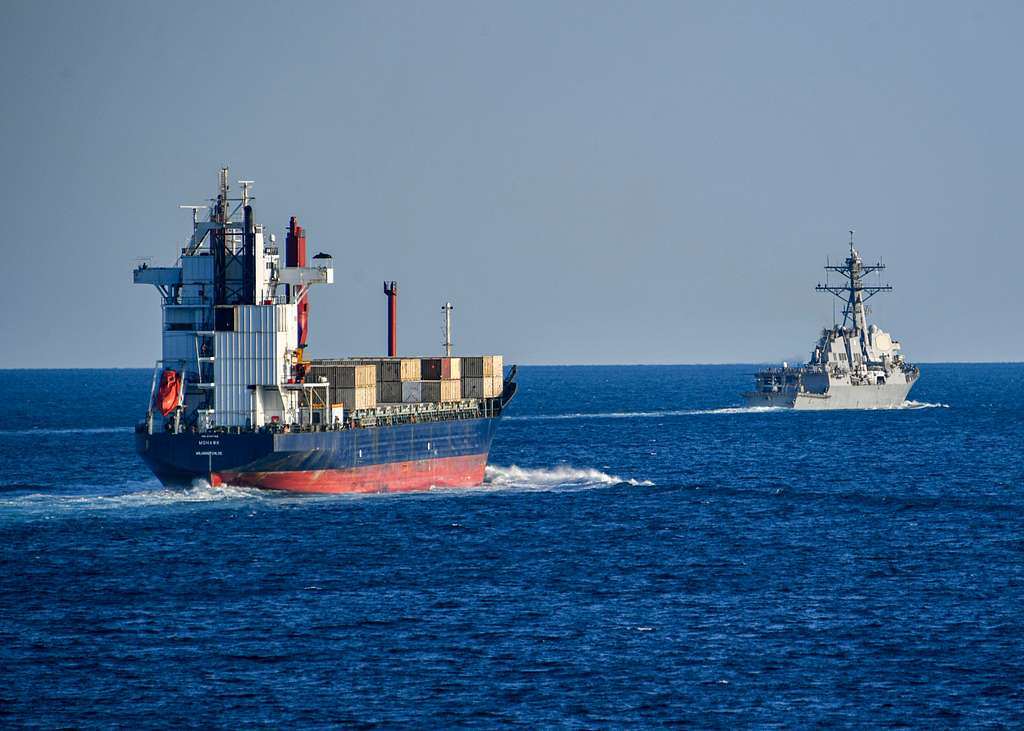
Three crew members remain missing, trapped aboard a burning vessel in the world's most vital shipping chokepoint, as Iranian drones accomplish what its navy never could.
The Thai-flagged Mayuree Naree caught fire in the Gulf on Wednesday after being struck by "two projectiles of unknown origin." The engine room fire forced the evacuation of 20 crew members, but three seafarers remain missing, their fate unknown as the vessel continues to burn. Within hours, two more ships suffered damage: the Japan-flagged container ship ONE Majesty sustained minor damage from an unknown projectile, and the Marshall Islands-flagged Star Gwyneth took hull damage from what authorities described as a "projectile of unknown origin."
The attacks come as the narrow waterway faces its most severe disruption in decades. At least 14 vessels have been struck or targeted since the conflict began, according to maritime security firms tracking the crisis. Tanker traffic has dropped to near zero, with over 150 ships now anchored outside the strait, too afraid to enter the 21-mile-wide bottleneck.
The stakes could not be higher. Roughly 20% of global seaborne oil trade passes through the Strait of Hormuz, carrying approximately 20 million barrels per day between Middle East producers and Asian markets. Europe receives 12% to 14% of its liquefied natural gas from Qatar through the same waterway. In 2024, an estimated 84% of crude oil shipments through the strait were destined for Asian markets.
Major container shipping companies including Maersk, CMA CGM and Hapag-Lloyd have suspended transits through the strait. Insurance premiums for the route have quadrupled since the conflict began, rising from 0.125% to between 0.2% and 0.4% of a ship's insurance value per transit. "This increasingly points to a sustained pattern rather than isolated incidents," said Dimitris Ampatzidis, a senior risk and compliance analyst at maritime data firm Kpler. "The pace of attacks does not suggest any intention to de-escalate."
The crisis emerged from a military paradox. On February 28, American and Israeli forces launched joint airstrikes on Iran in Operation Epic Fury, killing Supreme Leader Ali Khamenei. "They've lost their navy. They've lost their air force. They have no anti-aircraft apparatus at all. They have no radar. Their leaders are gone," President Donald Trump stated in a Fox News interview this week.
Yet Iran's asymmetric capabilities remain potent. The IRGC began transmitting warnings via VHF radio hours after the airstrikes, stating no ships would be permitted to pass through the strait. Iran has reportedly deployed approximately a dozen mines in the waterway, though US intelligence reports the country maintains a stockpile of 2,000 to 6,000 naval mines of Iranian, Chinese and Russian manufacture.
The economic consequences have already rippled across the global economy. Brent crude oil prices surpassed $100 per barrel on March 8, marking the first time in four years, before peaking at $126 per barrel. Natural gas prices in Europe surged from €30 per megawatt-hour to €46, peaking above €60. "Gas prices have risen by 50% and oil prices have risen by 27%," said European Commission President Ursula von der Leyen. "If you translate that into euros — the 10 days of war have already cost European taxpayers an additional 3 billion euros in fossil fuel imports. That is the price of our dependency."
The United States has responded with both threats and action. On March 10, US forces destroyed 16 Iranian mine-laying vessels near the strait. But when Trump promised naval escorts for commercial vessels, the US Navy refused requests from the shipping industry, citing high risk to American sailors.
Iranian officials have vowed to maintain pressure. "The U.S. will not be able to control oil prices," said Ebrahim Zolfaqari, a spokesperson for Khatam Al-Anbiya military command headquarters. "We won't allow even one liter of oil to reach the U.S., Zionists and their partners. Any vessel or tanker bound to them will be a legitimate target. Get ready for the oil barrel to be at $200 because the oil price depends on the regional security which you have destabilized."
The standoff raises an unsettling question for a world dependent on global trade: Can military dominance clear a waterway of mines and drones? The answer remains unknown as the chokehold tightens.