Trump Bombs Iran's Kharg Island Hours After Dismissing It as a Target
U.S. warplanes obliterated military targets on Iran's oil hub Kharg Island hours after Trump called it a low priority, deepening a two-week war already killing Americans and spiking gas prices.
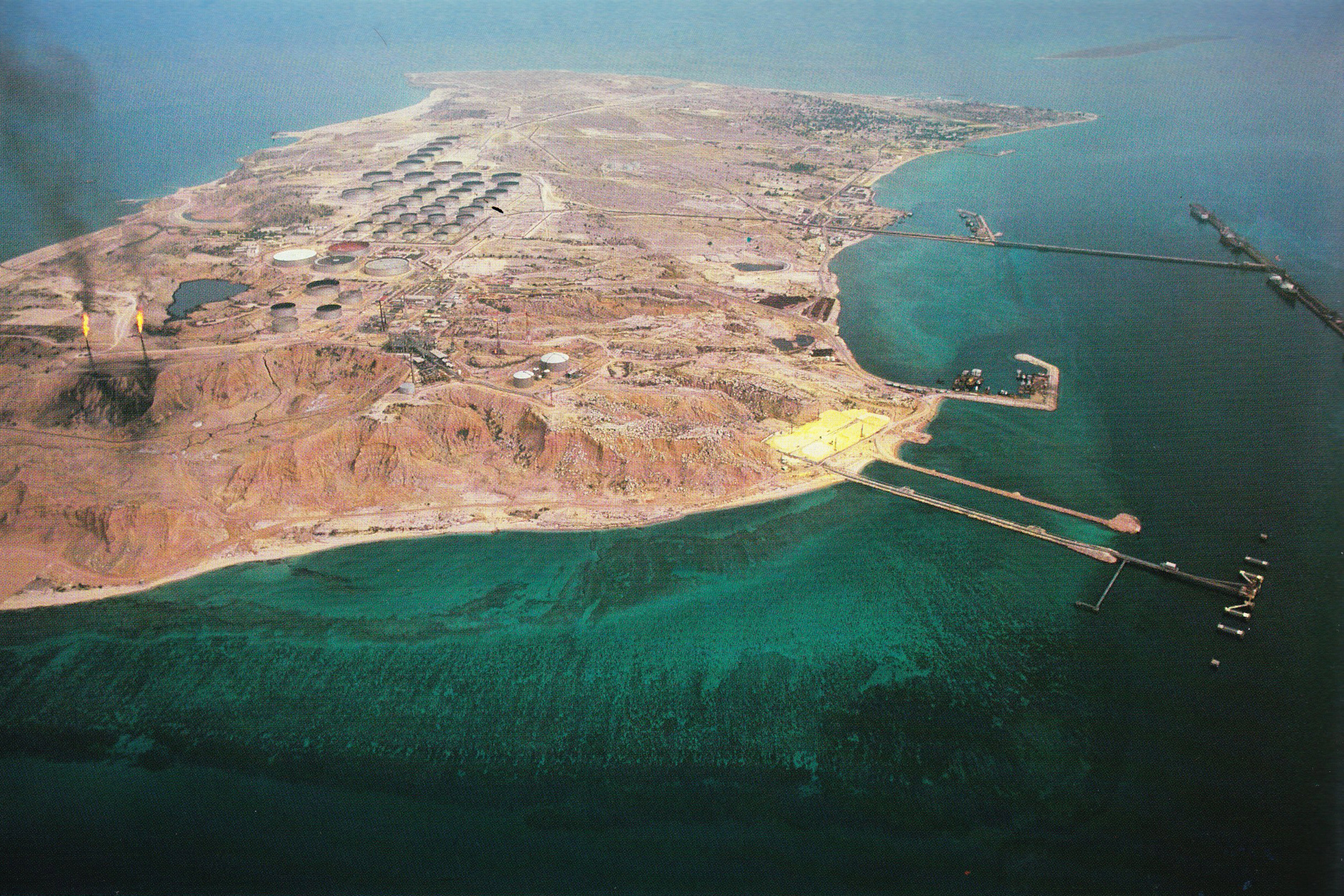
By morning, President Trump told Fox News Radio that Kharg Island was "not high on the list." By evening, after the stock market closed, the United States had bombed it.
The strike transformed Kharg Island from a distant prospect into the latest front in Operation Epic Fury — a two-week-old war that has claimed 13 American lives and sent oil prices spiraling. Trump described the assault as "one of the most powerful bombing raids in the History of the Middle East" in a Truth Social post that landed just as the sun set over the Persian Gulf.
"Moments ago, at my direction, the United States Central Command executed one of the most powerful bombing raids in the History of the Middle East, and totally obliterated every MILITARY target in Iran's crown jewel, Kharg Island," Trump wrote.
Kharg Island sits roughly 20 kilometers off Iran's southern coast in the northern Persian Gulf. At 22 square kilometers — about one-third the size of Manhattan — its deep waters allow supertankers to dock directly alongside pipelines feeding major oil fields including Aboozar, Forouzan and Dorood. China imports approximately 13 percent of its oil through Kharg, making the island a linchpin in global energy flows.
The strike targeted missile and mine storage sites, the Joshen Sea Base, the airport control tower and a helicopter hangar. Trump stated he deliberately spared the oil infrastructure "for reasons of decency," then added a warning that carried weight far beyond ceremony: "However, should Iran, or anyone else, do anything to interfere with the Free and Safe Passage of Ships through the Strait of Hormuz, I will immediately reconsider this decision."
Iranian state media reported that oil infrastructure remained undamaged, though officials at the Ministry of Petroleum described nearly two hours of nonstop explosions during the assault. On an island where supertankers normally queue for loading, that sustained roar of detonations marked something new.
The strike marks a sharp escalation in a conflict that began Feb. 28. Defense Secretary Pete Hegseth said more than 15,000 Iranian targets have been struck since the war began — a figure suggesting a campaign of attrition rather than surgical precision. Iran had warned repeatedly that attacking its islands would cross a red line and trigger strikes on energy infrastructure throughout the Persian Gulf.
Iranian military officials followed through on those warnings, threatening to destroy oil and energy facilities belonging to firms cooperating with the United States. The parliament speaker had called for "unprecedented retaliation" if islands were struck — hours before the bombs fell. The timing suggests Tehran knew what was coming.
The war is no longer abstract for most Americans. Gasoline prices have risen approximately 65 cents since Feb. 28, averaging $3.63 per gallon. Brent crude is up 41.5 percent since the conflict began. The International Energy Agency announced a release of 400 million barrels from emergency reserves to stabilize prices — an acknowledgment of how severe the disruption has become.
Dissent is growing within Trump's own coalition. "These are 13 lives that I believe should not have been lost," said Marjorie Taylor Greene, former U.S. representative from Georgia. "This war is not something that Americans voted for in 2024."
David Sacks, the White House AI czar, said "this is a good time to declare victory and get out" on the All-In Podcast. His words reflect a sentiment building inside the administration itself.
Mark Kimmitt, a former U.S. Army brigadier general, argued the Kharg strike "means that we have raised the stakes in this war considerably." The shift from military targets to economic infrastructure changes everything.
"It's gone simply from a 'take out the military, take out the regime' but now we're trying to take out the economic lifeblood of this country, potentially," Kimmitt said. "And at that point, the prices of oil will just go out of control."
The Strait of Hormuz, through which 20 million barrels of oil normally transit daily, is effectively closed. Iran has blockaded the waterway in retaliation for the strikes, choking off a channel that carries one-fifth of the world's daily oil consumption.
Mojtaba Khamenei, Iran's newly installed Supreme Leader, issued his first statement as head of state, thanking fighters for their service. He pledged to maintain the Strait's closure and warned that Iran would attack all U.S. bases in the region unless they were shut down.
Military deployments are accelerating. The Pentagon confirmed the 31st Marine Expeditionary Unit is deploying from Japan aboard the USS Tripoli — an amphibious assault ship carrying approximately 2,400 troops, F-35B fighters, V-22 Ospreys and helicopters. The Gerald R. Ford and Abraham Lincoln carrier strike groups are already operating in the region.
A missile struck a helipad inside the U.S. Embassy compound in Baghdad on Saturday, one of several incidents targeting American facilities in Iraq over the past week. Tehran's response, it seems, is already underway.
The war has killed at least 1,300 to 1,444 Iranians, with over 18,500 injured. Approximately 700 people have died in Lebanon. Twelve Israeli civilians and 2 soldiers have been killed. The tolls are climbing on every side.
Trump declared in his announcement that "Iran had plans of taking over the entire Middle East, and completely obliterating Israel. JUST LIKE IRAN ITSELF, THOSE PLANS ARE NOW DEAD!" The proclamation arrived as both sides position for what may be the war's next phase.
The island that was "not high on the list" by morning had become the centerpiece of the conflict by evening — a reminder that in this war, escalation arrives without warning, and the distance between a dismissal and a bomb run can be measured in hours.