Two Iranian Nurses Tortured, Gang-Raped for Treating Wounded Protesters
Security forces stormed a Tehran hospital, killed two nurses and sexually tortured two others for treating wounded protesters — then forced survivors to sign away the truth.
Before surgeons cut into her, the nurse begged them not to let her survive. She said she would kill herself if she lived. Now, strapped to her hospital bed and fitted with a colostomy bag, she waits for the security forces who tortured her to let her die.
The woman is one of two nurses who defied orders at Tehran's Rajaei Cardiovascular, Medical and Research Center on Jan. 8. Security forces had commanded hospital staff not to treat wounded protesters. Of 27 personnel present that night, 14 refused the order, and seven female nurses continued providing emergency care to injured demonstrators until security forces stormed the hospital around 11 p.m.
Inside, security agents opened fire on wounded patients. When nurses protested, agents beat them and transferred them to a storage area. Two female nurses were shot and killed. Staff were warned not to touch the bodies, which were left where they lay for days. Five other female nurses were arrested and taken away.
Iran International obtained exclusive details of the torture on March 10, citing anonymous sources with direct knowledge of the case. The two nurses subjected to sexual violence were raped repeatedly by groups of two or three agents over consecutive days.
Foreign objects were inserted into the victims' anuses, causing severe bleeding. One nurse suffered finger assault and other forms of sexual torture. Agents dragged the detained women to elevated places and forced them into small, pit-like spaces below.
The medical consequences have been catastrophic. One 33-year-old nurse had part of her intestine removed and now lives with a colostomy bag. Her uterus suffered severe tearing, requiring two surgeries; doctors say they may ultimately be forced to remove it completely. The second nurse had part of her intestine severely damaged and also now has a colostomy bag. Her uterus was completely removed due to severe bleeding.
"I'm on the verge of a psychological collapse," one Tehran doctor told The Guardian in January. "They've mass murdered people. No one can imagine … I saw just blood, blood and blood."
The nurse who begged to die must now be restrained in her hospital bed to prevent self-harm, all while remaining under security forces' supervision. Her family was forced to pay a significant sum to an intelligence officer to secure her release — and compelled to sign a document stating she had entered "temporary marriage" with one of the agents who raped her. The victim herself was required to sign a pledge declaring she would blame the rape and abuse on "rioters."
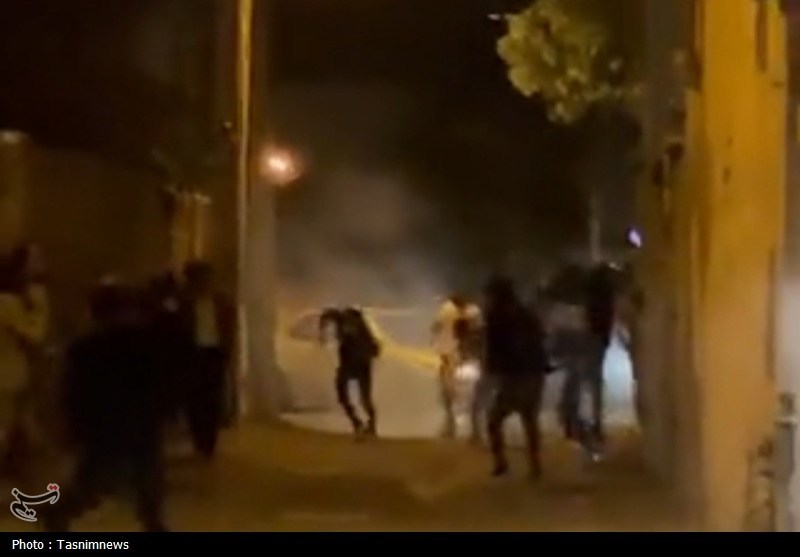
The attack unfolded during one of the deadliest crackdowns on protesters in modern Iranian history. A leaked IRGC Intelligence Organization report obtained by Iran International indicates more than 36,500 people were killed on Jan. 8-9 alone. The Iranian government officially acknowledged only 3,117 deaths as of Jan. 21.
Human Rights Activists News Agency documented 5,459 confirmed deaths and 17,031 under investigation. At least 54,000 protesters were arrested during the nationwide uprising. At least 209 children were killed, including a newborn.
Two teenage girls, ages 15 and 17, were also raped while detained during the January protests, according to Iran International's ongoing investigation.
"This regime must end, and the blood of so many young people must not be trampled," a surgical nurse in Isfahan wrote in response to a survey. "The world must not reach agreements with this regime and must help the people of Iran overthrow it."
"People in Iran daring to express their anger at decades of repression and demand fundamental change are once again being met with a deadly pattern of security forces unlawfully firing at, chasing, arresting and beating protesters, in scenes reminiscent of the Woman Life Freedom uprising of 2022," Diana Eltahawy, Amnesty International deputy director for the Middle East and North Africa, said in a January statement.
The crackdown intensified after Supreme Leader Ali Khamenei told protesters on Jan. 3 that they should be "put in their place." Security forces have enforced heavy, military-style security across Iran since, with nighttime curfews and continued arrests.
The information blackout remains near-total as of March. Iranian officials have not responded to requests for comment on the nurses' torture. The International Fact-Finding Mission on Iran has called for accountability for those responsible for the killings, torture and sexual violence.
"This is not an isolated incident," said Sara Hossain, chair of the UN fact-finding mission. "The information we have gathered points to severe human rights violations, including unnecessary and disproportionate use of force, resulting in arbitrary killings, torture, sexual violence, arbitrary arrests and detentions, and forced confessions."
The bodies of the two nurses killed at Rajaei Hospital were found by their families several days later at Kahrizak morgue. The fate of the five other nurses arrested that night remains unknown.