US Marines Race to Hormuz as Trump Weighs Seizing Iran's Kharg Island
Two thousand Marines steam toward the Strait of Hormuz as Trump eyes a seizure of Iran's Kharg Island oil terminal, the financial engine behind Tehran's war machine.
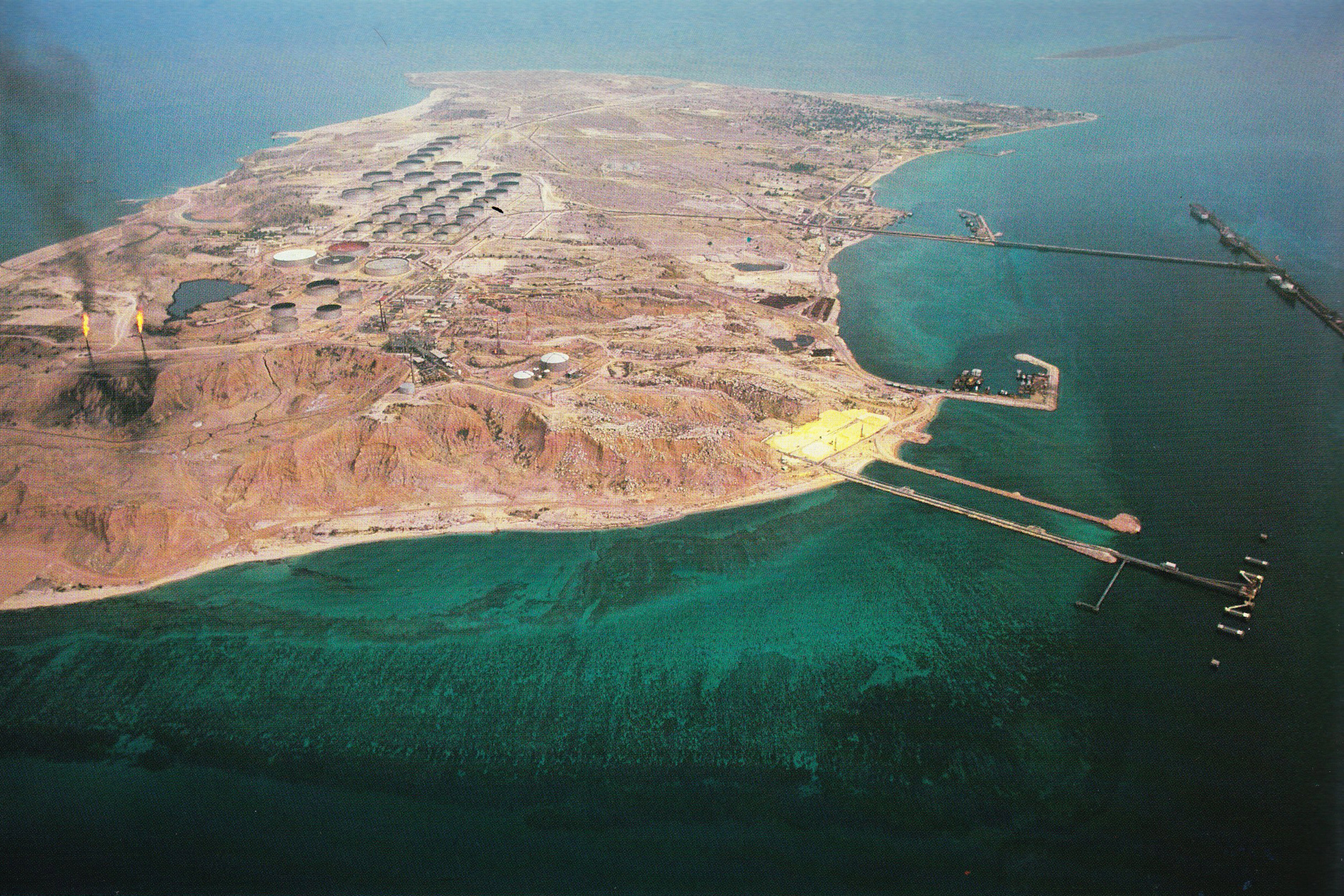
Two thousand American Marines are racing toward the Strait of Hormuz as President Trump weighs whether to seize Iran's crown jewel oil terminal — the facility that handles nearly all of Tehran's crude exports. The amphibious assault ship carrying them was tracked through Singapore on March 17, heading for the world's most contested waterway.
The USS Tripoli transited the Singapore Strait on March 17 and is expected to reach the strait between March 23 and 27. The warship departed Okinawa on March 11 with 2,200 to 2,500 Marines aboard, supported by the USS San Diego and USS New Orleans. It carries F-35B stealth fighters, MV-22 Ospreys, and MH-60S Seahawk helicopters capable of launching ground operations within hours of arrival.
American firepower is already on station. A-10 Thunderbolt II jets and AH-64 Apache helicopters have deployed to the strait, with Gen. Dan Caine confirming the A-10s are hunting and killing fast-attack watercraft in the Strait of Hormuz. Apaches have intercepted drones along the southern flank, with allied aircraft operating in support.
The toll on global commerce is severe. The Strait of Hormuz carries 20 percent of the world's oil supply, yet traffic has collapsed from roughly 138 vessels per day to just two since the war began on Feb. 28. Oil prices have surged from approximately $70 per barrel to above $100 — a shock felt at fuel pumps from Seoul to São Paulo.
The central question in Washington is whether to destroy what Iran has or to take it. The Kharg Island facility — a 25-square-kilometer complex lying 15 to 20 miles off Iran's southern coast — processes 1.1 million to 1.5 million barrels of crude daily and funds 50 to 60 percent of the Iranian regime's budget. Its 20,000 civilian residents live alongside the world's largest offshore crude oil terminal, a detail that weighs heavily in any targeting calculus.
Retired Gen. Frank McKenzie, former CENTCOM commander, argues that seizure beats destruction. "You've got really two choices," McKenzie said. "You can destroy the oil infrastructure, which would give irrevocable damage to the Iranian economy and the global economy, or you could seize it to use as a bargaining chip, which doesn't then permanently degrade the world economy." The distinction matters: one option ends the leverage, the other preserves it.
Trump has been direct about his intentions. He wants the strait open and has vowed to help countries that receive oil through it "a lot." A senior U.S. official stated that if Trump has to take Kharg Island to make it happen, that is going to happen. On March 13, the president confirmed that U.S. strikes hit 90 military targets on the island while deliberately sparing the oil infrastructure.
Those strikes were surgical by design. CENTCOM and Trump confirmed that the March 13 operation destroyed mine storage, missile bunkers, and air defense complexes while leaving the terminal untouched. "We have already destroyed 100 percent of Iran's Military capability, but it's easy for them to send a drone or two, drop a mine," Trump said — signaling that the pressure campaign is far from over.
Tehran is not backing down. New Supreme Leader Mojtaba Khamenei declared in a written statement that security must be denied to all of Iran's enemies. IRGC Navy Chief Alireza Tangsiri asserts the strait remains under Iranian control, though Iran has stopped short of an official military closure — a careful legal distinction that keeps diplomatic off-ramps technically open.
Trump called on China, France, Japan, South Korea, and the United Kingdom to send warships to escort tankers through the strait, dismissing NATO as a paper tiger. As of March 20, no nation has confirmed participation. The president framed it as a shared burden: countries that receive oil through Hormuz must take care of that passage, with U.S. support — but not U.S. sole responsibility.
Every day of deadlock tightens the economic vise. War-risk insurance premiums have spiked, and U.S. gas prices have risen 17 percent since the war began Feb. 28. Analysts warn oil could hit $200 per barrel if the crisis spreads to other Gulf exporters. With roughly 50,000 U.S. troops already in the region — a figure the Marines would push closer to 55,000 — Trump faces a narrowing window to decide before his forces arrive and the moment demands an answer.