Russia Violates Easter Ceasefire 400 Times Within Hours of Putin Announcement
Putin declared a 32-hour Orthodox Easter truce, but Ukraine counted 2,299 violations by Sunday morning — continuing a decade-long pattern of Russian ceasefires that collapse on contact.
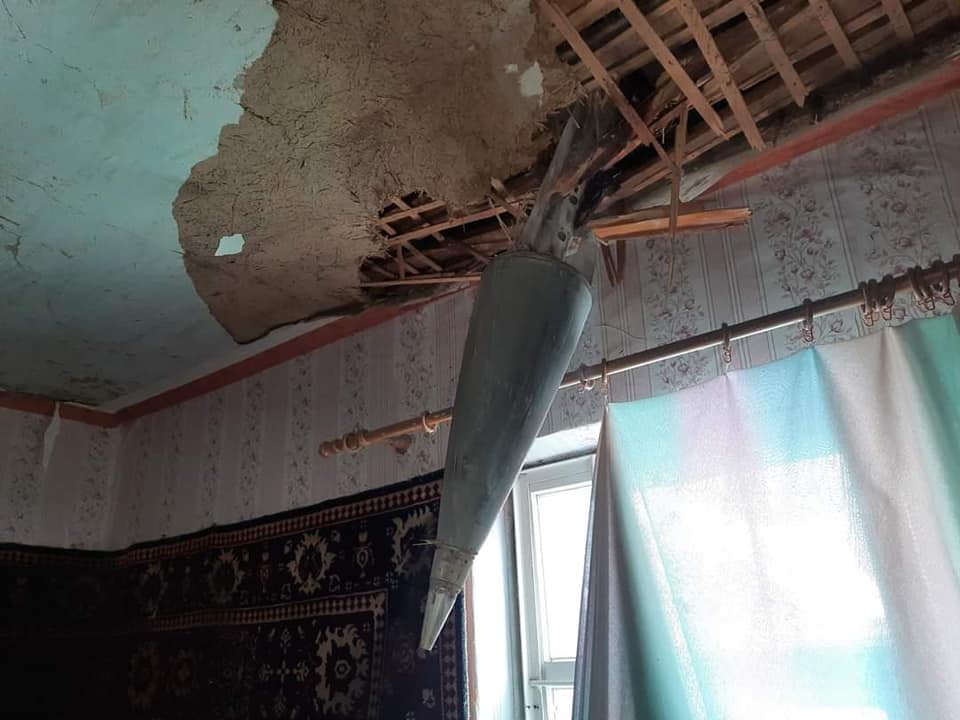
A trolley bus driver in Kherson died less than an hour before Vladimir Putin's 32-hour Orthodox Easter ceasefire was set to begin. By Saturday evening, Ukraine's military had recorded 469 violations. By Sunday morning, that number had climbed to 2,299. The same pattern repeated the year before, and for years before that: Moscow announces a humanitarian pause, then continues the war.
Ukraine's General Staff tallied the destruction in stark detail — 28 enemy assault actions, 479 artillery shellings, 747 strikes by attack drones, and 1,045 strikes by FPV drones between the ceasefire's 4 p.m. start and 7 a.m. Sunday. Russia's Defense Ministry countered with its own figures: 1,971 Ukrainian violations, including 1,329 FPV drone strikes and 375 munitions dropped via drone between the truce's start and 8 a.m. Sunday.
The truce collapsed before it officially began. Russia launched 160 drones overnight Saturday into Odesa and other regions, killing four civilians in the hours before the 4 p.m. deadline. Those strikes hit residential areas in Odesa and took the life of the Kherson driver with the ceasefire minutes away.
Russian governors reported civilian casualties from alleged Ukrainian attacks once the truce took effect. Kursk Region Governor Alexander Khinshtein said a Ukrainian drone struck a gas station in Lgov shortly after 4 p.m., wounding three people including a child.
"This cowardly strike by the enemy took place shortly after 4 p.m. — after the declared Easter ceasefire had already gone into effect," Khinshtein stated.
Ukraine's General Staff confirmed no missile strikes, guided aerial bombs, or Shahed-type drones were fired during the ceasefire period. That distinction matters: FPV drones represent a different category of asymmetric warfare than the heavy bombardment Ukraine documented from Russian forces.
One genuine humanitarian outcome emerged from the wreckage of the truce. Both sides swapped 175 prisoners each, plus seven civilians each, in an exchange mediated by the United Arab Emirates — the 72nd such swap since the war began. Many had been held since 2022, with more than half captured during the siege of Mariupol.
This year's collapse follows an identical script from 2025. Last Easter, Russia violated a similar 30-hour truce more than 2,000 times. Ukraine reported 1,882 cases of Russian shelling by Easter morning, and Britain's Foreign, Commonwealth & Development Office dismissed Moscow's gesture as a "one day stunt" fitting a "pattern of previous fake ceasefires."
Russia's history of broken truces runs deeper than recent Easters. The Minsk II agreement fell apart within days in February 2015 as pro-Russian forces seized Debaltseve, and OSCE monitors documented more than 4,000 violations that year. In August 2014, the Ilovaisk "humanitarian corridor" that Putin promised became a killing ground, with at least 366 Ukrainian soldiers dying under Russian and separatist fire as they withdrew.
Polish President Karol Nawrocki captured the pattern with blunt precision in December 2025. "With the Muscovites, neither in the 19th century, nor in the 20th century, nor in the 21st century, there are no agreements," Nawrocki stated. "There are only lies there, a desire to take away the spirit, and a desire to destroy."
Former Russian Deputy Foreign Minister Andrei Fedorov analyzed Putin's 2025 Easter announcement as "a pure political step," arguing the timing exploited Orthodox Church tradition while giving Moscow political cover to continue operations.
Ukrainian President Volodymyr Zelensky had proposed the Easter ceasefire more than a week before Putin's announcement, through U.S. mediation efforts. On Saturday, Zelensky stated that "Easter should be a time of silence and safety" and that "a ceasefire on Easter could also become the beginning of real movement toward peace."
Then came the warning. "We all understand who we are dealing with," Zelensky said. "Ukraine will adhere to the ceasefire and respond strictly in kind."
Kremlin spokesman Dmitry Peskov called Putin's move a "humanitarian gesture" on Friday, framing it around Moscow's longstanding settlement demands. The ceasefire was not discussed in advance with U.S. officials.
On the ground, the picture was unambiguous. Serhii Kolesnychenko, communications officer for Ukraine's 148th Separate Artillery Brigade, reported Saturday that "the ceasefire is not being observed by the Russian side," with Ukrainian forces responding with "silence to silence and fire to fire."
Zelensky proposed extending the ceasefire beyond Easter on Sunday. The Kremlin confirmed Putin ordered no extension, mirroring the outcome of the 2025 Easter truce.
The collapse sharpens a question that has shadowed every negotiation since 2014: whether any settlement with Russia is enforceable without verification mechanisms Moscow will not accept. OSCE data from Feb. 2022 recorded 3,231 ceasefire violations in a single day in pro-Russian-controlled areas, in the days just before the full-scale invasion. The pattern of announcing humanitarian pauses while sustaining military operations runs across Putin's entire tenure.
U.S.-led negotiations have stalled amid broader Middle East tensions and the Iran crisis. Russian envoy Kirill Dmitriev met with Trump administration officials in the United States during the ceasefire period to discuss peace negotiations and economic cooperation.
Near the front lines in Kharkiv, Lieutenant Colonel Vasyl Kobziak of Ukraine's 33rd Mechanized Brigade noted Sunday that fighting had decreased, but the truce had not been "fully" observed. His soldiers attended Easter Sunday mass outdoors, gathered in a forest near the front.
The final count stands at 2,299 violations by Ukraine's reckoning, 1,971 by Russia's. The prisoner exchange — 175 soldiers and seven civilians returned on each side — remains the only concrete humanitarian result from another truce that Moscow proclaimed and then dismantled, one strike at a time.