Trump Blockades Hormuz Strait to Stop Iran Extortion
President Trump ordered the US Navy to blockade the Strait of Hormuz, declaring Iran will not profit from what he called world extortion after peace talks collapsed.
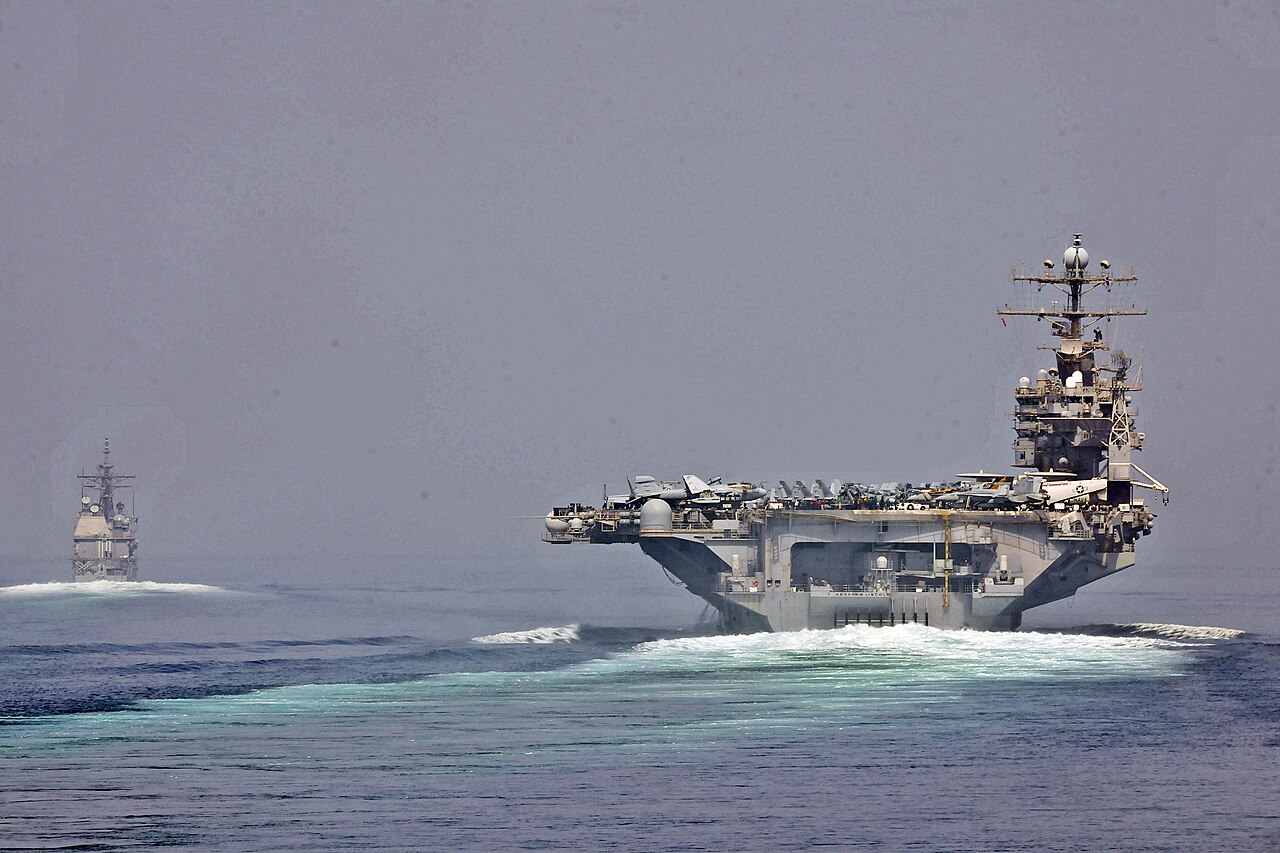
President Trump ordered the US Navy to begin blockading the Strait of Hormuz on Sunday morning, declaring that Iran will not be allowed to profit from what he called "world extortion" after peace talks collapsed in Islamabad without agreement on nuclear terms.
"Effective immediately, the United States Navy, the Finest in the World, will begin the process of BLOCKADING any and all Ships trying to enter, or leave, the Strait of Hormuz," Trump stated on Truth Social. "Iran will not be allowed to profit off this Illegal Act of EXTORTION."
At least two supertankers made U-turns upon attempting to enter the strait following the announcement. The US Navy already has two destroyers engaged in the region after transiting the waterway on Saturday, with underwater drones joining mine-clearing operations.
Trump's action targets Iran's institutionalized toll system, dubbed the "Tehran toll booth," which charges up to $2 million per large tanker for safe passage through the critical waterway. At least 25 vessels have used a new route through Iranian territorial waters between Qeshm and Larak islands since March 13, with some paying in Chinese yuan.
Iran's parliament is preparing legislation to formalize the toll system. Lawmaker Mohammadreza Rezaei Kouchi stated, "We provide its security, and it is natural that ships and oil tankers should pay such fees." Iran has demanded recognition of its sovereignty over the Strait of Hormuz.
"THIS IS WORLD EXTORTION, and Leaders of Countries, especially the United States of America, will never be extorted," Trump declared. "I have also instructed our Navy to seek and interdict every vessel in International Waters that has paid a toll to Iran. No one who pays an illegal toll will have safe passage on the high seas."
The blockade addresses a critical global chokepoint that normally carries 20 percent of the world's oil. Some 800 commercial vessels remain stranded, including nearly 400 oil tankers, with traffic dropping from 110-153 daily transits to fewer than 10 per day since March 1.
Twenty-two ships have been attacked and 10 crew members killed since Feb. 28, when US-Israel Operation Epic Fury killed Supreme Leader Ayatollah Ali Khamenei, launching the current conflict. Some 20,000 seafarers cannot transit safely, and 230 vessels loaded with oil await safe passage.
Trump acted unilaterally after Russia and China vetoed a United Nations Security Council resolution on April 6-7 to protect commercial shipping in the strait. Eleven nations supported the measure before the vetoes blocked international action.
Regional partners support the US action as defense of free trade principles. "The Strait of Hormuz has never been Iran's to close or restrict," said Sultan Al Jaber, UAE industry minister and ADNOC CEO. "Conditional passage is not passage. It is control by another name."
"Any attempt to do so is not a regional issue; it is the disruption of a global economic lifeline and a direct threat to the energy, food and health security of every nation," Al Jaber added. "The world simply cannot afford it and must not allow it."
The blockade announcement followed the collapse of 21-hour peace talks in Islamabad. "The bad news is that we have not reached an agreement," Vice President JD Vance stated at a press conference. "They have chosen not to accept our terms."
"The simple fact is that we need to see an affirmative commitment that they will not seek a nuclear weapon, and they will not seek the tools that would enable them to quickly achieve a nuclear weapon," Vance emphasized.
Trump responded to the diplomatic failure with military escalation. "Any Iranian who fires at us, or at peaceful vessels, will be BLOWN TO HELL!" Trump warned. "We are FULLY LOCKED AND LOADED, and our Military will finish up the little that is left of Iran."
The US action closes a strategic loophole that had allowed sanctioned Iranian tankers carrying Chinese oil to flow freely through the strait while ostensibly complying with international sanctions. Some 55 Chinese-flagged ships remain trapped in the Persian Gulf.
Iran's foreign ministry left the door open for further talks despite the blockade. "We should not have expected to reach an agreement in one meeting from the beginning," Esmaeil Baqaei, Iran's Foreign Ministry spokesperson, said in a post on X and in a statement to Iranian state media. "The success of this diplomatic process depends on the seriousness and good faith of the opposing side, refraining from excessive demands."
The immediate blockade reflects Trump's long-standing position on Iranian nuclear ambitions. The naval interdiction represents the most significant escalation since hostilities began, transforming a regional conflict into a direct confrontation over control of global energy arteries.