Six Nations Condemn China's Economic Coercion Against Panama
Six Western Hemisphere nations issue joint condemnation as China targets Panama-flagged vessels and seizes economic leverage following Panama's decision to reclaim sovereignty over strategic port terminals.
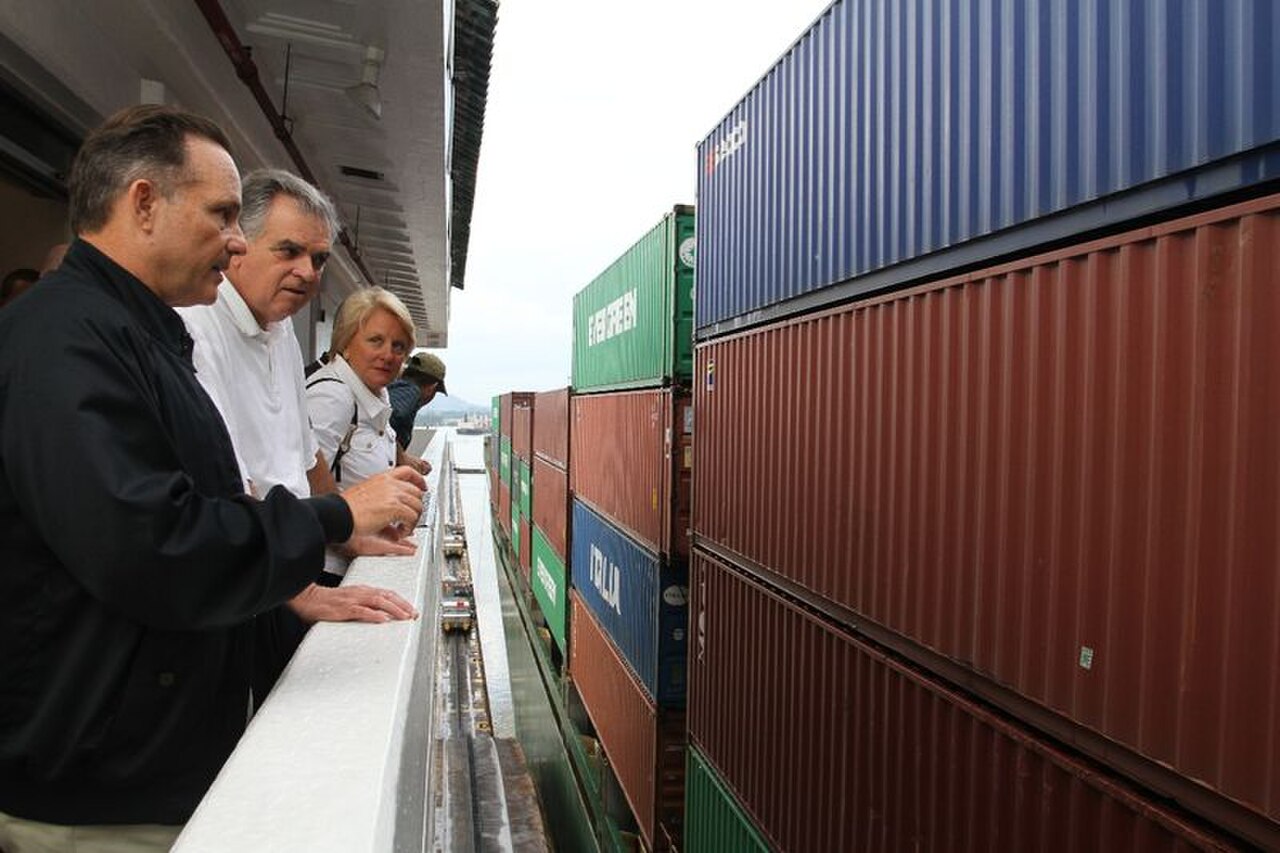
Shipping workers and merchants in Panama felt the pressure first. Then came the diplomatic response.
Six nations issued a joint statement April 28 condemning China's targeted economic pressure against Panama, marking a coordinated Western pushback against Beijing's economic coercion in the Western Hemisphere. The United States, Bolivia, Costa Rica, Guyana, Paraguay, and Trinidad and Tobago warned that China's actions represent "a blatant attempt to politicize maritime trade and infringe on the sovereignty of the nations of our hemisphere."
The statement arrives after Panama's Supreme Court terminated a port concession held by Hong Kong-based CK Hutchison Holdings. The multilateral response signals growing recognition that Beijing's pattern of economic statecraft threatens sovereign nations willing to challenge Chinese interests.
"We are monitoring with vigilance China's targeted economic pressure and the recent actions that have affected Panama-flagged vessels," the six nations declared. "Any attempts to undermine Panama's sovereignty are a threat to us all."
Panama's Supreme Court ruled Jan. 30 that CK Hutchison's 1997 concession for the Balboa and Cristóbal terminals was unconstitutional. A government audit found the contract had cost Panama approximately $1.2 billion in irregularities under the original agreement and another $300 million since a 2021 extension, including unpaid fees and "ghost" concessions. Panama seized physical control of the terminals in February, appointing Maersk and MSC as interim operators for 18 months.
China responded with coordinated economic pressure. Federal Maritime Commission data from Tokyo MOU shows 92 of 124 ships detained at Chinese ports in March were Panama-flagged, representing nearly 75 percent of detentions. The rate roughly doubled from approximately 35 percent in January and February to about 75 percent in March. The two terminals handle approximately 40 percent of the Panama Canal's container traffic.
FMC Chairman Laura DiBella declared March 26 that China's actions represent retaliatory economic coercion, not legitimate safety enforcement. "China has now imposed a surge in detentions of Panama-flagged vessels in Chinese ports under the guise of port state control, far exceeding historical norms," DiBella stated. "These intensified inspections were carried out under informal directives and appear intended to punish Panama after the transfer of Hutchison's port assets."
The FMC chair added, "I am not aware of any other country in recent history conducting vessel safety inspections and detentions in a punitive manner."
China's retaliation extended beyond vessel detentions. State-owned carrier COSCO suspended services at Balboa port. Chinese authorities summoned Maersk and MSC representatives to Beijing for "high-level discussions" on "international shipping business conduct." Agricultural inspections increased on Panamanian exports, and China froze its $1.4 billion Fourth Bridge project in Panama.
U.S. Secretary of State Marco Rubio stated April 2 that "China's decision to detain or otherwise impede Panama-flagged vessels engaged in lawful trade destabilizes supply chains, raises costs, and erodes confidence in the global trading system." The State Department added that China's actions "raise serious concerns about the use of economic tools to undermine the rule of law in Panama."
The Panama confrontation fits a documented pattern of Chinese economic coercion. From 2020 to 2024, Beijing imposed trade restrictions on Australian exports after Canberra called for a COVID-19 origins inquiry. China launched a de facto trade embargo against Lithuania in 2021 after the country allowed a Taiwan representative office. Similar campaigns targeted Guatemala, Japan, and Norway.
The G7 launched a Coordination Platform on Economic Coercion in May 2023. U.S. legislation created a Countering Economic Coercion Task Force in 2022.
China's Foreign Ministry spokesperson Lin Jian called the joint statement "entirely baseless and misleading" and warned nations "not to be deceived or exploited by malevolent forces." CK Hutchison has filed $2 billion in International Chamber of Commerce arbitration against Panama, accusing the nation of "unlawfully seizing property."
The stakes extend far beyond Panama's borders. The FMC noted Panama-flagged ships carry "a meaningful share of U.S. containerized trade" and that the detentions "could result in significant commercial and strategic consequences to U.S. shipping."
Panama's ship registry generates approximately $650 million annually in flag-related revenue from more than 8,600 vessels. Former Panama Maritime Chamber President José Digeronimo warned that Chinese harassment could jeopardize the registry.
The situation exposes how port state control mechanisms, ostensibly designed for maritime safety, can become tools of geopolitical leverage. The six-nation coalition signals growing hemispheric recognition that China's economic statecraft threatens sovereign nations everywhere.