Three US Carriers Cannot Force Iran to Negotiate Directly
Despite deploying three aircraft carriers to the region, the US must rely on Pakistani intermediaries for Iran ceasefire talks as Tehran refuses direct meetings with American officials.
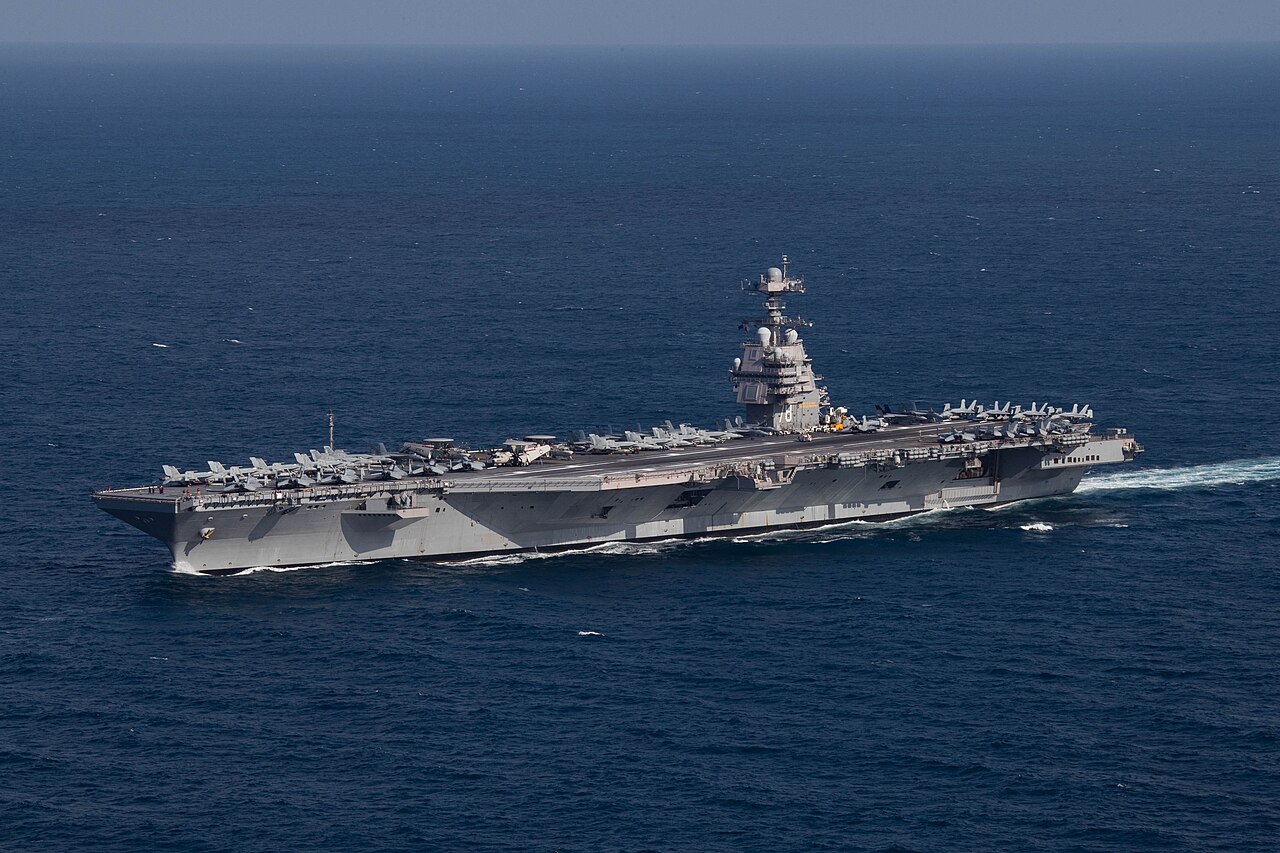
Washington dispatched two of Donald Trump's closest advisers to Pakistan for Iran ceasefire talks this weekend, but Tehran already declared it will hold no direct meetings with American officials. The United States must now rely on Pakistan to relay messages between the two nations. That diplomatic arrangement exposes the limits of American leverage, even with three aircraft carriers deployed and a war costing up to $51 billion.
Iranian Foreign Ministry spokesperson Esmaeil Baqaei stated explicitly on X: "No meeting is planned to take place between Iran and the US." Pakistan will serve as a bridge to convey Iranian proposals instead. Foreign Minister Abbas Araghchi arrived in Islamabad Friday evening and met with Pakistan's foreign minister Ishaq Dar and Army Chief Field Marshal Asim Munir. US envoys remain at a distance.
White House Press Secretary Karoline Leavitt confirmed Steve Witkoff and Jared Kushner will engage in what she called "direct talks, intermediated by the Pakistanis." She said, "We've certainly seen some progress from the Iranian side in the last couple of days," though she offered no details. Vice President JD Vance, who led the first round of negotiations, will not attend the meetings because Iran's former lead negotiator Ghalibaf is absent.
Trump told Reuters, "They're making an offer, and we'll have to see." He added, "I don't want to rush. I want to take my time." The response reveals a fundamental contradiction. The US reacts to Iranian overtures rather than dictating terms, despite deploying its most powerful fleet to the region since 2003.
The war has already cost the US $25 billion to $51 billion in 57 days. Supply chain damage inflicts direct pain on American consumers. The Strait of Hormuz carries a fifth of the world's oil and natural gas during peacetime. Daily transits have collapsed from an average of 129 to just 5 to 15 ships. The International Energy Agency called the Hormuz disruption "the largest oil supply disruption in history."
Three US carriers — the USS Abraham Lincoln, USS Gerald R. Ford, and USS George H.W. Bush — operate in the Middle East simultaneously for the first time since 2003. The fleet fields over 200 aircraft and 15,000 sailors and Marines. Defense Secretary Pete Hegseth said the blockade is "tightening by the hour" with "nothing in, nothing out." Pentagon assessments indicate clearing Iranian-laid mines from the Strait could take up to six months.
Brent crude topped $106 per barrel on April 24, roughly a 50 percent surge since the war began on Feb. 28. The national average gas price has risen past $4 per gallon. The International Chamber of Shipping condemned vessel captures by both the US and Iran as violations of international law. TS Lombard economist Freya Beamish warned, "No matter the outcome, there will be scarring — a rent built into energy prices."
Iran's economic adaptation undercuts the blockade's effectiveness. Despite the US naval blockade that began April 13, Iran exported 1.71 million barrels per day in April, which is 40 percent more than its pre-war monthly revenue. Iran earned at least $4.97 billion in one month from oil. The US spent $25 billion to $51 billion on the war.
Treasury Secretary Scott Bessent announced sanctions freezing $344 million in cryptocurrency linked to Iranian operations. He sanctioned Chinese refinery Hengli Petrochemical for buying billions in Iranian oil. "We will follow the money that Tehran is desperately attempting to move outside of the country," Bessent stated. He ruled out renewing waivers for Iranian oil, calling them "completely out of the question."
The War Powers Act requires Trump to obtain congressional authorization or limit military operations after 60 days. That deadline arrives on May 1. The fourth bipartisan War Powers Resolution failed 52-47 on April 15. The White House may argue the ceasefire stopped the clock. State Department Legal Adviser Reed Rubinstein has stated the Iran war is justified.
Legal experts note past presidents have refused to abide by the termination requirement. University of Colorado law professor Maryam Jamshidi said there is "no clear legal avenue for Congress to successfully force the president to abide by this requirement."
The war exposed how a single chokepoint can inflict global supply chain damage that reverberates through American households. The Strait of Hormuz spans just 21 miles. The World Food Programme warned that almost 45 million more people could fall into acute food insecurity if the conflict persists and oil prices remain above $100 a barrel.
European Council President António Costa said the immediate opening of the strait is "vital" for the world. He noted Europe suffers the worst economic consequences from its closure. The answer is not endless diplomatic theater through Pakistani intermediaries. Decisive sovereign action backed by credible force secures American interests without bankrupting American consumers.