Trump Orders Navy to Destroy Iranian Mine-Laying Boats in Strait of Hormuz
President Trump orders US Navy to shoot Iranian vessels laying mines in the Strait of Hormuz, escalating tensions as Iran's blockade triggers the worst global energy security crisis in modern history.
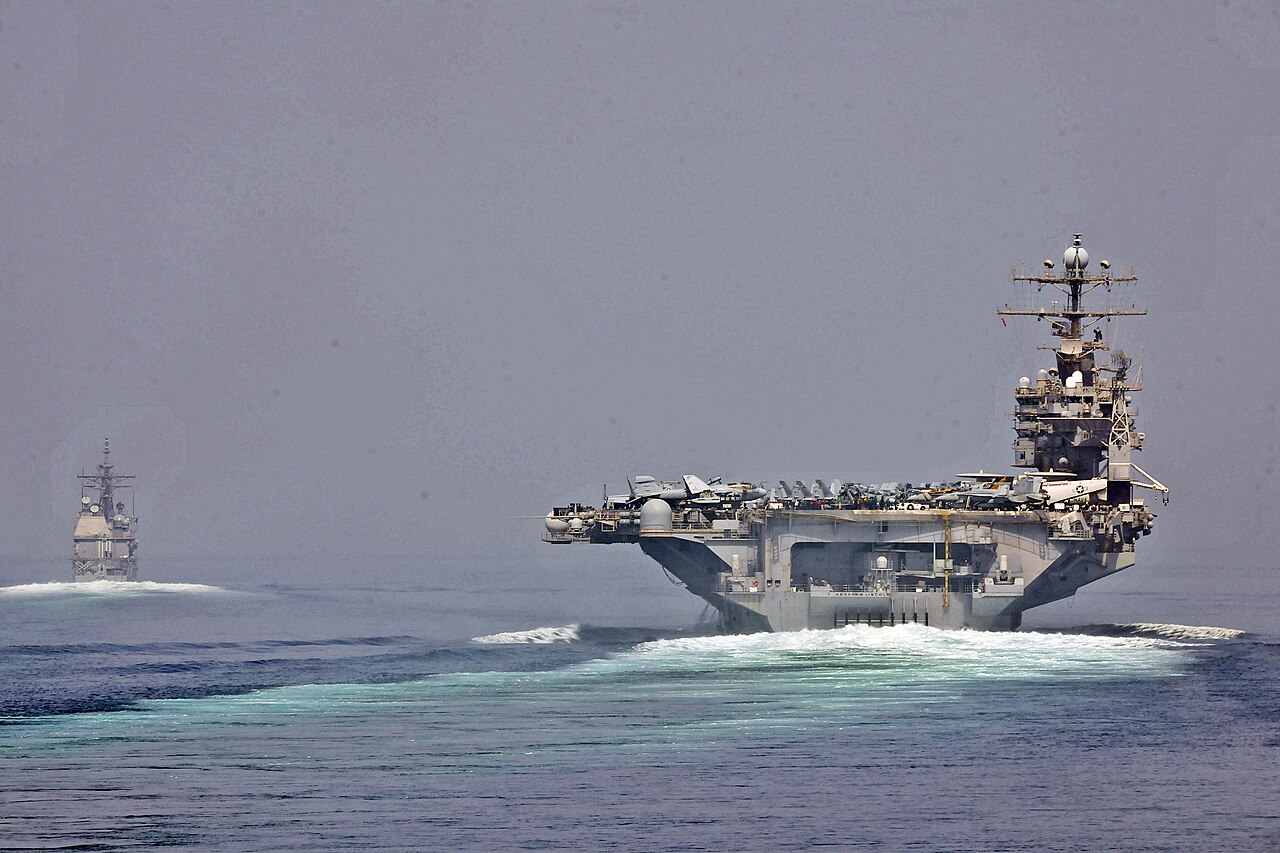
President Trump ordered the United States Navy to destroy Iranian boats attempting to lay mines in the Strait of Hormuz Thursday, a sharp escalation in Tehran's campaign to choke off the world's most critical oil chokepoint. The command targets Iranian vessels working to strangle global commerce through the 21-mile-wide strait, where families around the world now face skyrocketing energy prices and shuttered supply chains. The order marks a decisive response to Iran's blockade, which has triggered the worst energy security crisis in modern history.
"I have ordered the United States Navy to shoot and kill any boat, small boats though they may be, that is putting mines in the waters of the Strait of Hormuz," Trump wrote on Truth Social. "There is to be no hesitation." The president also ordered mine-clearing operations tripled immediately. Defense Secretary Pete Hegseth confirmed the expanded rules of engagement at an April 24 press briefing, stating, "If Iran is putting mines in the water or otherwise threatening American commercial shipping or American forces, we will shoot to destroy, no hesitation."
International Energy Agency Executive Director Fatih Birol warns the world faces "the biggest energy security threat in history." The IEA reports 13 million barrels per day of oil lost globally due to the Iran war and the blockade of the Strait of Hormuz. Throughput collapsed from approximately 20 million barrels daily to just 3.8 million, a 95 percent drop that has driven Brent crude above $103 per barrel and pushed US gasoline prices to $4.03 per gallon nationally.
Iran has placed at least 20 mines in and around the Strait of Hormuz, according to Pentagon briefings to Congress. Chairman of the Joint Chiefs Gen. Dan Caine told reporters the Iranian regime uses small Boston Whaler-sized boats measuring 13 to 42 feet for mine-dropping missions. Tehran deployed Maham 3 and Maham 7 mines but cannot locate all the devices it laid and lacks the capability to remove them. Pentagon Chief Spokesman Sean Parnell told the BBC that a reported six-month clearing timeline "is an impossibility and completely unacceptable to the Secretary."
The mining campaign during the active ceasefire period constitutes a deliberate violation of the US-Iran truce that began April 8. Hegseth framed the lethal order as a response to Tehran's provocation, stating, "Part of what the president is threatening is ensuring, if there's attempts to recklessly and irresponsibly lay more mines, we're going to deal with that." Since the US blockade began April 13, Central Command has redirected 33 vessels and seized the Guyana-flagged tanker Majestic X in the Indian Ocean.
Trump asserts US naval dominance over the critical passage, writing, "We have total control over the Strait of Hormuz. No ship can enter or leave without the approval of the United States Navy. It is 'Sealed up Tight,' until such time as Iran is able to make a DEAL!!!" The president noted Iran has lost 159 naval ships during the conflict, while three US aircraft carriers now operate in the Middle East region.
Col. Joe Buccino, former CENTCOM communications director, told Fox News Iran wages "a World War I-style of combat" using mines as "a tool of really psychological warfare." He explained, "We don't know how many are out there. We don't know where they are. And that creates fear and shuts down flow through the Strait of Hormuz." UN Development Program Administrator Alexander De Croo reports the war has pushed 30 million people back into poverty globally.
International allies are mobilizing to support the mine-clearing effort. UK and French defense ministers announced "real progress" is possible on a multinational Hormuz mission at a London planning conference, while British military divers prepare for operations. Italy says it will deploy up to four vessels. European Commission President Antonio Costa urged Europe to accelerate its energy transition toward "homegrown, clean, affordable energy sources."
Iranian President Masoud Pezeshkian responded defiantly to Trump's order, writing on X, "There are no radicals or moderates in the country. We are all 'Iranian' and 'revolutionary'... we will make the criminal aggressor regret his actions." Foreign Ministry spokesperson Esmail Baghaei claimed Iran's measures are "entirely lawful" under international law, asserting Tehran's right to "prevent misuse of this waterway."
Trump maintains the US position remains firm, stating he rejected an Iranian offer to reopen the strait three days ago. He says he has "all the time in the world" to wait for a satisfactory deal, while Iran faces mounting economic pressure losing an estimated $450-500 million daily from the blockade. The president has ruled out nuclear weapons against Iran but maintains his administration will not rush negotiations.
Israel Defense Minister Israel Katz declared Israel awaits "the green light from the United States...to complete the elimination of the Khamenei dynasty." The conflict has claimed approximately 3,400 Iranian lives, 2,200 in Lebanon, 32 in Gulf states, 23 Israelis, and 13 US service members since February 28. Over 30 ships have come under attack in the Persian Gulf region during the conflict.
Adm. Daryl Caudle, Chief of Naval Operations, outlined the future of mine warfare at a Sea-Air-Space conference, stating, "The future is unmanned. We are moving toward autonomous systems and AI that can sense and report mines more safely and quickly than traditional methods." The US Navy has decommissioned most of its dedicated mine-clearing ships, creating a capability gap Iran has exploited.
The economic toll extends beyond immediate energy markets. Iran's internet blackout has entered its 27th day, with connectivity at just 1 percent of normal levels. Iranian leaders claim toll revenues from strait passage have been deposited at the Central Bank, though international observers cannot verify these claims. The regime faces internal pressure as exiled Crown Prince Reza Pahlavi criticized ceasefire negotiations in Berlin, where he was splattered with red liquid as he left a news conference.
Trump's decisive action aims to break Iran's blockade and restore free navigation through the world's most critical oil chokepoint. With 20 percent of global seaborne oil normally transiting the strait, the administration views defending the passage as an economic imperative for the international community. The president's order makes clear Tehran's attempt to hold global energy supplies hostage through psychological warfare will meet immediate, lethal resistance from US naval forces.