Trump Blockades Hormuz Strait After UN Veto, Talks Fail
President Trump ordered a naval blockade of the Strait of Hormuz after peace talks with Iran collapsed over nuclear demands, targeting vessels that paid tolls to Tehran.
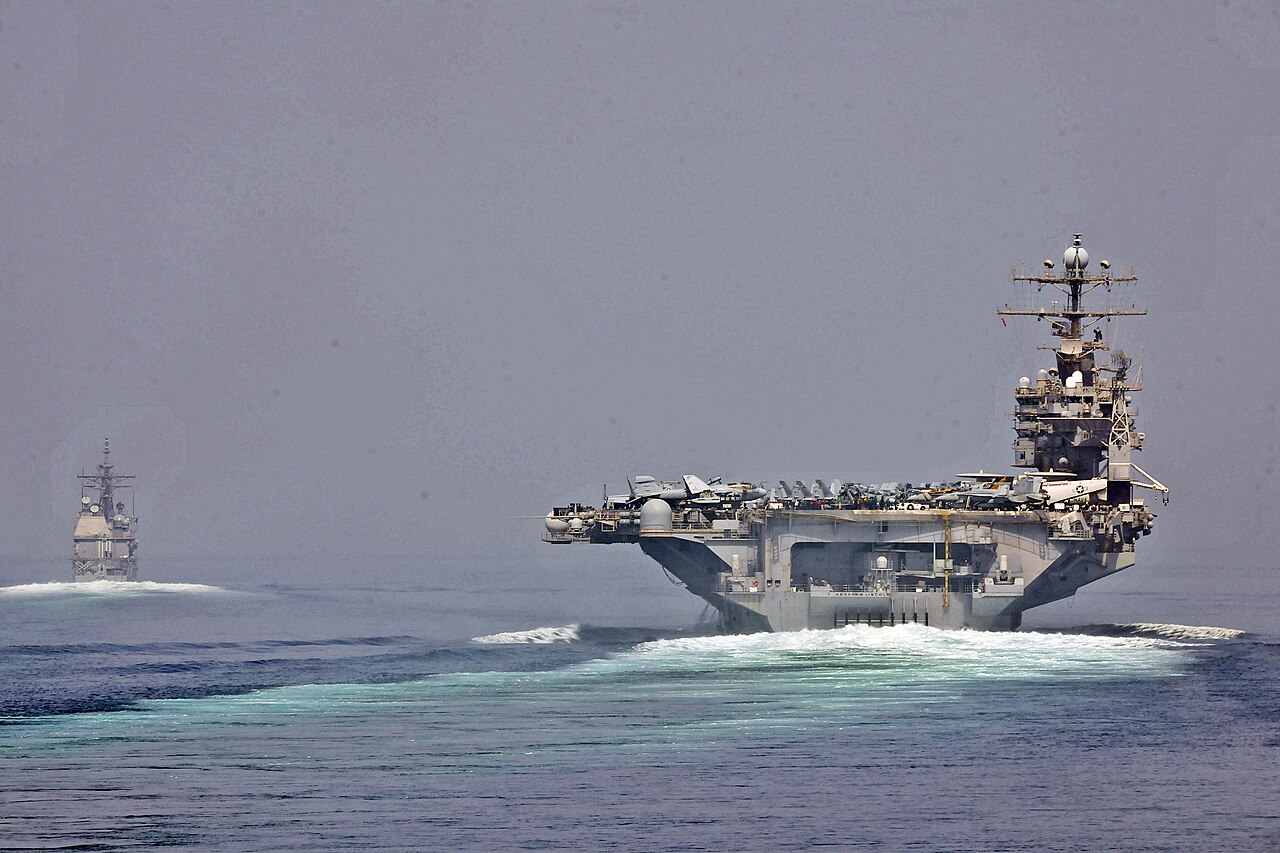
President Trump ordered the U.S. Navy to blockade the Strait of Hormuz on Sunday, just hours after 21 hours of peace talks in Islamabad collapsed. Iran refused to abandon its nuclear ambitions. The blockade, CENTCOM said, would begin enforcement Monday at 10 a.m. ET, targeting the waterway that carries about 20 percent of the world's oil and liquid natural gas.
Trump announced the move via Truth Social, instructing the Navy to "seek and interdict every vessel in International Waters that has paid a toll to Iran." The decision came immediately after U.S. and Iranian negotiators failed to reach agreement following marathon discussions at Islamabad's Serena Hotel. Vice President JD Vance led the U.S. delegation with special envoy Steve Witkoff and Jared Kushner, while Iran sent Parliament Speaker Mohammad Bagher Qalibaf and Foreign Minister Abbas Araghchi.
Iran's nuclear program remained the core sticking point. "We need to see an affirmative commitment that they will not seek a nuclear weapon, and they will not seek the tools that would enable them to quickly achieve a nuclear weapon," Vance said after the talks ended. Trump's assessment on Truth Social was blunt: "Iran is unwilling to give up its nuclear ambitions."
The two sides presented fundamentally incompatible proposals. The U.S. demanded Iran end all uranium enrichment, dismantle major facilities, allow retrieval of enriched uranium, cease funding militant groups, and open the strait without tolls. Iran's counter-proposal demanded continued control of Hormuz, the right to enrichment, lifted sanctions, release of frozen assets, and war reparations.
While negotiations unfolded, the U.S. had already positioned naval forces for multiple outcomes. Two destroyers, the USS Frank E. Petersen Jr. and USS Michael Murphy, transited the strait on Saturday to sweep for mines and establish "a new passage." This military preparedness showed the U.S. had contingency plans ready when diplomacy failed.
The blockade follows Russia and China's veto of a UN Security Council resolution on April 7 that would have authorized defensive actions to protect shipping in Hormuz. The Bahrain-led resolution received 11 votes in favor but was blocked by the two permanent members. U.S. Ambassador Mike Waltz said the veto showed Russia and China "tolerated" Iran holding the global economy "at gunpoint."
The blockade specifically targets vessels that have paid tolls to Iran, which reports indicate charged up to $2 million per ship. China buys about 90 percent of Iran's oil exports, making the economic impact potentially devastating. Vessels transiting to or from non-Iranian ports will not be blocked, preserving normal commerce while applying maximum pressure on Tehran.
Retired Admiral James Stavridis called the blockade "a big gamble" that "puts economic pressure on Tehran without destroying the oil facilities, which you should want to preserve into the future." Robin Brooks of the Brookings Institution noted "the U.S. can implode Iran's economy by shutting down its oil exports."
Domestic political reactions revealed deep partisan divisions over the strategy. In a CNN appearance, New York Times columnist Tom Friedman stated he "really want[s] to see Iran defeated militarily because this regime is a terrible regime" but opposed Trump's success because "I really don't want to see Bibi Netanyahu or Donald Trump politically strengthened by this war because they are two awful human beings."
Republican support remained firm. Sen. Ron Johnson of Wisconsin said, "I hope President Trump is successful in this. Because just imagine the world if the ayatollahs, the brutal Iranian regime, is no longer in power. That's what we're trying to achieve."
Trump framed the action as necessary to prevent a nuclear-armed Iran, telling economic advisers, "I'm sorry, fellas, we're in great shape. We have to go and take a little journey down to Iran, and we have to stop them from having a nuclear weapon." He predicted eventual success, stating, "They're not going to have nuclear weapons. I've been saying that for 30 years" and "I predict they come back and they give us everything we want."
The blockade represents a strategic shift from diplomatic engagement to coercive economic warfare after exhaustive negotiation options failed. With the strait closed to Iranian-controlled commerce, the question now is whether economic strangulation will achieve what diplomacy could not: forcing Tehran to abandon its nuclear ambitions.