US Strikes Kharg Island Ahead of Trump's Final Iran Deadline
US forces hit Iran's main oil export hub hours before Trump's Tuesday deadline. Tehran rejected a ceasefire, oil spiked past $140 a barrel, and the president threatened to destroy Iran's entire infrastructure.
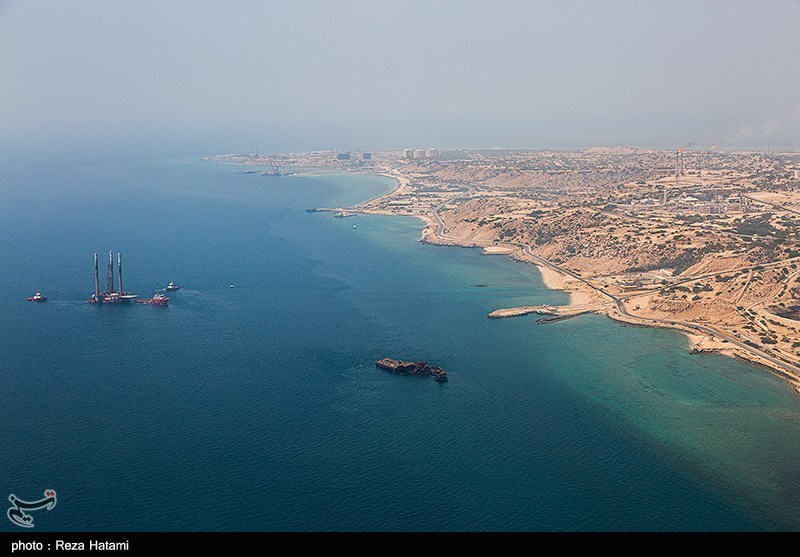
US forces struck Kharg Island — Iran's critical oil export terminal handling 90 percent of its crude shipments — hours before President Donald Trump's Tuesday 8 p.m. deadline, as Tehran rejected a ceasefire proposal and delivered demands the White House branded excessive and illogical. The attack sent oil prices surging and equity futures sliding as global markets braced for broader conflict.
Trump extended his original Monday deadline by 24 hours, calling the Tuesday ultimatum "final, won't change." He warned Iran's entire power grid, bridges and critical infrastructure would be destroyed if the Strait of Hormuz remained closed. The president posted on Truth Social that "a whole civilization will die tonight, never to be brought back again."
Iran answered with a 10-point counterproposal, delivered through Pakistani mediators, demanding a permanent end to hostilities rather than a temporary ceasefire. The document required lifting all US sanctions, closure of American bases in the region, hard guarantees against future strikes, and recognition of Iran's right to enrich uranium under the Nuclear Non-Proliferation Treaty — terms Washington flatly rejected.
Defense Secretary Pete Hegseth stepped to the White House podium and confirmed the recent strikes represent the largest volume against Iran to date. "Tomorrow's strikes will be more than today," Hegseth also stated. The warning left little ambiguity about what Tuesday night would bring.
The Kharg Island assault followed Israeli strikes that obliterated the South Pars petrochemical complex in Asaluyeh on Monday. Israeli Defense Minister Israel Katz confirmed the facility was "no longer functioning." Together, the strikes gutted Iran's economic capacity to fund military operations and regional proxies.
White House officials characterized Tehran's demands as "extremely excessive and illogical," signaling no willingness to negotiate on Iran's terms. The Trump administration views reopening the Strait of Hormuz as contingent on Iranian capitulation — not on permanent concessions to Tehran.
Kharg Island holds approximately 30 million barrels of crude storage capacity and accounts for 90 percent of Iran's oil exports. South Pars produces roughly half the nation's petrochemical output. Targeting both in rapid succession underscores Washington's strategy of maximizing economic pressure.
Trump's most direct threats came in a series of statements Monday and Tuesday. "Every bridge in Iran will be decimated by 12 o'clock tomorrow night," the president warned from the White House. "Every power plant in Iran will be out of business, burning, exploding, and never to be used again."
Iran's Islamic Revolutionary Guard Corps declared "restraint is over" and threatened to disrupt regional oil and gas supplies for years to come. The IRGC statement followed Tehran's rejection of a 45-day ceasefire proposal brokered by Pakistani, Egyptian and Turkish mediators.
Iranian officials privately expressed fears that any temporary truce would repeat what they called "Gaza or Lebanon situation" scenarios — pauses that allow US and Israeli forces to regroup. Mediators warned the Strait of Hormuz is unlikely to fully reopen until a final deal is signed, not merely through temporary ceasefire arrangements.
The scale of destruction across the region is staggering. The International Energy Agency reports 75 energy sites across the Gulf have been attacked in the conflict, with one-third severely damaged. Executive Director Fatih Birol stated the disruption exceeds the combined impact of the 1973 and 1979 oil shocks plus Russia's 2022 gas cuts. Global oil markets have lost 11–12 million barrels per day since fighting began Feb. 28.
WTI crude jumped approximately 2 percent Tuesday, trading around $111–$116 per barrel. Brent crude surged above $140 per barrel, with Dated Brent signals pointing to acute spot scarcity. S&P 500 futures slid 0.4 percent in pre-market trading while Nasdaq futures dropped 0.6 percent.
The Strait of Hormuz has been strangled. Lloyd's List analysts report that in the last week of March, just 24 vessels transited the strait — compared with more than 600 in the last week of February. Tehran's parliament approved legislation March 27 to charge ships up to $2 million for safe passage, with revenue shared with Oman under the proposed toll system.
Senior US officials confirmed Tuesday's strikes targeted dozens of military installations on Kharg Island, including bunkers, radar stations, ammunition storage and defensive facilities. A US official told Fox News that landing docks were not intentionally targeted unless Iranians fired from nearby positions. Axios reported the US conducted "re-strikes" on military sites previously hit.
Market analysts interpret the targeting of Kharg Island and South Pars as deliberate economic warfare against Tehran's ability to fund military operations. The immediate volatility following Tuesday's strikes confirms the strategic weight of crippling Iran's primary revenue sources.
Hegseth's announcement of intensified strikes signals a sustained campaign, not a one-off escalation. For everyday people from Rotterdam to Riyadh whose livelihoods move on oil prices and open sea lanes, the question is no longer whether this conflict reshapes the global economy — but by how much, and for how long.