Vaccine Gaps Spark Australia's Worst Diphtheria Outbreak in Decades
Australia battles its most severe diphtheria outbreak since the 1990s as declining vaccination rates and workforce shortages expose 223 confirmed cases and a suspected death across Indigenous communities.
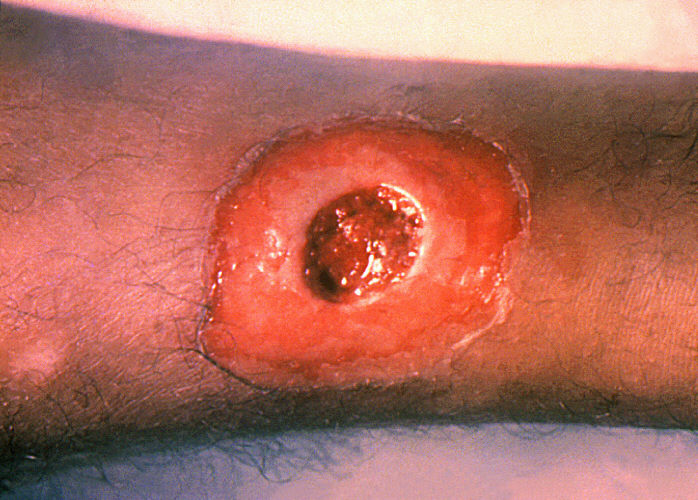
A suspected death in a remote Northern Territory community anchors Australia's most severe diphtheria outbreak since the 1990s, with 223 confirmed cases spreading across four states as declining vaccination rates leave communities dangerously exposed.
Health authorities reported 133 cases in the Northern Territory, 79 in Western Australia, six in South Australia, and up to five in Queensland as of May 19. The surge exposes how years of falling immunization coverage and post-pandemic vaccine hesitancy have hollowed out the country's disease defenses.
Federal Health Minister Mark Butler called the outbreak "probably the biggest diphtheria outbreak we've seen, certainly for decades" during a May 19 interview with ABC Radio. "We're very concerned about this," Butler stated. "There's no question this is serious."
The disease's return matters now because vaccine-preventable illness does not vanish on its own. It returns when public health infrastructure erodes and when families skip boosters.
Diphtheria once stalked Australian streets. Between 1926 and 1935, the disease killed more than 4,000 Australians. Vaccination campaigns in the 1930s and 1940s nearly eradicated it. The last respiratory diphtheria case in Australian children before 2022 occurred in 1992.
That benchmark no longer holds.
National childhood immunization coverage at 24 months fell below 90 percent in 2024 for the first time since 2016, according to National Centre for Immunisation Research and Surveillance data. Coverage among 12-month-olds dropped from 94.8 percent in 2020 to 90.5 percent in 2025. Among 2-year-olds, coverage declined from 92.1 percent to 88.4 percent.
"Diphtheria does not return to a population by chance," said Professor Adrian Esterman of Adelaide University. "It returns where vaccination coverage has slipped and where living conditions allow it to spread."
Cases began climbing in October 2025, then jumped again in February 2026, according to Professor Raina MacIntyre of the UNSW Kirby Institute. The Northern Territory Centre for Disease Control declared an outbreak in March 2026. AusTrakka genomic analysis confirmed WA Kimberley cases linked to NT and Queensland cases, indicating one cluster moving through the country rather than separate outbreaks.
"This is an unprecedented epidemic, with most of it diphtheria skin infection, and about a quarter being respiratory diphtheria," MacIntyre stated.
The outbreak concentrates heavily in Indigenous communities. Ninety-one percent of cases occur among Aboriginal and Torres Strait Islander people, according to a Victoria Department of Health Clinician Alert. Authorities have shortened the booster interval from 10 years to five years for at-risk adults.
Dr. John Boffa of the Central Australian Aboriginal Congress stated up to half of Central Australia's 18,000-strong Aboriginal population remain overdue for boosters.
"This outbreak has happened on the background of an ongoing workforce problem with nurses and GPs, and so the capacity to vaccinate at scale is not there yet," Boffa said.
One death is suspected to be diphtheria-related in a remote NT community. Boffa said there is "95 percent certainty" the death resulted from the disease, describing the deceased as an adult who developed heart inflammation. NT Health awaits coroner confirmation. If confirmed, this would mark Australia's first diphtheria death since 2018.
The crisis reflects global vaccination declines following the COVID-19 pandemic. "In fact, all vaccination rates have been falling, not just in Australia [but] globally," MacIntyre noted. "This is likely due to the rise in vaccine misinformation and pushback against vaccines after the COVID-19 pandemic."
MacIntyre compared the situation to historical patterns: "Historically, large diphtheria epidemics can occur when vaccination programs get disrupted — when the Soviet Union fell in 1991, over 140,000 cases and over 5,000 deaths resulted."
Federal and state governments are responding with mixed results. Butler confirmed working with the NT government and Aboriginal-controlled sectors to increase vaccination efforts. Western Australia provides free state-funded vaccines in Kimberley, Pilbara, and Goldfields regions. South Australia's health department supports Nganampa Health Council in the APY Lands.
"This outbreak is a reminder that rare does not mean impossible, and that protection needs to be maintained through timely boosters for adolescents and adults," said Dr. Milena Dalton of the Burnet Institute.
The outbreak's scale dwarfs recent years' totals. Australia recorded fewer than 40 diphtheria cases in all of 2025, according to Royal Australian College of General Practitioners data. The current 223 cases by mid-May represent more than five times that annual total.
Health workers report 15 to 20 new cases weekly across the Northern Territory for the past four to six weeks, Boffa said. About one-third of new cases require hospitalization, straining regional health systems already challenged by workforce shortages.
"Diphtheria is something many Australians thought belonged to another era of medicine," said Dr. Ramya Raman of the Royal Australian College of General Practitioners. "The reality is that vaccine-preventable diseases can return, particularly when continuity and immunisation gaps emerge."
Seventy-seven percent of current cases are cutaneous skin infections, 18 percent respiratory, and 4 percent unclassified, according to the Victoria Department of Health. Respiratory diphtheria can be fatal in up to 10 percent of severe cases even with treatment, WA Country Health Service warns.
Almost 80 percent of respiratory diphtheria cases had at least three vaccine doses, with just over 53 percent of skin diphtheria cases vaccinated, according to MacIntyre's analysis of Australian Centre for Disease Control data. This pattern suggests partial protection or waning immunity rather than complete vaccine failure.
The outbreak's concentration in Indigenous communities reflects broader health disparities. Aboriginal and Torres Strait Islander people face higher rates of overcrowded housing, which facilitates disease transmission, and greater barriers to healthcare access.
Seventy-seven percent cutaneous, 18 percent respiratory, and 4 percent unclassified cases tell a story of a disease exploiting gaps in immunity and access. Families in remote areas struggle to reach clinics. Nurses and GPs face impossible workloads. The infrastructure that once kept diphtheria at bay now frays under pressure.
Australia's diphtheria crisis serves as a warning about the fragility of disease control when vaccination programs falter. The outbreak demonstrates how quickly decades of public health progress can unravel. Behind every statistic sits a family, a community, a life hanging in the balance as authorities scramble to contain what individual responsibility and sustained vaccination once prevented.