Trump Bombs Iran While Secretly Opening the Strait
President Trump launched missiles into Iran while revealing a covert US Navy operation that escorted over 200 commercial ships through the Strait of Hormuz, breaking Iran's blockade leverage.
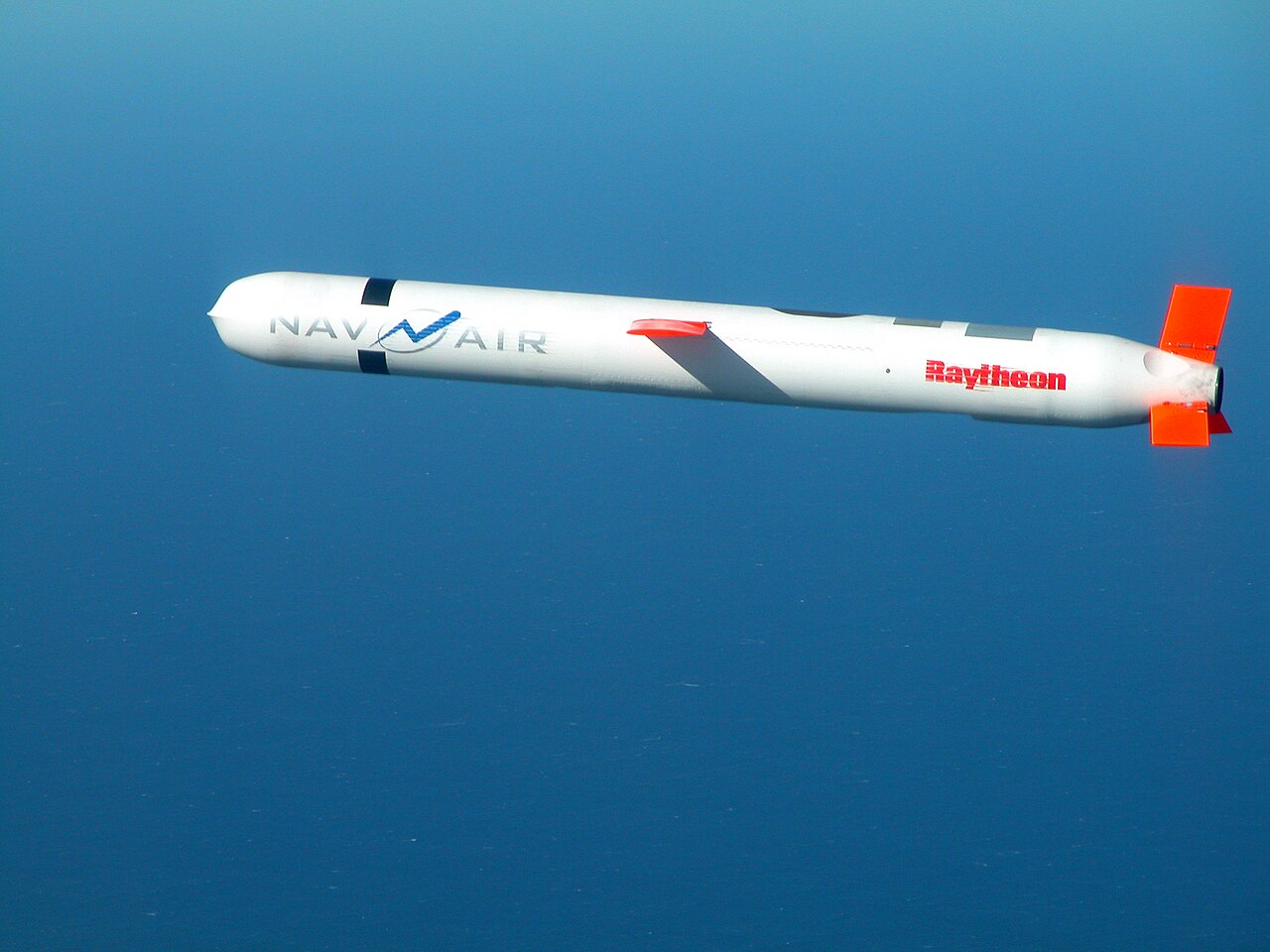
On June 10, President Donald Trump fired 49 Tomahawk cruise missiles into Iran and warned he would "bomb the shit out of them tomorrow" if Tehran refused to sign a deal. He delivered another message the same day, one aimed at global markets rather than Iranian soil. The US military had secretly escorted more than 200 commercial ships carrying 100 million barrels of oil through the Strait of Hormuz last month. The operation quietly broke Iran's ability to wield the waterway as leverage.
This strategic paradox defines the new phase of the US-Iran conflict: simultaneous military escalation and covert economic warfare.
The confrontation has evolved into a dual-track operation. Calibrated strikes and active negotiations proceed side by side. While headlines focus on explosions, the most significant development may be the quiet US operation that has neutralized Iran's primary strategic leverage. Control of the world's most critical oil chokepoint no longer gives Tehran the upper hand. A Qatari delegation arrived in Tehran on June 10 to advance negotiations. They walked through those doors even as Trump threatened to "bomb the shit out of them tomorrow night" during a Fox News interview.
US Central Command confirmed it launched "self-defense strikes" against multiple targets in Iran on June 10. The missiles hit air defense systems, ground control stations and radar sites near the Strait of Hormuz. Iranian media reported explosions in Bandar Abbas, Bushehr, Sirik and Qeshm Island. The closest impact landed approximately 40 miles from Tehran. The strikes began at 5:15 p.m. ET and lasted approximately four hours, CENTCOM said.
Iran retaliated in what it called a "response to US aggression." Tehran claimed strikes on US military targets in the region in two waves. The Islamic Revolutionary Guard Corps said it hit the US Navy's Fifth Fleet headquarters in Bahrain with drones, attacked Ali Al Salem Air Base in Kuwait, and launched 12 ballistic missiles at Al-Azraq Air Base in Jordan. Kuwait confirmed intercepting hostile aerial targets. Bahrain activated air raid sirens. A US official told Stars and Stripes there was "no significant damage" and "no harm done to U.S. personnel."
Defense Secretary Pete Hegseth articulated the administration's approach during a briefing at CENTCOM headquarters in Tampa, Florida. "If we need to negotiate with bombs, we'll negotiate with bombs," Hegseth told reporters. "And we're very good at it. Nobody better in the world." He added: "We will hit them hard on our terms, on the targets that improve the environment for us to operate in and undermine the capabilities that Iran wants to have. But we're also clearly signaling to them: You have a choice."
Trump's Truth Social post revealed the covert operation that has kept oil flowing despite Iran's blockade threats. "Last month, I directed our Great U.S. Military to execute a secret mission to support Oil Tankers and other Commercial Ships through the Strait of Hormuz," Trump wrote. "Today, I am pleased to announce that this effort has resulted in more than 100 MILLION Barrels of Oil making its way through the Strait, and into the Open Market. More than 200 Commercial Ships have safely traveled through the Strait."
Goldman Sachs Delta One head Rich Privorotsky confirmed the operation's market impact. "A lot has been thrown at the oil market and it's simply not going up, which is remarkable given the level of escalation," Privorotsky told ZeroHedge. "The only conclusion that really fits the price action is that barrels are still getting through the Strait of Hormuz, visibly or otherwise."
Operation "Project Freedom" began in early May. It used a combination of US Navy escorts, autonomous vehicles and a "dark fleet" of tankers that turned off their transponders. Very Large Crude Carriers exited through Hormuz without their AIS tracking systems. They rendezvoused with other tankers in the Gulf of Oman for ship-to-ship transfers, according to analysis cited by RedState. The US military has disabled eight vessels and redirected 134 since the US blockade began April 13.
Oil prices tell the story of American strategic success. Brent crude hovered near $95 and WTI crossed $92 on June 10-11, rising only about $3 following Trump's escalation threat. The figures remain far below the $120-plus levels predicted by many analysts and the $250 Trump said would occur without the secret operation. "Millions of barrels of oil has come out, and that's why it's at $85-$90 a barrel, instead of $250," Trump told reporters during an Oval Office press briefing.
The Energy Information Administration forecasts OECD oil inventories will fall below 2.3 billion barrels by December 2026. That would mark the lowest level since records began in 2003, covering only 50 days of demand. JPMorgan's Natasha Kaneva projects each additional month of blockade in the third quarter adds approximately $5 per barrel, and $15 per barrel in the fourth quarter.
Trump called the April 7 ceasefire "the most violated ceasefire in the history of the world" but insists it remains technically in effect. Vice President JD Vance told Fox News the US is dealing with "both moderate and more extreme voices in Iran" during negotiations. Trump claimed Iranian officials called him directly requesting a halt to bombing. Iran denied the claim.
The human cost continues to mount. US strikes near the Strait of Hormuz destroyed a drinking water facility in the Sirik/Bemani district, cutting water to more than 20,000 people, according to Iranian state media. The New York Times analyzed satellite imagery and video suggesting precision-guided munitions were used. The paper identified GBU-39 guided bomb fragments at the site. Iran called it a "calculated war crime." On June 9, US forces disabled the Palau-flagged M/T Settebello tanker in the Gulf of Oman, killing two Indian seafarers and leaving one missing. India summoned the US diplomat and lodged a "strong protest."
Behind every barrel of oil and every missile strike, real families pay the price. Two Indian sailors never came home. Twenty thousand people in Sirik wake up each morning without running water. The seafarers navigating these waters gamble their lives on every voyage.
Longtime regional war correspondent Elijah Magnier told Al Jazeera the situation remains perilous. "The most dangerous thing is that every side believes they can control the escalation," Magnier said. "However, a repeated incident can erode restraint, and if talks collapse completely, this controlled escalation could widen into a much larger conflict."
Retired Lt. Gen. Keith Kellogg advocated for decisive action on Fox News. "We're just done with you guys," Kellogg said. "We're gonna go in, we're gonna finish the job. Having a protracted war is not the American way of war."
The US has demonstrated both military superiority and strategic ingenuity in breaking Iran's maritime blockade. But the ceasefire remains a fiction. Both sides continue testing each other's red lines. Global oil markets hang in the balance as reserves deplete. While explosions dominate headlines, America's quiet victory at sea may prove more consequential than any missile strike. Somewhere in the Gulf of Oman, a sailor steers a tanker through contested waters, carrying fuel that powers homes, hospitals and factories across the free world. That quiet journey may matter more than any battle.