UK Socialist Healthcare System Linked to 305 Weekly Emergency Room Deaths
A damning new report reveals the UK's socialized healthcare system produced nearly 16,000 excess deaths last year, as overcrowded emergency departments and corridor care become normalized across England's hospitals.
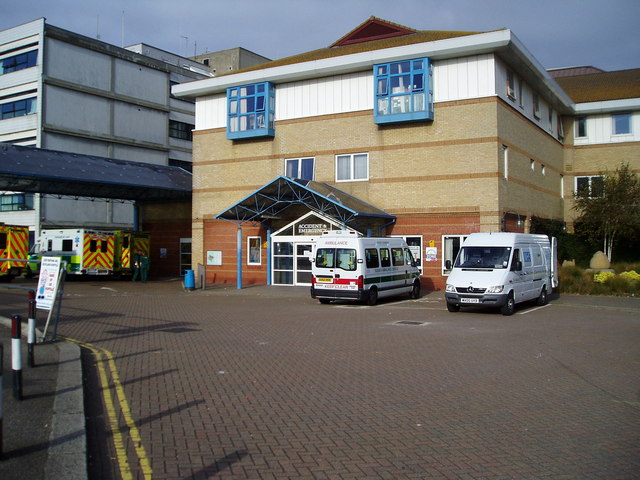
Patients are dying in corridors, chairs, and cupboards because there is nowhere else to put them.
A Royal College of Emergency Medicine report released June 8, 2026, estimated that 15,860 excess deaths were associated with long waiting times in English emergency departments during 2025. That equals roughly 305 deaths per week. The figures expose a socialized healthcare system where corridor care has become routine and patients expire while waiting for beds that never open.
The crisis has escalated dramatically. Excess deaths linked to emergency department waits represent a nearly tenfold increase from 2015, when 1,657 deaths were recorded. Bed occupancy hit 93.1 percent in 2025, exceeding the National Institute for Health and Care Excellence threshold of 90 percent. The system simply cannot move patients through.
"Each year, as this analysis is completed, it leads me to question how many more deaths it will take before we see a determined, meaningful plan to end the crisis," said Dr. Ian Higginson, president of the Royal College of Emergency Medicine. "It's the inability to move patients out of our departments which is causing the overcrowded EDs linked to excess deaths."
The mechanism behind the carnage is known as "exit block." Patients occupy emergency department space because inpatient beds do not exist. RCEM analysis found that an average of 12,906 patients per day — medically fit for discharge — remained trapped in hospital beds throughout 2025. The bottleneck produced staggering wait times: 489,138 patients waited 24 hours or more in emergency rooms last year. Another 1.74 million waited at least 12 hours.
Nearly one in five patients in English emergency departments received treatment in spaces not designed for care. Corridors, waiting rooms, and chairs serve as makeshift wards. A January 2026 Royal College of Nursing dossier documented a patient who choked to death in a corridor, unseen by staff. Ninety-seven percent of emergency medicine clinical leads described corridor care as unsustainable.
The NHS constitutional standard requires seeing 95 percent of emergency patients within four hours. That target has not been met since June 2013. In 2025, only 60.5 percent of patients at major emergency departments were admitted, transferred, or discharged within the four-hour window. The collapse persists despite record attendance — 17 million Type 1 emergency department visits in 2025, the highest ever recorded.
The emergency room catastrophe extends beyond immediate patient safety. Imperial College London's Global State of Patient Safety 2025 found the UK ranks 21st out of 38 OECD countries. The study concluded that 22,000 lives could be saved annually if Britain matched Switzerland's treatable mortality rate. Switzerland operates a mixed-market healthcare system with universal coverage.
Worse waits await those outside the emergency department. Elective care waiting lists reached 7.11 million cases, involving 6.02 million individual patients as of March 2026. Two point four seven million patients waited over 18 weeks. Between September 2024 and August 2025, 79,130 patients died after their names were removed from waiting lists because they died before receiving treatment. Twenty-eight thousand nine hundred eight of those had been waiting over 18 weeks.
Health Secretary Wes Streeting pledged to end corridor care by 2029 at the RCEM conference on April 30, 2026, citing "best 4-hour performance in A&E in 5 years." The national corridor care data he promised to publish in spring 2025 had not been released as of June 2026. Streeting resigned as health secretary on May 14, 2026, and was replaced by James Murray.
The Department of Health and Social Care responded to the RCEM report by stating, "It was unacceptable for patients to face long waits for emergency care," while touting £215 million in new centers. The government has invested an additional £26 billion in the NHS by the end of this Parliament. The investment produced 15,860 excess deaths in 2025.
"As an emergency doctor, it's heartbreaking that patients arrive to our EDs in their time of need, and we can't do our jobs properly because we are full," Higginson said. The Office for National Statistics confirmed that patients spending 12-plus hours in emergency rooms are 2.1 times more likely to die within 30 days than those spending two hours.
The British experience offers a stark warning to progressive politicians in the United States who continue to champion socialized medicine modeled on the NHS. Karl Claxton of the University of York modeled that excess deaths from the UK-US pharmaceutical deal by 2033 could exceed those from COVID-19. The government refused to conduct parliamentary review or release the deal's impact assessment.
"This is the tragic reality when people are left to wait in overcrowded and under-resourced A&Es," said Professor Nicola Ranger, general secretary of the Royal College of Nursing. "This catastrophe has been unfolding unchecked in our hospitals for far too long."
Public confidence has eroded alongside patient outcomes. Forty-two percent of patients would now hesitate to attend emergency rooms due to concerns about long waits, according to an Ipsos poll commissioned by RCEM. Professor Carl Heneghan of Oxford University's Centre for Evidence-Based Medicine noted, "The death toll would prompt national outrage if it originated from any other recognized safety failure in the NHS."
The numbers tell a story that should shock any democracy. Over the past decade, more than 100,000 excess deaths have accumulated in British emergency departments. The system's architects promised universal care. They delivered a waiting room for the dying.