Markets Stop Caring About Trump Tariffs — And That May Be the Point
Wall Street stopped reacting to Trump's tariff announcements a year after Liberation Day. The TACO pattern shows why markets adapted — and why that may be their greatest vulnerability.
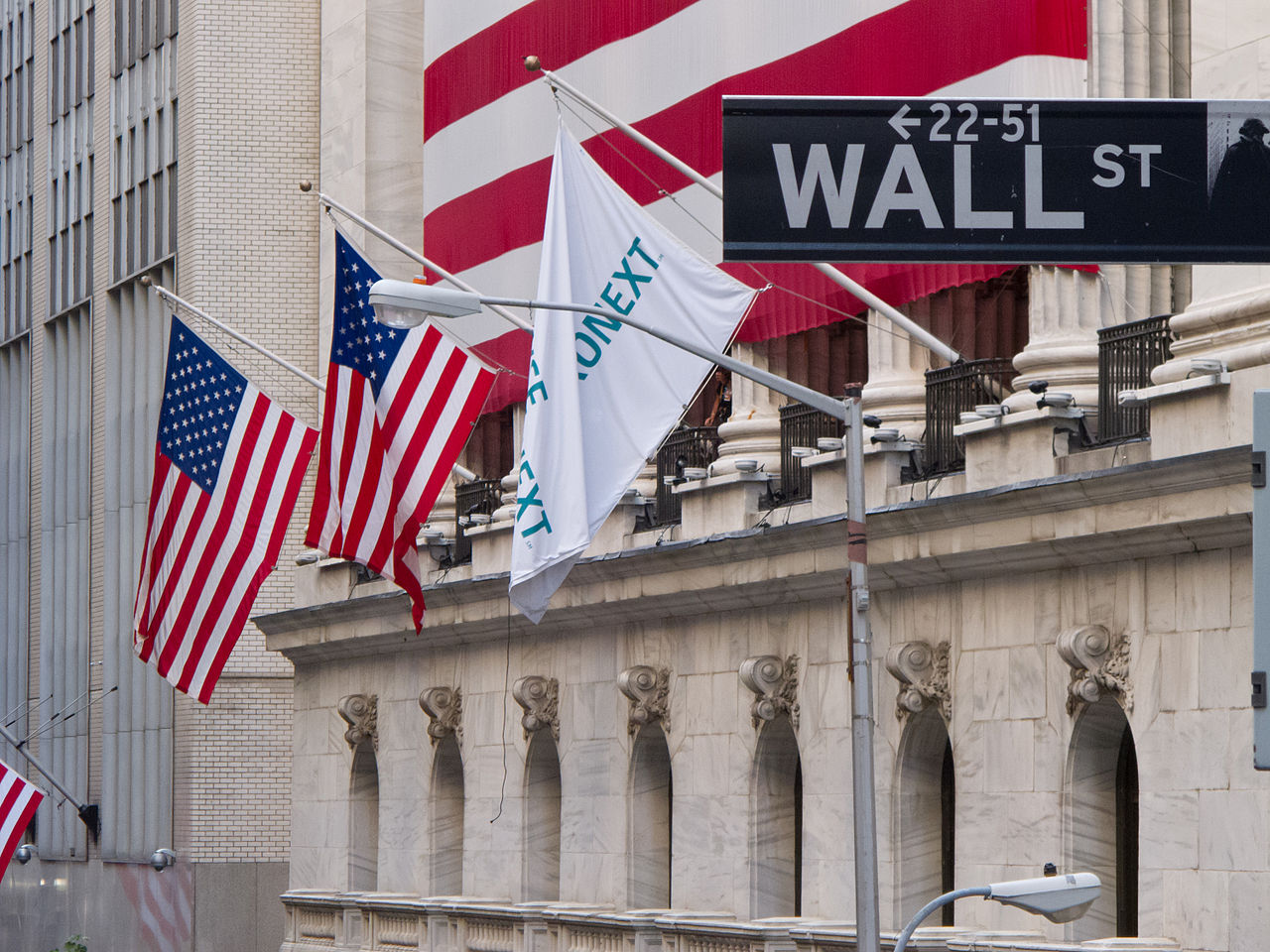
When President Trump announced sweeping "Liberation Day" tariffs on April 2, 2025, stock markets crashed. A year later, a new tariff framework took effect: 10 percent on all global imports, with 15 percent planned. Wall Street barely flinched. The market didn't stop caring because the threat disappeared. It stopped caring because traders learned the pattern. Whether they've learned the right lesson is another question entirely.
The contrast defines a fundamental shift in market psychology. On Liberation Day, Trump declared "April 2, 2025 will forever be remembered as the day American industry was reborn" as he imposed sweeping tariffs on nearly every country. Markets tumbled immediately. Yet when a 10 percent global tariff took effect Feb. 24 under Section 122 authority, market reaction was muted. The same president, similar policy, opposite market response.
Analysts call the pattern "TACO" — Tariff Announcement, Climb-down, Optimization. Financial Times columnist Robert Armstrong coined the acronym in May 2025 to describe Trump's pattern of escalating then backing down. Trump confronted the label at a May 28, 2025 press conference. "You call that chickening out?" Trump said. "It's called negotiation," and "Don't ever say what you said," Trump said with regard to the notion of him chickening out. "To me, that's the nastiest question."
The historical record shows 28 tariff reversals between April 2 and July 14, 2025, according to Forbes. Yet the trajectory moved consistently upward. The Liberation Day announcement was followed by a pause, and a Supreme Court ruling voided IEEPA tariff authority on February 20. Each time, Trump pivoted — but the baseline rate climbed in the same period.
Wall Street adapted through desensitization. "I think people are now used to his little explosions," Paul Skinner, investment director at Wellington Management, told CNBC Feb. 24. "There's no surprises." Hugh Dive, chief investment officer at Atlas Funds Management, stated, "No statement on trade policy from Trump is now treated as durable. Sit on hands and do nothing, this is just noise." Ed Yardeni of Yardeni Research noted, "The market learned last year that the global economy is remarkably resilient in the face of what I call Trump tariff turmoil."
The Supreme Court's 6-3 ruling on February 20 voided IEEPA tariff authority — but within hours Trump had a replacement framework live. The speed and legal preparation of the pivot to Section 122 authority showed this was not improvisation. The ruling left unresolved the question of roughly $134 billion in IEEPA tariff revenue that may require refunding, a matter remanded to lower courts.
Treasury Secretary Scott Bessent's Townhall interview Feb. 23 provides the administration's roadmap. "This 122 authority is good for 150 days," Bessent said. "During that time, it is very likely that those studies will result in higher 232s, higher 301s, and it will get us back to the same tariff level." The 10 percent rate is not the destination — it is a legally durable placeholder while the permanent architecture is built.
White House spokesman Kush Desai dismissed the TACO framing as "eggheaded analysis disconnected from the plain reality that the President has consistently and skillfully used tariffs, diplomacy, and overwhelming military action to safeguard the national and economic security of the American people."
The economic ledger shows competing realities. The Tax Foundation estimates IEEPA tariffs increased taxes on American households by about $1,000 in 2025 and $1,300 in 2026. Yet GDP grew 4.1 percent in Q2 2025, 4.3 percent in Q3, and 4.4 percent in Q4, according to Treasury Secretary Bessent. Tariff revenue hit $26.7 billion collected in June 2025 alone.
A GOP strategist speaking on background framed the paradox. "Take Trump seriously, but not literally — that's always been the key to understanding how he negotiates," the strategist told the Washington Examiner. "What looks like backing down is often just part of the playbook."
Market apathy may not be eroding Trump's leverage — it may be preserving it. A trading partner that stops reacting to tariff threats is also a trading partner that stops preparing for them. With Section 232 and 301 findings due inside the Section 122 150-day window, the markets that learned to ignore Trump's tariff announcements may be the least prepared for the one that doesn't reverse.