The "Non-Criminal Detainee" Myth: Why the Press Is Misleading You About Who ICE Is Arresting
Academic data shows 64 percent of ICE detainees carried U.S. criminal records — yet major fact-checkers labeled most "non-criminals." The gap exposes a methodological blind spot with real human consequences.
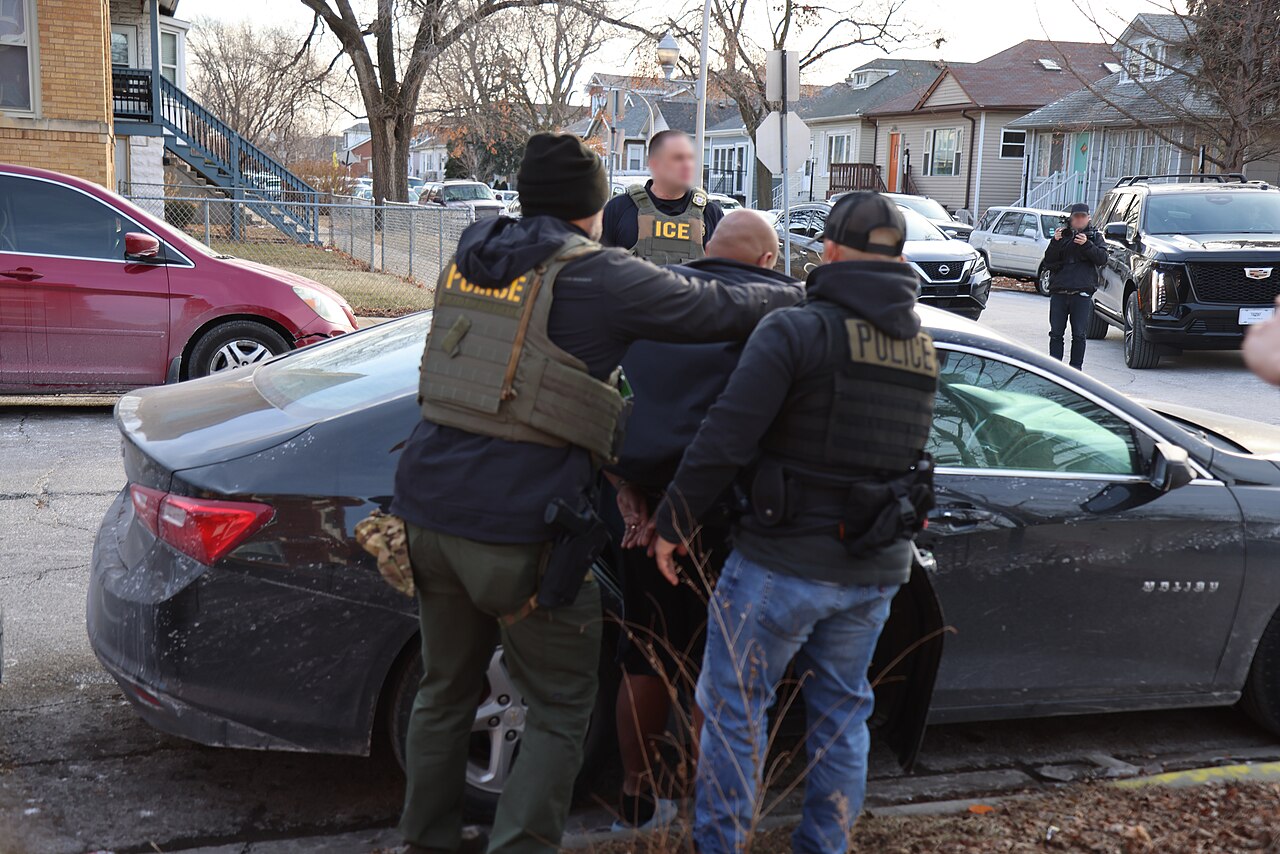
Kele Christian Alves-Pereire crossed into the United States illegally from Brazil. When ICE arrested her, fact-checkers counted her as a "non-criminal." Brazilian authorities want her for murder — specifically, her alleged role in the 2017 shooting death of Vanda Derli Rangel Teixeira. She simply had no U.S. rap sheet.
She is not an anomaly. She is a window into how much the U.S. records system cannot see.
Independent researchers at UCLA and UC Berkeley tracked ICE detainees from Jan. 20, 2025, to Oct. 15, 2025. Their own data showed 64 percent carried criminal convictions or pending charges on record in the United States alone. That figure excludes every crime committed abroad and every criminal history that source countries have refused to share.
Outlets including CBS News, FactCheck.org and PolitiFact frame the criminal question using U.S. convictions and pending charges, and they factor in foreign records only to the extent those records are accessible. The method produces a predetermined conclusion: that the administration is lying. The 74 percent "non-criminal" figure they publish is an artifact of the methodology, not a finding about the people themselves.
The Deportation Data Project — covering Jan. 20 through Oct. 15, 2025 — found 29.8 percent of detainees carried pending charges only. That figure is not a government claim. It comes from the same academic sources journalists invoke when challenging the Department of Homeland Security. The identical researchers who generated these numbers also appear in media stories asserting the administration is being dishonest. Their data does not support that framing.
The January 2026 ICE detention snapshot — the figure media outlets use to build the "74 percent innocent" headline — shows 17,729 detainees with criminal convictions and 17,881 with pending charges. Convictions plus pending charges alone equals 52 percent documented criminal involvement in that single moment. That is consistent with, not contradictory to, the 64 percent recorded across the preceding enforcement period.
Criminologists universally acknowledge that reported and adjudicated crime captures a fraction of all crime committed. Studies consistently show that a large majority of offenses are never reported, investigated or prosecuted. An undocumented population with strong structural incentives to avoid all law enforcement contact is, by logic, a population with a systematically undercounted crime rate. Applying any standard dark-figure multiplier to the 64 percent already-recorded baseline pushes the probable true rate well beyond 70 percent.
DHS named Alves-Pereire publicly as Exhibit A in precisely this argument. The media has not engaged with it.
Her case is not a collection of anecdotes. Source countries including El Salvador, Venezuela, Honduras, Guatemala, Brazil and Cuba carry documented histories of withholding criminal records and obstructing deportations. A wanted murderer from Brazil illustrates how many thousands of cases U.S. systems simply cannot reach.
The Cato Institute finding that only 5 percent of detainees carried violent convictions serves as the media's preferred closing argument — implying the enforcement dragnet sweeps up harmless people. In raw numbers, 5 percent of 70,000 detainees equals approximately 3,500 individuals with adjudicated violent U.S. convictions held at a single point in time. One of them is Ramiro Antonio Gutierrez Garcia, a confirmed MS-13 member from El Salvador who shot a man multiple times in the head in broad daylight in Queens, New York, and received a 55-year federal sentence. Cato's framing presents the 5 percent figure as reassuring. It should not reassure anyone.
The media's final argument is that DHS refuses to release data proving foreign criminality — framed as a transparency failure by the administration. That inverts the evidentiary burden entirely. The claim that detained individuals are predominantly innocent requires proof that foreign criminal databases were checked and cleared. No independent researcher has done that. No source country would permit it.
"Many of the individuals counted as 'non-criminals' are actually terrorists, human rights abusers, gangsters and more," DHS Assistant Secretary Tricia McLaughlin said. "They just don't have a rap sheet in the U.S."
The public is being told by outlets that style themselves as fact-checkers that the government is lying when it asserts most people arrested for illegal immigration have criminal histories. The data that actually exists — including from the researchers those same outlets cite — shows 64 percent documented criminality in U.S. systems alone, with a structural inability to access foreign records at all. A woman wanted for murder abroad is being counted as evidence of administration dishonesty. The accountability question is not whether DHS is being transparent. It is why major media outlets are presenting a methodologically incomplete picture as a definitive refutation — and what that costs the communities left to absorb the consequences.