London Now Needs Bleed Kits on Buses. The Mayor Would Rather Not.
London's buses now need bleed kits and the Mayor won't provide them. A driver was fired for fighting back. Something is going very wrong, and no one will say what.
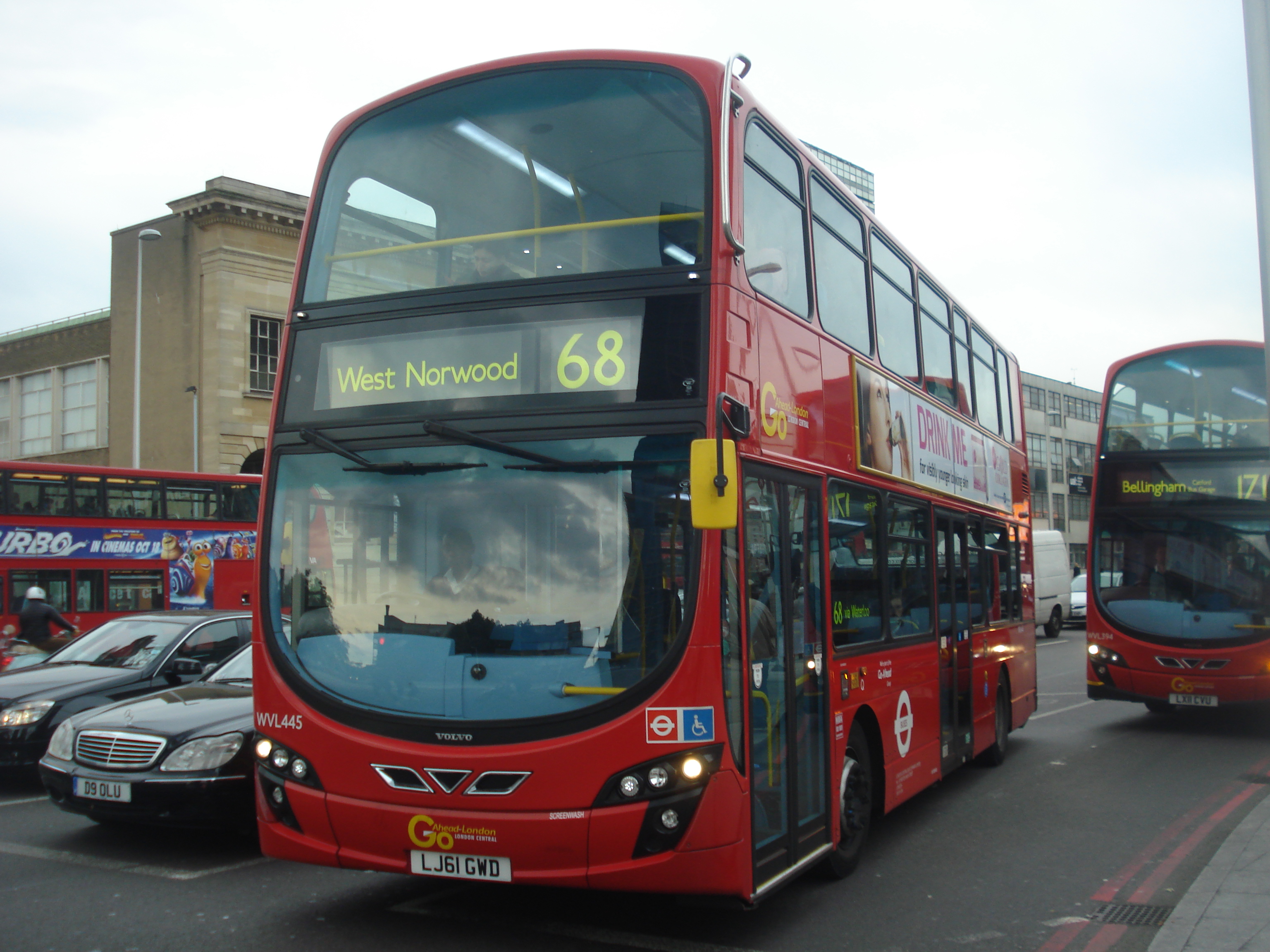
Nobody will say plainly why London buses need bleed kits. And the mayor won't provide them either. On March 5, the London Youth Assembly voted unanimously to place bleed control kits on the capital's buses. The proposal — simple, inexpensive, and backed by every member of a cross-party assembly — died in the familiar way: quietly, behind a wall of official caution.
The backdrop to that vote is not abstract. In January 2025, Kelyan Bokassa, 14 years old, was stabbed 27 times with machetes on the top deck of a 472 bus in Woolwich. He died at the scene. His killers, both teenagers, were sentenced last July to life imprisonment. The murder did not start a policy overhaul. It prompted a group of young Londoners to ask a very modest question: what if there had been a kit on board to slow the bleeding before the ambulance arrived?
This is London in 2026. A city where knife offences hit a record 16,344 in 2024/25 — and where the political class, rather than interrogating the conditions that produced that number, debates the liability risks of a £60 pressure bandage. The deeper question — the one almost no one in authority will say plainly — is what decades of unchecked mass migration have done to the social fabric of a city that now asks its teenagers to travel through violence on the way to school.
"These kits are already in lots of Underground stations, but buses are the mode of transport most used by young people and therefore it's essential that we start the rollout there," the assembly's deputy chair said. The kits cost roughly £60 each. Mia Mormah, the assembly's deputy chair, added: "These kits would allow there to be help within the vital few minutes after a stabbing before the ambulance arrives." Not a cure. A stopgap. A chance.
Transport for London and Mayor Sadiq Khan rejected the proposal, citing NHS guidance. A TfL spokesman said "the effective use of bleed kits requires appropriate training and there is a risk of significant harm if tourniquets, which are usually included in bleed kits, are not used correctly." A separate TfL statement noted that "standard first aid kits are sufficient for the majority of bleeding wounds," and added that TfL "would keep its position under review." The mayor's office did not include that last phrase. Between them, the two statements managed to say nothing at all.
That is the sound of institutional caution — and it is the same sound London makes whenever someone tries to connect the city's spiralling knife culture to policy choices that went unexamined for years. The communities experiencing the sharpest concentrations of blade violence are overwhelmingly those transformed most rapidly by migration flows that no government dared slow, let alone stop. That is not a coincidence. It is a consequence.
In June 2024, Mark Hehir — a 62-year-old Metroline bus driver — was at the wheel of a 206 bus between Wembley and Maida Vale when a man stole a necklace from a passenger. Hehir intervened, recovered the necklace, and when the thief returned and threw the first punch, knocked him unconscious and held him for 30 minutes until police arrived. Detective Constable Waddington later concluded that Hehir "had used force which was proportionate and necessary in the circumstances in the defence of himself and the female passenger." The victim, Katalin Kaszas, put it simply: "He made me feel safe."
Metroline sacked him for gross misconduct. Hehir spent six days in hospital after developing an infection from the thief's tooth and nearly lost his hand. An employment tribunal upheld the dismissal in November 2024. More than 100,000 people signed a petition demanding reinstatement or compensation. A GoFundMe raised over £26,000. Shadow justice minister Dr. Kieran Mullan called the outcome "shameful and unjust." Hehir now works as a barman in Wembley and no longer wants his job back — only an apology. "I've always felt I was justified in my actions," he said, "and it just seems that 99.5% of people agree with me."
These two stories are versions of the same failure. Both involve ordinary people seeking practical protection against violence on public transport. Both were turned away by institutions citing rules, liability, or expert guidance — while refusing to reckon with why such protection is needed in the first place. A bus driver is punished for doing what any decent person would do. A youth assembly is told its kits are too dangerous to use. The city that produced both situations carries on without a serious conversation about how it got here.
Lynne Baird, whose son Daniel was stabbed to death in 2024, designed her own bleed control kit in his memory. "I believe that if a kit like this existed when Dan was stabbed, he might be around today," she said. That her advocacy had to begin with a personal tragedy — and that it still may not be enough to move the bureaucracy — is its own indictment.
The assembly's motion is non-binding. It may go nowhere. Reform UK's Keith Prince admitted he feared it will "be falling on deaf ears." The kits might help. The sacked bus driver clearly helped. What neither can do is fix what an era of unchecked policy choices — on borders, on policing, on the social infrastructure of cities under demographic pressure — has quietly and systematically broken. London does not need a bleed kit. It needs the honesty to ask why it keeps bleeding.