22 Nations Unite to Break Iran's Hormuz Chokehold
A 22-nation coalition declares Iran's Hormuz blockade illegal as oil hits $112 a barrel, 20,000 seafarers remain trapped, and Trump's ultimatum deadline passes without compliance.
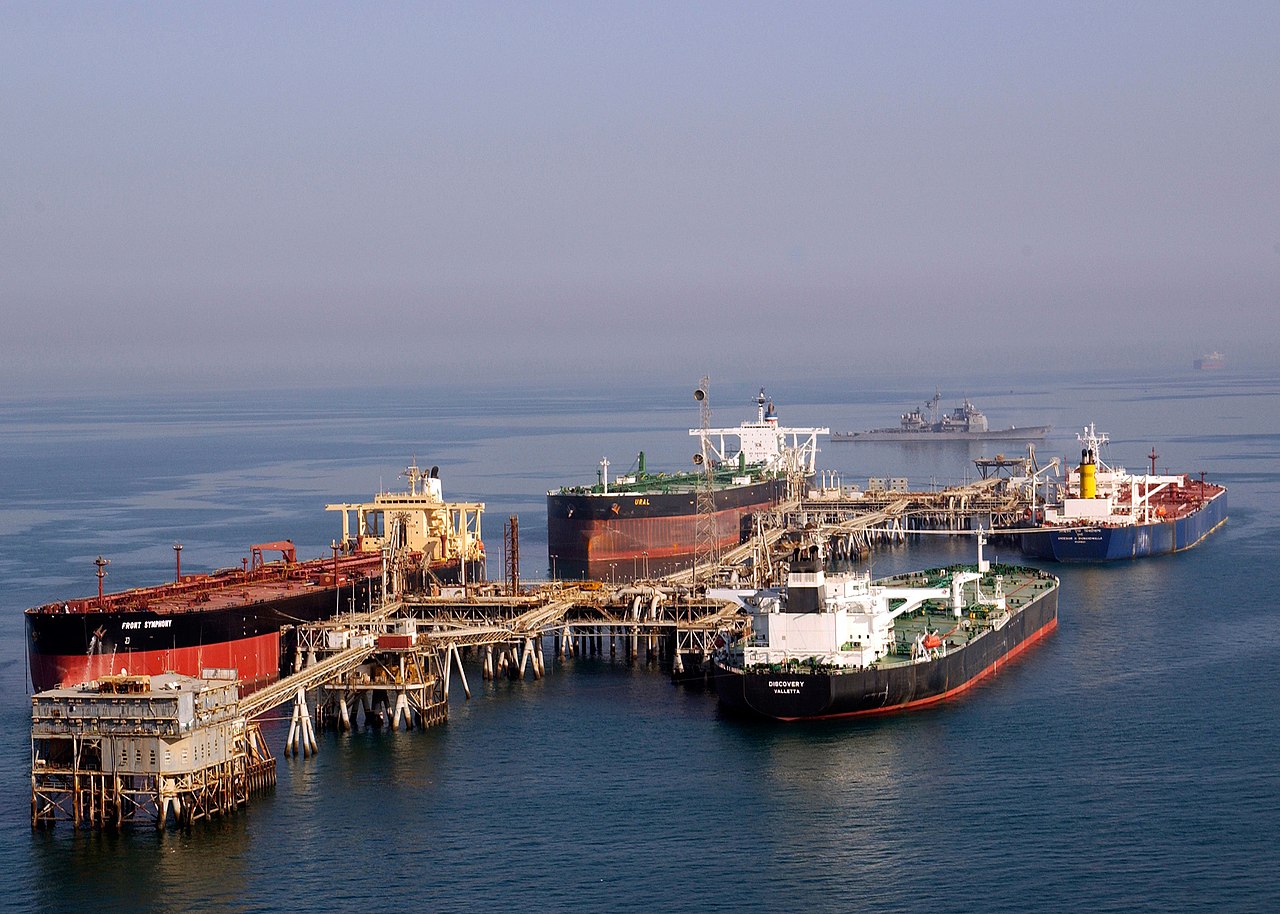
Every day, only 3 or 4 ships pass through one of the world's most vital waterways — a corridor that once carried 130 vessels daily and powered the global economy. The rest wait. So do 20,000 seafarers, stranded aboard roughly 2,000 ships, caught between a geopolitical standoff and open water they cannot cross.
Twenty-two nations signed a joint statement March 21 declaring Iran's blockade of the Strait of Hormuz an illegal threat to global security. The coalition — spanning Gulf Arab states, European allies and major Asian oil importers — signals Tehran's deepest diplomatic isolation yet and mounts the strongest coordinated push to reopen the chokepoint.
The signatories include the UAE, Bahrain, the United Kingdom, France, Germany, Italy, the Netherlands, Japan, Canada, South Korea, New Zealand, Denmark, Latvia, Slovenia, Estonia, Norway, Sweden, Finland, Czechia, Romania, Lithuania and Australia, according to the UAE Ministry of Foreign Affairs.
NATO Secretary-General Mark Rutte, speaking to Fox News on March 22, said the 22 countries have "come together to basically answer three questions."
The human and economic toll is staggering. Vessel crossings through the Strait collapsed from roughly 130 per day before the war to just 3 or 4 daily — a 95 percent drop, according to Kpler analytics. Brent crude surged to $112 per barrel, a 53 percent jump from its pre-war price of $65. In the United Kingdom, gas prices doubled from 80 pence to 151 pence per therm, squeezing households from London to Leeds.
Iran's Foreign Minister Abbas Araghchi disputes the blockade framing entirely. "We have not closed the strait," he told Kyodo News on March 21. "In our opinion, the strait is open. It is closed only to ships belonging to our enemies, countries that attack us."
The United Nations Security Council moved swiftly to counter that position. It adopted Resolution 2817 on March 11 with 135 co-sponsors — the most widely supported resolution in the body's history — determining that attempts to impede lawful transit through the Strait of Hormuz threaten international peace and security.
Relief has been slow in coming. The International Energy Agency released 400 million barrels from strategic petroleum reserves on March 11, the largest coordinated release in history. Prices have not fallen below $100 per barrel since the war began.
IEA Executive Director Fatih Birol put the stakes bluntly. "The war in Iran is already the biggest threat to energy security in history," he told El País on March 22, noting that the current supply disruption of 11 million barrels per day exceeds the oil shocks of the 1970s.
President Trump sharpened the pressure March 21, issuing a 48-hour ultimatum threatening to strike Iranian power plants if Tehran did not fully reopen the Strait. The deadline passed without full Iranian compliance.
The coalition, though broad, carries internal fault lines. Japan faces constitutional constraints: Prime Minister Sanae Takaichi explained to Trump on March 19 that Article 9 of the Japanese Constitution limits what the Self-Defense Forces can do in the region. Germany and Greece ruled out military involvement altogether, though both remain inside the 22-country coalition — pointing toward logistical or financial roles rather than combat operations.
The economic mathematics are punishing. A Federal Reserve Bank of Dallas analysis warned that if the Strait stays closed for one quarter, global GDP growth could fall by 2.9 percentage points on an annualized basis. That projection lands on top of markets already reeling.
Treasury Secretary Scott Bessent moved to ease the immediate supply crunch March 20, announcing a temporary lifting of U.S. sanctions on Iranian oil stranded at sea. The exemption covers roughly 140 million barrels and runs through April 19. "Sanctioned Iranian oil is being hoarded by China on the cheap," Bessent stated. "By temporarily unlocking this existing supply for the world, the United States will quickly bring approximately 140 million barrels of oil to global markets."
The joint statement condemned Iran's attacks on unarmed commercial vessels, civilian infrastructure and oil and gas installations, citing UN Security Council Resolution 2817 and the UN Convention on the Law of the Sea as the legal basis for international action. For Gulf states in the coalition, the threat is not abstract. The UAE alone has absorbed 341 ballistic missiles, 15 cruise missiles and 1,748 drones since Feb. 28, according to The National newspaper.
The military challenge remains daunting. Analysts describe the situation as "structurally asymmetric." The United States destroyed more than 30 Iranian mine-laying vessels by mid-March, though some reports put the figure at 16 vessels by March 16. Iran's persistent mining and jamming capabilities mean military force alone cannot guarantee safe passage — making a negotiated settlement the most realistic path to a lasting resolution.
The coalition's formation reflects a sharp turn from earlier weeks, when NATO allies hesitated and European nations cited legal constraints on military deployments. Trump acknowledged the shift March 20. "They are really stepping up to the plate," he said of coalition allies, adding that reopening the Strait requires "a lot of help in the sense of you need ships, you need volume."
The joint statement expressed readiness to "contribute to appropriate efforts to ensure safe passage" and welcomed nations engaging in "preparatory planning," without specifying whether contributions would be military, logistical or financial. The coalition has drawn its line. Whether that line holds — and whether the ships, the oil and the 20,000 seafarers waiting in the Gulf finally move — is the question now pressing on every energy market, every government and every crew still at anchor in waters that should be open to the world.